Key facts
- Starfish Space established initial communications with its Otter spacecraft after launch but lost contact during commissioning and has not reestablished two-way communication.
- SSPICY was built to fly toward and inspect inactive American space objects in low Earth orbit while demonstrating propulsion, guidance, navigation, control systems, and an articulating robotic boom.
- This flight marked the first time Starfish launched and deployed its Otter spacecraft and combined its navigation and propulsion technology into one vehicle.
- On future Otter flights, Starfish plans to keep collecting data for NASA about how the technology performs and to gather orbital debris inspection information in low Earth orbit.
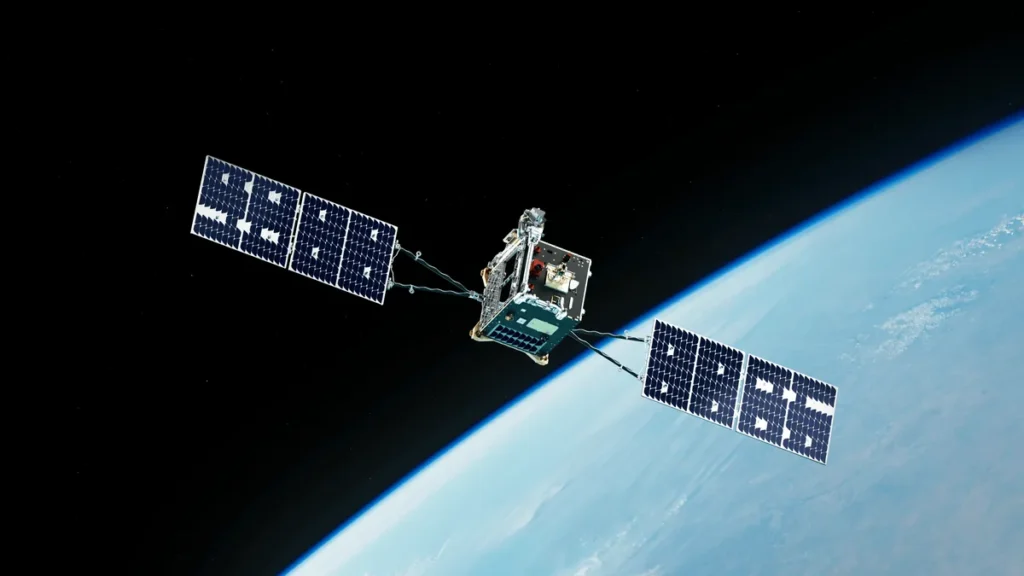
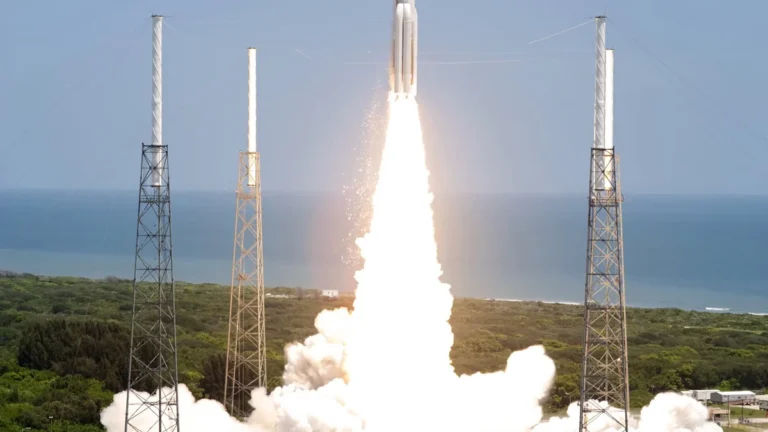
NASA and Starfish Space have determined that the SSPICY small satellite cannot be recovered after communications were lost during commissioning following its Oct. 1, 2026 launch from Vandenberg Space Force Base in California. A fault protection problem is leaving the spacecraft’s radio switched off, blocking contact with ground operators. The vehicle flew aboard a SpaceX Transporter-18 rideshare mission on a Falcon 9 rocket as a NASA-supported technology demonstration led by Starfish under the Small Spacecraft Propulsion and Inspection Capability program. Teams on the ground could not fix the communications failure, so both organizations declared the spacecraft not recoverable.
The company made initial contact with its Otter spacecraft after launch, but contact was lost during commissioning and two-way communication has not been restored. Commissioning is the first phase after launch, when systems are activated, instruments are calibrated, and the vehicle is readied for normal operations; the contact loss happened during this stage. Analysis by NASA and Starfish traced the issue to a fault protection problem that leaves the radio off. That system is onboard software designed to detect problems and trigger responses, and it blocked recovery efforts.
The SSPICY mission aimed to observe inactive American spacecraft in low Earth orbit, demonstrating propulsion, guidance, navigation, control systems, and an articulating robotic boom. The flight represented the debut launch and deployment of Starfish’s Otter spacecraft, with navigation and propulsion technology combined aboard one vehicle. Starfish had flown smaller scaled-down Otter Pup prototypes.
NASA said the Advanced Research and Technology Division inside its Research and Technology Mission Directorate pays for SSPICY, while the Small Spacecraft and Distributed Systems program at Ames Research Center in Silicon Valley, California, manages the agency’s support. The division stressed that commercial capabilities matter for a competitive U.S. space economy and that NASA will keep pursuing bold technology demonstrations with industry partners. The mission is valued at $15 million.
Greg Stover, who directs NASA’s Advanced Research and Technology Division, said commercial capabilities such as Starfish’s are important for a competitive U.S. space economy and for American leadership in low Earth orbit. He added that these demonstrations allow NASA to test new systems quickly, learn from how they perform, and iterate to expand what is achievable, with the agency continuing to work with industry on difficult challenges.
With its solar arrays deployed, the Otter spacecraft is about the size of a kitchen oven and weighs 660 pounds, or 300 kilograms. Starfish designed the Otter family with a flexible architecture for satellite life extension and end-of-life disposal, so the vehicles can operate in different orbital regimes even on spacecraft never built for servicing.
Once it separated from the Falcon 9 and completed commissioning, Otter was expected to conduct close observations of several satellites. For SSPICY, the Otter was not to touch or dock with any satellite but was to test technologies for future missions that service, repair, or safely remove objects by deorbiting them into Earth’s atmosphere. Beginning in early 2027, Otter was to pass within hundreds of yards of each target to inspect it, using autonomous software that needed little direction from ground controllers. That inspection plan cannot proceed because the spacecraft is unrecoverable.
During each inspection, Otter was to gather data on an object’s spin rate, orientation, and surface condition, information that would help NASA understand how spacecraft endure years in orbit. Electric propulsion would have allowed the spacecraft to travel between objects, and a moving boom was to test thruster pointing for careful orbit changes. Computer vision and sensors were to support real-time navigation decisions as the spacecraft approached each target, making this the first test of these technologies together as an integrated system.
Starfish Space was founded in 2019 by Austin Link and Trevor Bennett, both former Blue Origin employees, and is based in Tukwila, Washington. In 2023, Starfish flew an Otter Pup prototype about the size of a microwave oven. Docking failed because of technical problems, but the craft demonstrated the company’s satellite-tracking system. A second Otter Pup launched last year and has been near a different target satellite since about June, with plans to attempt docking.
NASA said that on future Otter flights, Starfish plans to continue gathering data about technology performance and to collect orbital debris inspection information in low Earth orbit. Other planned missions include a disposal flight for the Pentagon’s Space Development Agency, two commercial servicing flights in geostationary Earth orbit, and two Space Force servicing flights. Starfish is building at least six Otters in total, including the October vehicle, and says each spacecraft takes roughly 18 months to manufacture. The company aims to speed up production and shift toward a fleet strategy because of customer demand.
A few months before September 2026, Starfish said it had more than 90 employees, and the workforce has since grown to more than 120 people. Expanding the workforce is central to Starfish’s goal of building and launching Otters more quickly.
Starfish received early technology development funding from NASA’s Small Business Innovation Research effort and its Small Business Technology Transfer program. That early federal support came before the larger SSPICY technology demonstration award.


Join the discussion