Key facts
- Researchers determined its age using uranium-lead age analyses of tiny zircon crystals, which date igneous rocks formed from cooling molten magma.
- During that time Mars may still have had a magnetic field, a denser atmosphere, and surface waters, making it the time when surface life would have been most possible, according to Agee.
- Researchers do not know the exact birthplace on Mars but narrowed it to 13 primary possible locations, several in the Southern Highlands region, and possibly near Hellas Basin.
- The meteorite was blasted off Mars by an impact, traveled through space, entered Earth's atmosphere as a meteor, and survived to land in the Sahara; it is not known exactly when it landed.
Researchers published a peer-reviewed study in Science on October 29, 2026, about Teghaza 001, a 4.1-billion-year-old Martian meteorite found in the Sahara Desert of Mali in 2022.
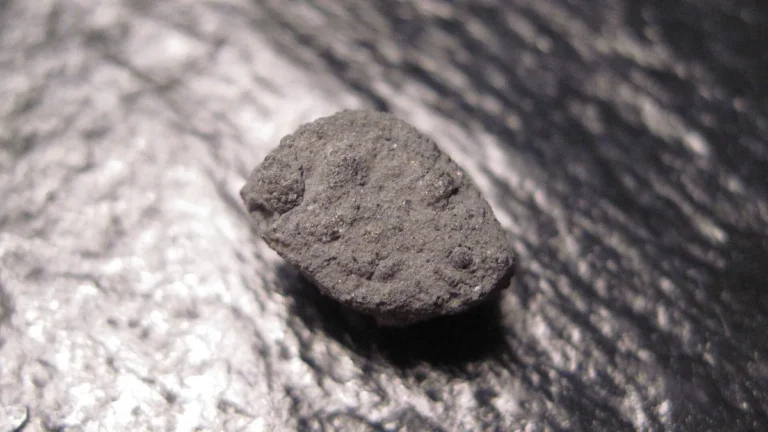
The meteorite weighs about 800 grams. It was found in 2022 in eight fragments. The pieces lay about 34 kilometers (21 miles) from Bir Chali, a village in Mali, and the largest fragment is roughly the size of a fist.
Only about 435 Martian meteorites have been identified on Earth, and most are much younger than Teghaza 001. The study’s authors describe Teghaza 001 as one of the oldest known Martian meteorites and possibly the oldest igneous rock from Mars ever found. Only three Martian meteorites date to the planet’s earliest history. A meteorite found in Antarctica in 1984 was first estimated at about 4.5 billion years old, but later analysis put it at roughly Teghaza 001’s age, and researchers behind the study say Teghaza 001 is probably older.
Researchers determined its age with uranium-lead analyses of tiny zircon crystals, which date igneous rocks that formed as molten magma cooled. Scientists from NASA’s Jet Propulsion Laboratory and the University of New Mexico worked on the study, along with teams at NASA’s Ames Research Center and elsewhere.
Unusual oxygen isotope compositions and altered minerals in the rock indicate that liquid water existed on Mars billions of years ago, pointing to a warmer, much wetter ancient Mars. Water altered the meteorite about 4.1 billion years ago, so the rock itself must have formed even earlier. Co-author Lee Saper of NASA’s Ames Research Center said the rock documents water-mineral interactions and might hold clues about the Martian atmosphere from the time the planet was losing water.
The meteorite is a coarse-grained gabbro, an igneous rock formed from magma that originated in the planet’s mantle, and it crystallized slowly beneath the Martian surface while in contact with water. Isotopes of oxygen and hydrogen show that water entered deeper crustal layers and mixed with molten rock rising from the mantle. The signal appears in hydrogen isotopes in phosphate and in oxygen isotopes in minerals and bulk samples.
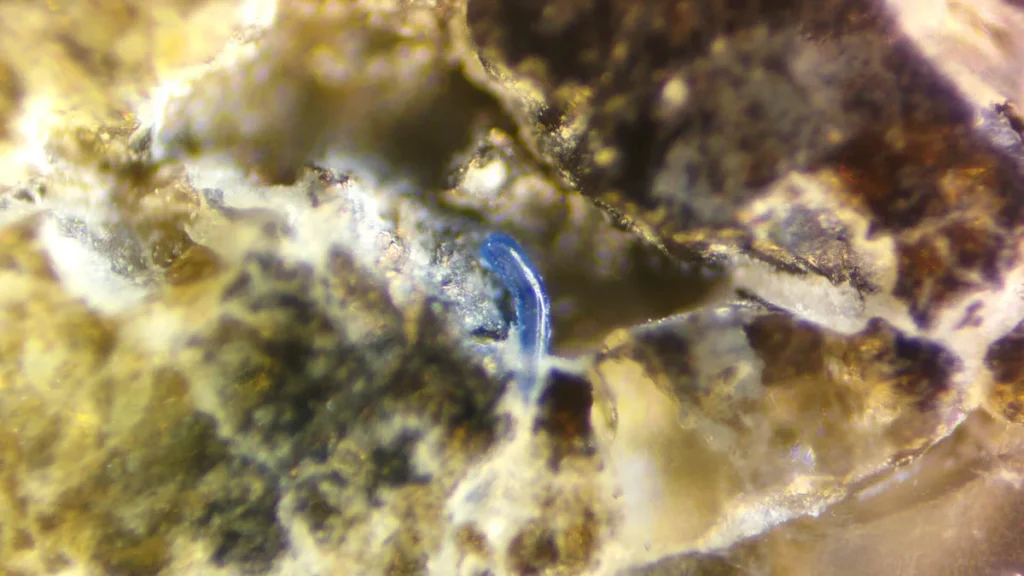
The rock contains large amounts of manganese oxide, a compound that on Earth is commonly produced by microbial life and that Mars rovers look for when assessing whether an environment can support life. Carl Agee, director and curator at the University of New Mexico’s Institute of Meteoritics, found domains within the meteorite with high levels of manganese oxide.
The period is called the Pre-Noachian, Mars’s oldest geological epoch, spanning roughly 4.5 to 4.1 billion years ago. Agee said Mars may still have possessed a magnetic field and a denser atmosphere, with surface waters present during the era most likely to have hosted surface life.

Yang Liu of NASA’s Jet Propulsion Laboratory described the meteorite as “a witness to a time when Mars was likely warmer and wetter than it has been for most of its history.” Liu, the paper’s lead author, said, “One of the paper’s reviewers called it a Rosetta Stone for Mars.” He added that the team recognized the rock’s uniqueness only after looking closely.
Researchers do not know the meteorite’s exact birthplace on Mars, but they narrowed it to 13 primary possible locations, several in the Southern Highlands region and possibly near Hellas Basin. NASA’s Mars Reconnaissance Orbiter observations helped identify 13 locations on Mars whose composition and chemistry match the meteorite. Pinpointing the origin could help planners decide where to send future rovers.
To confirm a Martian origin, researchers compare the rock’s chemical and isotopic signatures against measurements made by spacecraft and rovers. An impact blasted it from Mars. After traveling through space, it entered Earth’s atmosphere as a meteor before surviving touchdown in the Sahara, and researchers do not know exactly when it landed.
Researchers say the finding does not prove that ancient life existed on Mars. They describe the results as water and geology rather than a discovery of life, and they say they still need to establish the detailed sequence of events.
Carl Agee said the rock is like Black Beauty in its oxygen isotope values, though a single unadulterated rock type rather than a conglomeration. It holds together as one coherent igneous piece rather than a jumble of different fragments, and changes in its minerals, oxygen chemistry, and manganese-rich areas are consistent with interaction with fluids. That formation environment differed from conditions tied to many younger Martian meteorites.
The discovery builds on evidence of dried river channels and ancient lake deposits, along with water-formed minerals observed by spacecraft, offering a complementary source researchers can examine in laboratories. Liu said Martian meteorites are the only samples of Mars available for study, forming the basis for understanding early Mars and letting researchers evaluate in laboratories whether ancient Mars was habitable. Researchers can learn more from the rock by comparing it with spacecraft observations, work that could point them toward other ancient terrain.



Join the discussion