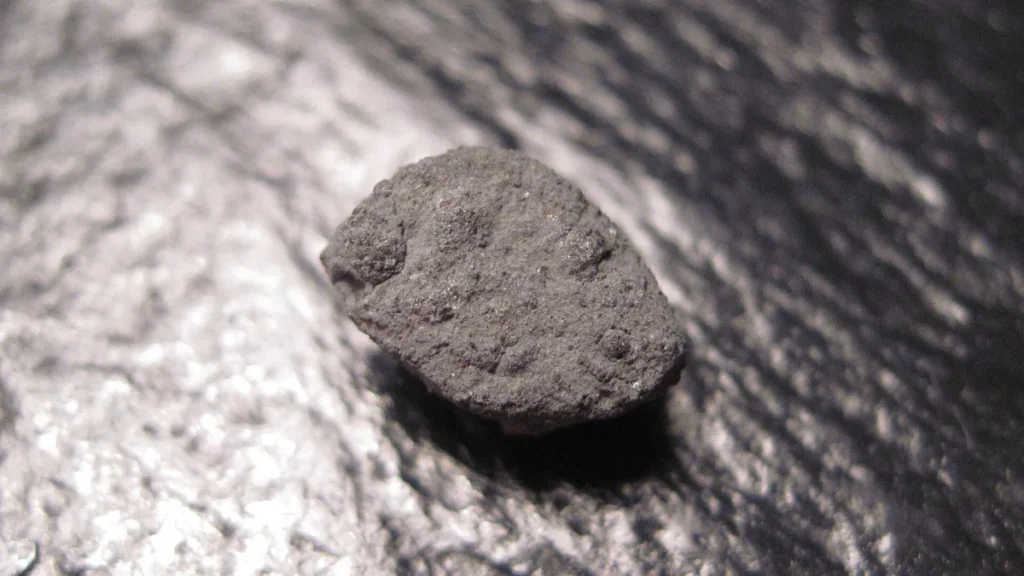
ETH Zurich researchers found that Bennu, Ryugu and CI meteorites carry matching chemical fingerprints from a single reservoir of ancient cosmic dust.
The researchers used isotopes of iron, titanium and chromium as chemical fingerprints to trace where asteroid ingredients originated. Researchers at ETH Zurich received half a gram of Bennu material in Schönbächler’s laboratory and treated the isotope signatures as fingerprints revealing where the ingredients came from. The work appeared in Science Advances in 2026. Schönbächler described Bennu as a hybrid: “Bennu is a hybrid: the material does not clearly match either the inner or the outer Solar System,” she said.
Bennu, Ryugu and CI meteorites carry isotope signatures that resemble each other but differ sharply from other asteroids, meteorite groups and planets. The researchers say the objects share one origin in ancient dust. These meteorites contain carbon-rich material from the dawn of the Solar System and underwent little alteration. They are seldom found among meteorites recovered on Earth.
The researchers propose that material forming Bennu and Ryugu accumulated near the water-ice line around 4.5 billion years ago, where dust from the inner and outer Solar System mixed. This boundary sits in the disk around the young Sun, where temperatures allow water vapor to freeze into ice and help particles stick together to build larger bodies.
Under the proposed scenario, the parent bodies of Bennu and Ryugu, along with objects that produced CI meteorites, formed from thoroughly mixed material near that line. Jupiter started forming within approximately one million years of the Sun’s birth, and its gravity blocked most larger particles while letting finer dust circulate. Fine material from different parts of the disk mixed heavily near the water-ice line, keeping a makeup near the Sun’s element mix.
The findings challenge earlier assumptions that primitive asteroids such as Bennu originated in the outer Solar System and assembled relatively late in Solar System development. Researchers once believed primitive asteroids formed in distant areas like comet regions, but the new evidence points instead to formation near the water-ice line.
Japan’s Hayabusa2 spacecraft landed twice on Ryugu, blasted a crater into the surface to gather material from below, and brought samples back to Earth in 2020. Hayabusa2 continued traveling through space toward a more difficult destination after finishing its work at Ryugu, rather than ending its mission.
Ryugu measures approximately 900 meters across. Hayabusa2’s new target, 1998 KY26, spans just 11 meters and rotates once every 5.35 minutes. In July 2026, the spacecraft passed asteroid Torifune. It continues toward 1998 KY26, with a rendezvous planned for July 2031.
Studying KY26 may reveal whether the rock is dry and explain the forces acting on it. Toni Santana-Ros of the University of Alicante said, “We found that the reality of the object is completely different from what it was previously described as,”



Join the discussion