Key facts
- Haloferax volcanii, a salt-loving archaeon, grew continuously for 160 days in a laboratory simulation of shallow Martian subsurface brine, according to researchers led by Adam Robinson of the University of Florida.
- The liquid medium was extremely salty and contained either nitrate or perchlorate, Martian chemicals the microbes could use instead of oxygen for respiration.
- Electron microscope images revealed dense biofilm-like structures in actively growing low-pressure cultures, but not in Earth-pressure controls or in non-growing low-pressure cultures.
- Fewer studies have combined multiple Martian conditions and shown microorganisms can actively grow, according to Robinson.
Researchers led by Adam Robinson of the University of Florida grew a salt-loving archaeon (a single-celled microorganism) for 160 days in a laboratory simulation of shallow Martian subsurface brine, reporting the work in a paper published online Nov. 5, 2026, in Applied and Environmental Microbiology.
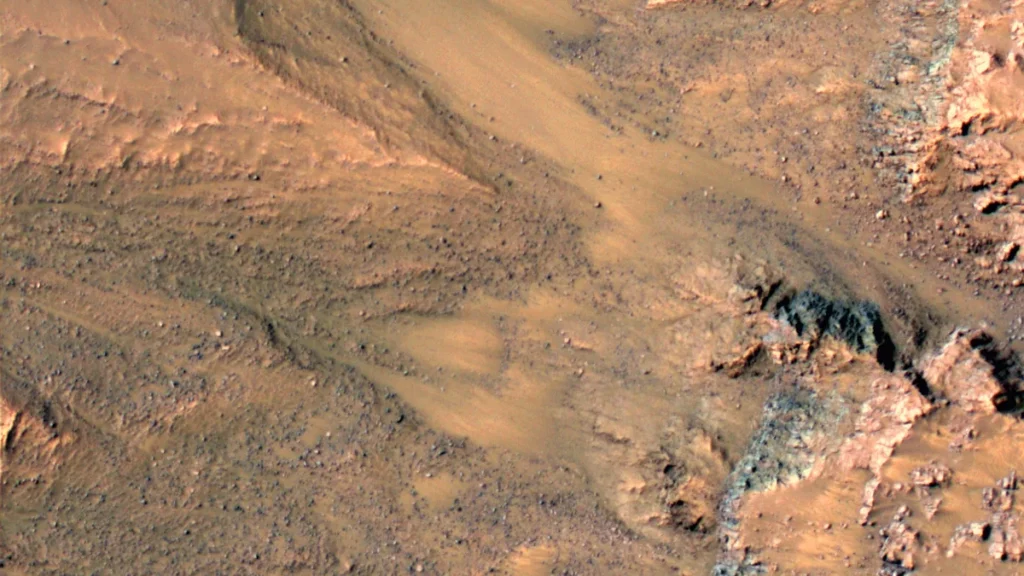
The team, co-led by Scott Perl of the Los Angeles Natural History Museum and the Blue Marble Space Institute of Science, maintained cultures at 24 millibars, about 2% of Earth’s sea-level pressure, in an oxygen-free carbon dioxide atmosphere at 21 degrees Celsius. The brine was seven times saltier than seawater and contained either nitrate or perchlorate, Martian chemicals the microbes could use instead of oxygen for respiration. The team chose these conditions to mimic pressure inside sealed fluid pockets in salt minerals roughly 20 centimeters below the Martian surface, a depth the authors say could theoretically support liquid brine. The paper appeared under DOI 10.1128/aem.01749-26.
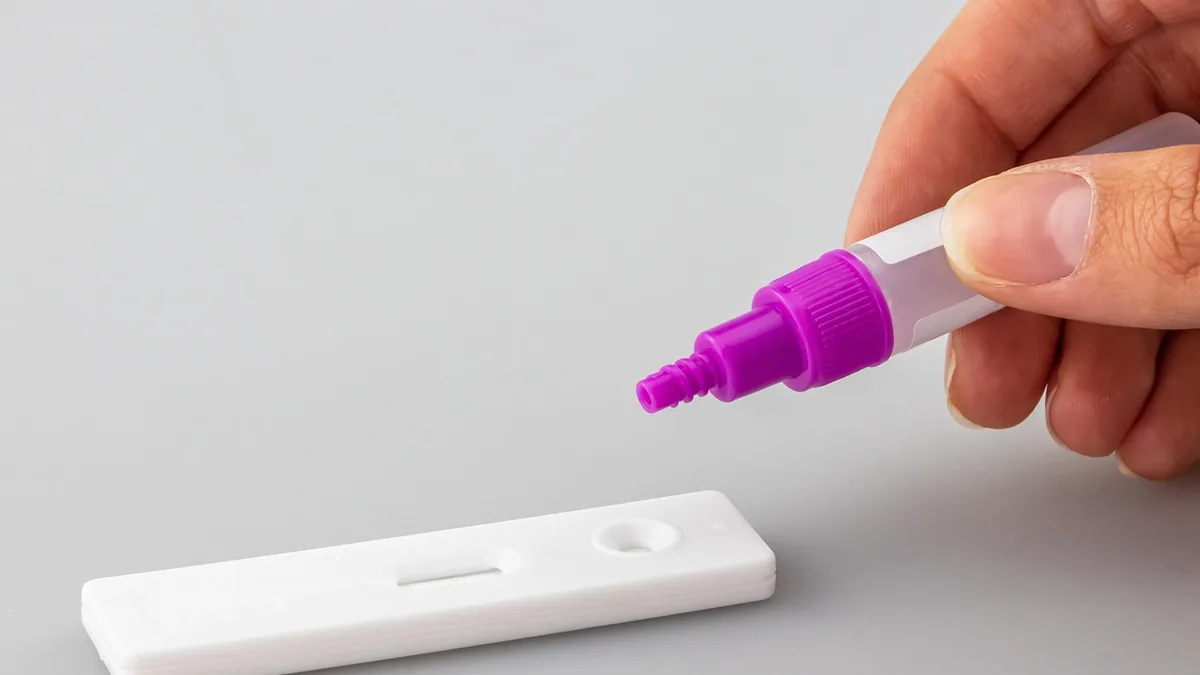
Growth appeared in every low-pressure culture supplied with nitrate or perchlorate, as shown by rising optical density (a measure of how dense the culture of cells has grown), while cell-free controls showed no chemical depletion. Nitrate concentrations dropped by about 15% to 29% and perchlorate by about 16% to 29% in the Mars-pressure cultures. The researchers interpreted the optical density increases and chemical declines as evidence of active metabolism rather than passive survival. When the researchers gave the cultures neither nitrate nor perchlorate, the microbes stayed alive without reproducing, letting the team separate mere survival from active growth.
Electron microscope images revealed dense biofilm-like structures in actively growing low-pressure cultures, but not in Earth-pressure controls or in non-growing low-pressure cultures. Liquid loss remained below 4% across all treatments during the full 160-day run, a noteworthy result because water normally evaporates rapidly at such low pressure. The dense biofilms may have helped hold water in the salty solution, according to the researchers’ interpretation.
The researchers held the cultures at 70 degrees Fahrenheit (21 degrees Celsius), while most of the Martian subsurface is far colder, and the microbes received nutrients supplied by the researchers. The simulation did not reproduce Martian freeze-thaw cycles, radiation, or full chemistry, and the nutrient-rich medium does not represent the organics believed available on Mars. The researchers measured the cultures only at the beginning and end of the run because opening the vacuum chamber would have admitted oxygen.
The authors stress that the environment they imitated has not been observed on Mars but is theorized to exist, and they say the result does not mean life exists on Mars. Liquid-water pockets the experiment was designed to resemble have not been confirmed on Mars. Dr. Robinson said “The environment that we’re mimicking in this experiment has not been observed on Mars, but is theorized to exist”
Earlier work cited by the authors tested microbes under individual Martian stresses or for only hours to days, whereas this study combined low pressure, high salt, oxygen-free gas, and alternative electron acceptors over five months. The research team tested whether the microbe could actively reproduce, not merely survive, under combined Martian stresses. Robinson said “Far fewer have been able to combine these conditions together and show that microorganisms can actively grow”
The microbe grew more slowly at 24 millibars than in identical cultures kept at Earth pressure, according to the research team. The finding shows the microbe can reproduce under Mars-like pressure but does so more slowly than under ordinary terrestrial conditions.
The authors say later missions below Mars’s surface should weigh whether certain spots might host organisms alive today, instead of only seeking proof of life from long ago. Researchers say the findings might guide the design of life-detection tests and cut the chance that spacecraft carry Earth organisms to Mars. Watching microbes work in these settings could let researchers tell chemical traces left by dead cells apart from signals made by organisms still alive.
Scott Perl said microbes that evolved on Mars would have had billions of years to adapt and that what is hostile to humans is not necessarily hostile to those microbes. Perl said “They’ve evolved within the Martian environment that we consider hostile”. Parts of the shallow Martian subsurface with evidence of past groundwater flow might hold salty pockets able to keep liquid water and support microbial metabolism.
Researchers describe the modern Martian surface as unwelcoming to life, citing thin air, strong radiation, worldwide dryness, and oxidizing chemistry that has grown since the Late Noachian. Chemical signatures of carotenoid pigments remained detectable in the cultures, though weaker than in oxygen-fed controls, and Raman spectroscopy can detect such pigments.



Join the discussion