Key facts
- The analysis placed the quake's source 20–40 kilometers beneath the canyon, indicating an active fault comparable to midcontinent rifts including the New Madrid Seismic Zone on Earth.
- Caroline Beghein, a University of California, Los Angeles planetary geologist who worked on InSight but not this study, said Mars has no current plate tectonics, though some may have existed in the past.
- Valles Marineris is named for NASA's Mariner 9 spacecraft, which provided the data that revealed its existence, and it ranks as the solar system's largest canyon system.
- Imperial College London seismologist Jung-Hun Song, the study's lead author, said the event is the farthest recorded by the InSight mission and that its quality is very high.
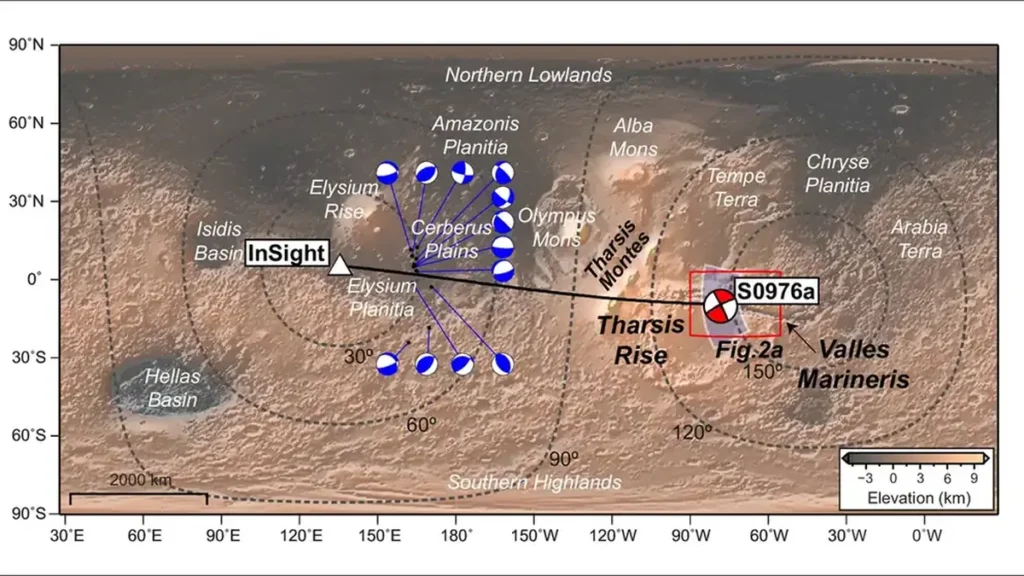
A Nature Communications study traced marsquake S0976a, detected by NASA’s InSight lander on the 976th Martian day, to Valles Marineris nearly on the opposite side of Mars, indicating an active fault beneath the canyon.
Jung-Hun Song, the Imperial College London seismologist who led the study, said the event is the farthest recorded by InSight and that its quality is very high. Song noted that most prior work on marsquake S0976a concerned the Martian interior rather than the nature of its source. He said identifying it as tectonic would show whether the canyon system is still active, rifting, or closing, and the team compared the quake to other possible sources and to various types of tectonic quakes using simulated synthetic waves.
“This is the farthest event recorded by InSight mission, but it’s very high quality,” Song said. The analysis placed the quake’s source 20–40 kilometers beneath the canyon, indicating an active fault comparable to midcontinent rifts on Earth including the New Madrid Seismic Zone. Song said the wave patterns include surface reflection and crustal-layer interactions that only events originating deep below the surface can create. Song said the quake differs from events occurring at the surface.
This pattern of surface reflection and crustal-layer interactions supports classifying the event as a deep subsurface occurrence rather than a surface event.
Caroline Beghein, a University of California, Los Angeles planetary geologist who worked on InSight but not this study, said Mars has no current plate tectonics, though some may have existed in the past. She described the fault beneath Valles Marineris as ancient and recently reactivated, with the quake serving as proof. Finding Martian faults matters for understanding how rocky planets form and why Earth differs from the other rocky planets in the solar system, she said.
“There is no current plate tectonics, but maybe there was some in the past. We don’t actually know for sure,” Beghein said. She said finding Martian faults matters for understanding how rocky planets form and why Earth differs from the other rocky planets in the solar system.
Valles Marineris takes its name from NASA‘s Mariner 9 spacecraft, which provided the data that revealed its existence, and it ranks as the solar system’s largest canyon system. The canyon extends beyond 4,000 kilometers end to end and reaches up to 200 kilometers wide, with its lowest point sitting no less than 7 kilometers under the surface. Like the Texas-sized volcano Olympus Mons, the canyon’s dimensions are described by the sources as staggering by Earth standards. Comparisons to Arizona’s Grand Canyon are common.
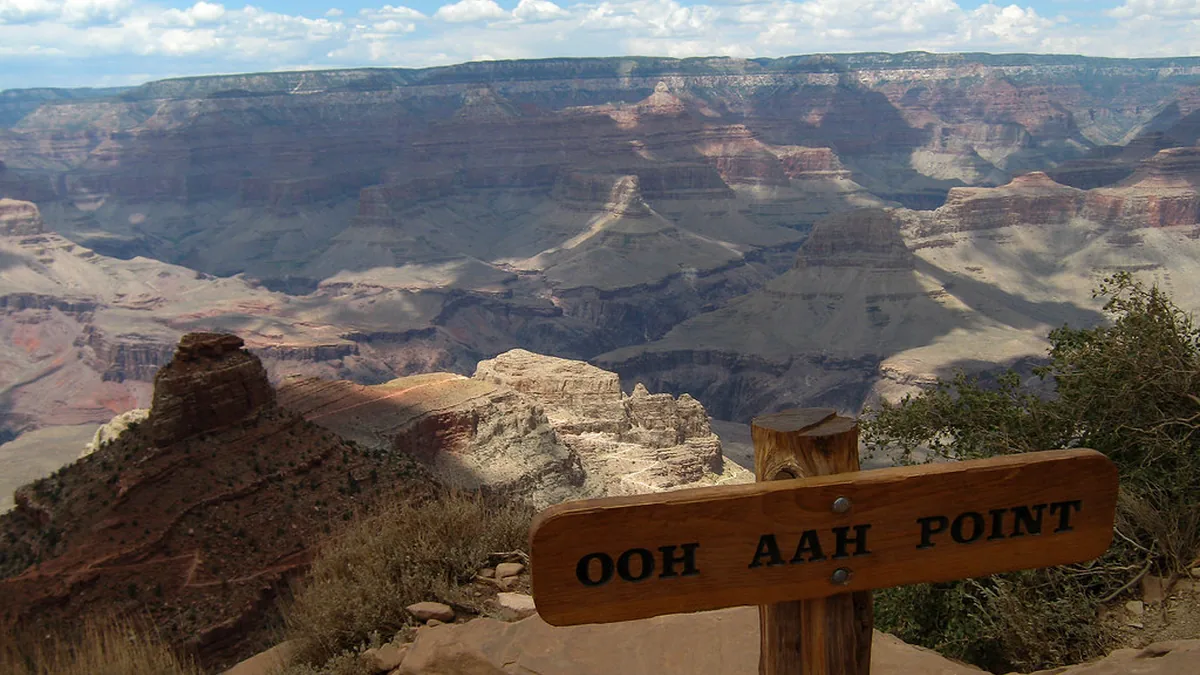
It runs nearly 10 times longer than Arizona’s Grand Canyon while reaching more than 4 times deeper. Geologically, the system compares more closely to the East African Rift system stretching from Mozambique into western Asia than to erosional features, because crust movement shaped both rather than erosion. Erosion later widened the canyons, so it stayed unclear whether the system was still seismically active.
Mars lacks tectonic plate boundaries, making it a single-lid planet, and Valles Marineris almost certainly formed as the cooling Martian crust cracked. Before the S0976a analysis, researchers had long wondered whether the canyon system was still seismically active after erosion had widened it over time. The question had remained open long after erosion widened the canyons following the crust cracking as the planet cooled.
Geologist An Yin suggested in 2012 that the canyon system’s structure resulted from a strike-slip fault below the surface, drawing on Mars Odyssey and Mars Reconnaissance Orbiter data rather than seismic measurements. The research team examined the quake’s characteristics, ruled out explanations including landslides or meteorite impacts, and classified the required source type.
Both Song and Beghein said marsquakes like this are likely relatively common, and both urged future missions to place multiple seismometers across broader regions of Mars. InSight’s single instrument let researchers study many events, yet adding even a second probe working alongside it would improve triangulation, reduce noise, and better characterize the source.
Relative to Earth, Mars is geologically quiet, with old dormant volcanoes, no apparent tectonic plates, and most seismic activity stemming from meteorite impacts. Researchers point to a growing set of results showing that Mars still undergoes intrinsic shaking, though not at Earth’s constant scale, and that this activity can shape the planet. The finding of intrinsic shaking fits a growing set of results showing Mars is not seismically dead despite being geologically quiet compared with Earth.
The discovery of faults on Mars matters because it helps explain rocky planet formation and why Earth is unlike the other rocky planets in the solar system, Beghein said. Beghein asked why all rocky planets started from the same mix, yet Earth is the only one known with active tectonics, and whether Mars had tectonics before and it stopped, and if so why.
Join the discussion