Key facts
- The four candidate tunnels are located near Vallis Schröteri, Rima Mairan, and two sites close to the Wollaston crater.
- Each candidate's gravity signature matches a tunnel under 2 kilometers wide, fitting within known structural limits for lunar lava tube roofs.
- All four remain unconfirmed candidates because gravity data cannot directly measure cavity dimensions and other lunar rock density variations could produce similar signals.
- Radar observations and better geological mapping could help confirm whether the subsurface tunnels are actually present.
Four candidate lunar lava tunnels beneath the Moon’s surface were identified by Juan Losarcos and Andrew Dombard, geoscientists at the University of Illinois Chicago, using a gravity map NASA released in May 2025, ScienceAlert reported.
The researchers found that the candidates each potentially span more than 1 kilometer and lie beneath roughly 100 meters of lunar rock. They are located near Vallis Schröteri, Rima Mairan and two sites close to the Wollaston crater. Vallis Schröteri, described as the Moon’s largest sinuous rille, sits near one of the four candidates. Rima Mairan and the Wollaston crater area likewise appeared in the gravitational anomaly data.
The gravity signature of each candidate matches a tunnel spanning less than 2 kilometers and falls within accepted structural limits for lunar lava tube roofs. Earlier estimates reached up to 9 kilometers across, but those structures were considered too wide to support their own roofs. Losarcos and Dombard mapped small gravity dips once surface topography had been accounted for, then compared the results with simulations of hollow tunnel signatures. Because a hollow tunnel holds less mass than the same volume of solid rock, the Moon’s gravitational pull is slightly weaker nearby, a difference orbiting spacecraft can detect.
From 2011 to 2012, NASA’s twin GRAIL spacecraft charted the Moon’s gravity field by tracking minute shifts in their separation over areas of different gravity. Research published in 2017 and 2024 drew on GRAIL data to identify possible lava tube locations up to 9 kilometers across. Follow-up work suggested many of those wider tunnels could not support their own roofs, narrowing the search to smaller candidates once the new gravity model was available. In May 2025, NASA published a more detailed gravity model of the Moon, letting researchers revisit possible tunnel locations after the earlier wider candidates were ruled out.
The researchers say none of the four has been confirmed, since gravity data cannot directly measure cavity dimensions and other lunar rock density variations can produce similar signals. Gravity by itself is not enough to confirm the cavities. Intact tubes that have not suffered roof collapses are especially hard to locate because the method relies on surface geological clues. The team checked the gravity results against surface features associated with an underground cavity.
The authors say radar data and improved geological mapping might confirm whether the subsurface tunnels exist. They propose these steps to verify the subsurface cavities indicated by the gravity anomalies.
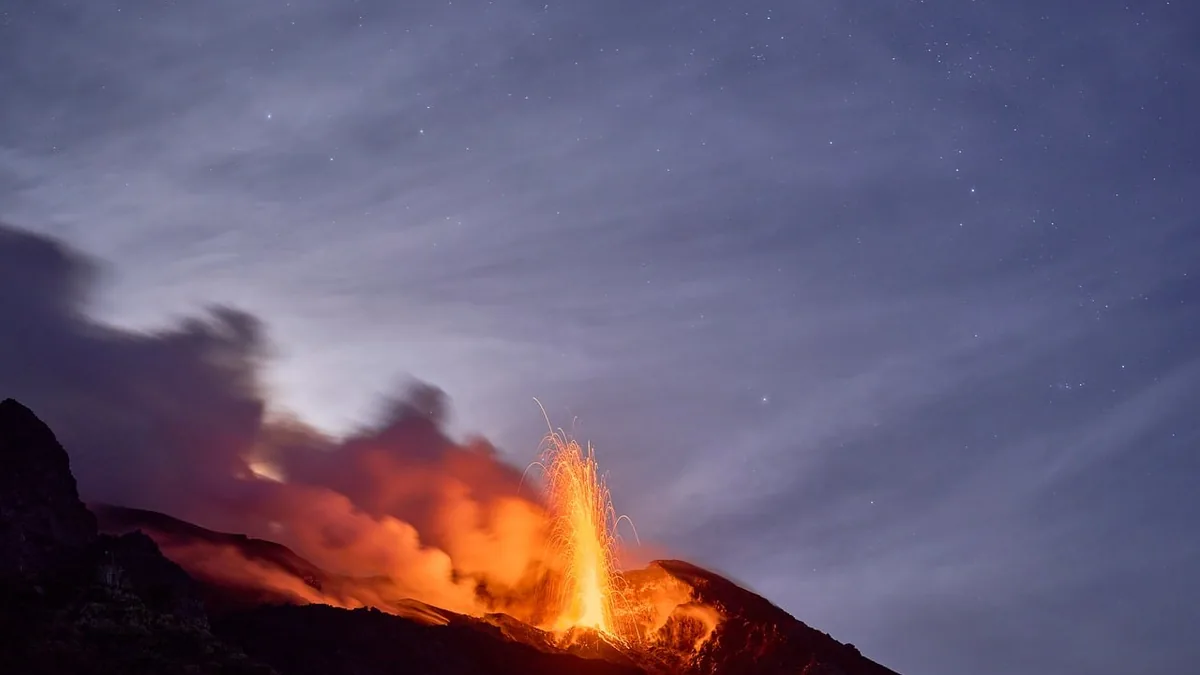
Scientists have long suspected that ancient lunar volcanism carved a network of tunnels beneath the Moon’s surface as molten rock flowed. Terrestrial lava tubes start when the top of a cooling lava flow hardens into a roof that insulates the molten rock still moving beneath it. After an eruption ends and remaining lava drains away, an extended empty tunnel can survive beneath a seal of solidified volcanic rock, forming a hollow stone-capped passage. The researchers say the Moon’s weaker gravity, higher eruption rates, and easier lava flow may have permitted the formation of subterranean lava tubes far larger than those on Earth.
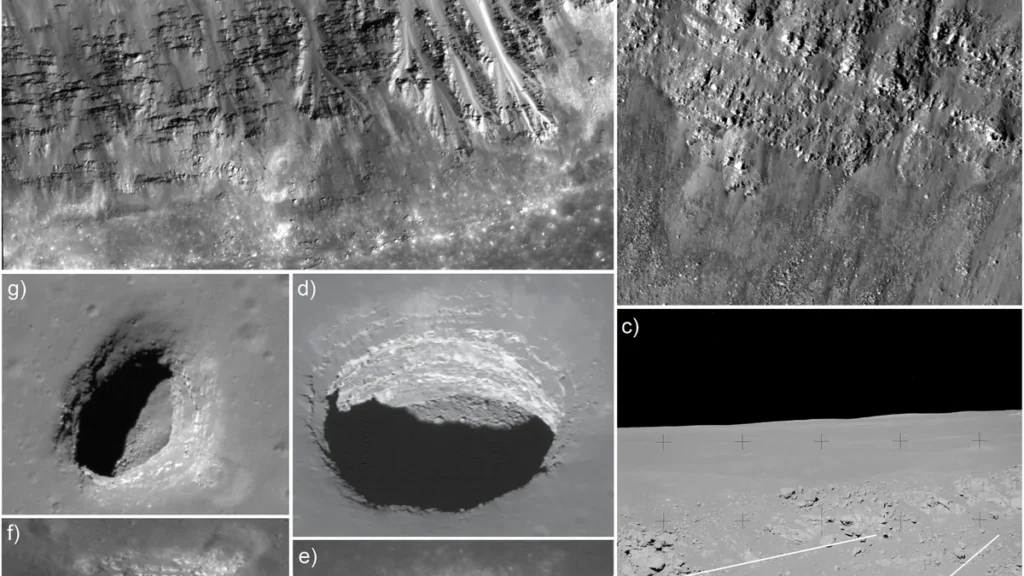
The researchers say these candidates might have started as small underground channels enlarged by molten rock melting and eroding surrounding material, instead of forming as roofs over enormous open lava rivers. They link the associated geological features to a formation process unlike the standard lava tube model. Long, winding sinuous rilles may trace collapsed lava tubes, while deep pits could serve as skylights formed when part of a tube roof caved in. Researchers use these surface features as geological clues to locate potential underground cavities.
Lunar lava tubes might protect explorers from harsh radiation and temperature extremes while revealing clues about the Moon’s volcanic and thermal history. The study authors wrote that pristine tubes could preserve key evidence of lunar volcanic and thermal evolution even though they are harder to reach for exploration. The study’s results suggest the Moon may conceal far more hidden passages beneath its surface than its visible features show, and the authors conclude that the Moon may hide its crannies and hollows better than previously thought.
The Moon sits an average of 384,400 kilometers (238,855 miles) from Earth, making small surface details hard to spot by eye and subsurface detection even more difficult. The separation helps explain why remote sensing struggles to resolve fine lunar surface features or reveal buried structures.
The journal Icarus published the study. ScienceAlert presents this as a long-standing hypothesis rooted in lunar volcanism before introducing the new gravity-based evidence. The source describes these tubes as both a window into lunar geological history and potential shelters for explorers, though intact examples are harder to reach for exploration.

Join the discussion