Key facts
- Earth temporarily captured asteroid 2026 QQ8 as a mini-moon in April 2026; it should remain bound to Earth through December 2026 and depart in 2027, according to the Minor Planet Center.
- Astronomers debated whether 2026 QQ8 was natural or junk from a rocket or old satellite before its identity was settled.
- At closest approach, 2026 QQ8 will pass 0.0038 astronomical units from Earth, about one and a half times the Earth-Moon distance, and poses no collision risk because it would burn up in the atmosphere.
- Because 2026 QQ8 crossed Earth's Hill sphere in April 2026, the region where Earth's gravity can bind an object despite the Sun's influence, it became temporarily gravitationally bound to the planet.
According to the Minor Planet Center, Earth temporarily captured asteroid 2026 QQ8 as a mini-moon in April 2026, and it should remain bound through December 2026 before departing in 2027. The object measures about three feet (1 meter) across and will pass no closer than 0.0038 astronomical units from Earth, about one and a half times the Earth-Moon distance, posing no collision risk because it would burn up in the atmosphere. An atmospheric impact by an object of this size would produce little more than a fiery show.
The object was initially known under the observational designation Sar2901, and as of September 2026 it was unclear whether it was a natural asteroid or artificial hardware. Astronomers debated whether 2026 QQ8 was natural or junk from a rocket or old satellite before its identity was settled.
Tony Dunn noted on social media, ‘Is Sar2901 a mini-moon or space junk? Even the Minor Planet Center isn’t sure.’ An object moving around Earth is not automatically an Earth satellite; scientists must compare positions over time to calculate its orbit.
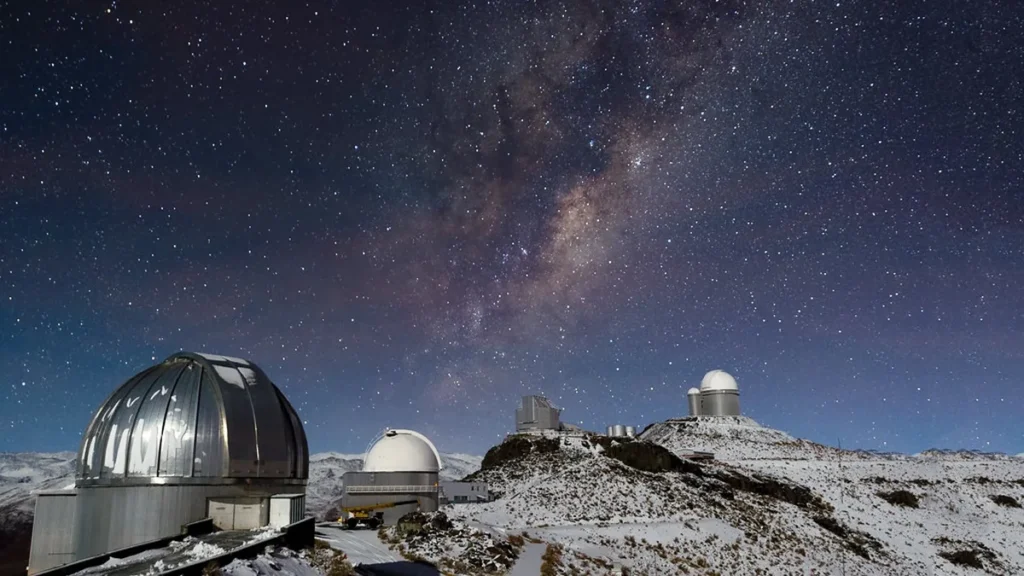
The Minor Planet Center asked other observatories to conduct observations because small artificial objects and small natural objects can be difficult to tell apart from a distance. Follow-up observations with the University of Hawaii 2.2-meter telescope and the Lowell Discovery Telescope led the Minor Planet Center to confirm 2026 QQ8 is a natural small asteroid, not space junk. Data from observatory codes G37 and T12 were especially important for studying the object’s orbit over a longer period.
Astronomers used solar radiation pressure, the slight push of sunlight on small objects, as a clue to judge whether 2026 QQ8 was natural or artificial. Sunlight carries momentum and can slightly alter the orbit of small objects, so estimating this effect from observational data provided clues about the object’s nature. On October 29, 2026, the Minor Planet Center published the observational and orbital information for the object as MPEC 2026-U95.
Because 2026 QQ8 crossed Earth’s Hill sphere in April 2026, the region where Earth’s gravity can bind an object despite the Sun’s influence, it became temporarily gravitationally bound to the planet. Outside Earth’s Hill sphere, the Sun dominates the motions of objects rather than Earth’s gravity. During earlier close approaches in 1965 and the expected 2058 approach, the rock did not cross into the Hill sphere, so capture never happened in those cases.
By analyzing orbital data, astronomers reconstructed 2026 QQ8’s trajectory around the Sun and its previous encounters with Earth.
Past mini-moons include 2006 RH120, a few meters across, which Earth captured in 2006 and remained bound for about a year, completing orbits before escaping. SpaceEyeNews presents 2006 RH120 as one of a few confirmed mini-moons verified through telescope observations and orbital analysis, showing these captures are real objects rather than theoretical predictions. Another example is 2020 CD3, discovered by the Catalina Sky Survey and likened in size to a small car, which stayed near Earth for at least two and a half years.
In late 2024, 2024 PT5 lingered near Earth for weeks without circling the planet, so researchers classed it as a temporary flyby rather than a fully captured orbiter. Researchers sort mini-moons into temporarily captured orbiters that finish at least one full circuit around Earth and temporarily captured flybys that stay nearby without completing any full circuit. Both categories belong to the wider population of Earth mini-moons, whose existence shows Earth’s gravitational setting is more dynamic than it appears.
The Minor Planet Center lists 2026 QQ8’s absolute magnitude at approximately 31.3, making it too dim to see with the naked eye. Its exact size and shape cannot be determined from brightness alone. Earth mini-moons move quickly relative to the stars, which makes them harder to track with automated surveys.
Many mini-moon captures last only weeks or months, and by the time astronomers identify an object it may already be leaving Earth’s vicinity. Past missions left discarded rocket stages behind, and some were initially suspected of being Earth mini-moons. Confirmed Earth mini-moons likely number far fewer than the true total present at any given time.
Modeling studies suggest Earth mini-moons may appear and disappear almost continuously, and Robert Jedicke, an astronomer, has estimated that about one dishwasher-sized minimoon may exist somewhere in the Earth-Moon system at any given time. The Vera C. Rubin Observatory, designed to repeatedly scan large areas of sky for faint, fast-moving objects, is expected to uncover many more mini-moons of Earth than earlier surveys. A larger catalog from Rubin could let researchers answer how often Earth captures mini-moons, how long captures last, what sizes dominate, and how many originate from the Moon. If future surveys confirm the prediction, Earth may almost always have at least one temporary companion.
A quasi-moon does not truly orbit Earth; it shares Earth’s orbit around the Sun and can appear in front of or behind the planet at different times. Objects such as 469219 Kamoʻoalewa are sometimes called Earth’s second moon but are not true mini-moons because they orbit the Sun rather than Earth. Researchers have suggested that 2024 PT5 and quasi-satellite 469219 Kamoʻoalewa could be lunar material blasted into space by old impacts.


Join the discussion