Key facts
- NASA scientists have used sounding rockets for the first time to study a solar flare while it was underway, relying on a new flare alert system to tell the team when to launch.
- In May 2026, the team launched another sounding rocket using an enhanced version of the alert system, and the rocket observed three solar flares.
- Sounding rockets provide a fast, inexpensive method for studying solar flare light that Earth's atmosphere absorbs, yet they get only about five minutes of observation time before returning to Earth.
- Solar flares speed up particles and release energy across the solar system, with effects that can reach Earth and its technologies.
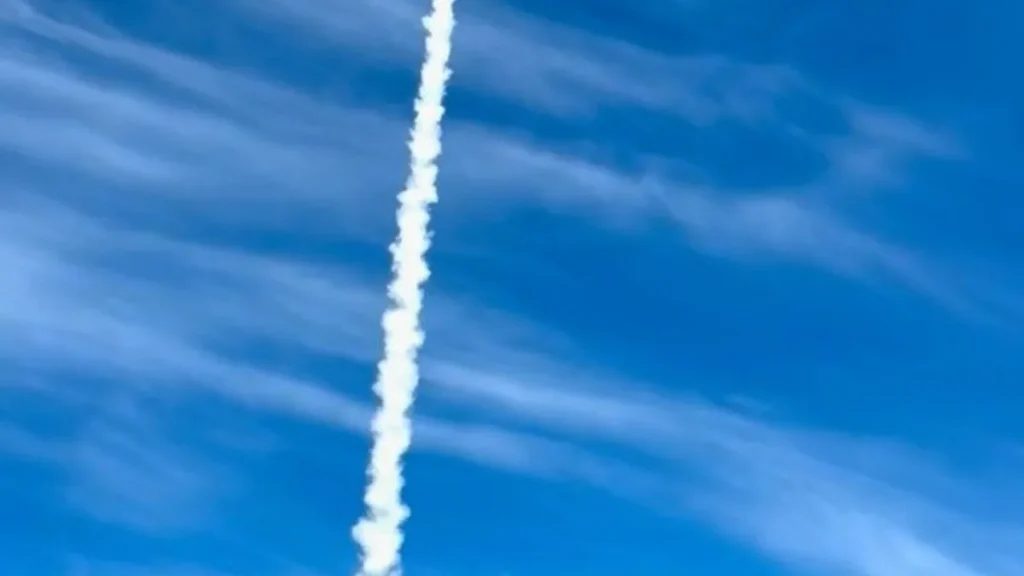
NASA scientists have used sounding rockets — suborbital research rockets — for the first time to study a solar flare as it happens, relying on a new flare alert system to tell the team when to launch, according to NASA Science reporting from Goddard Space Flight Center on Nov. 4, 2026.
NASA Science said the alert system locates a solar flare and forecasts how long it will last within minutes after spacecraft detect it. The Astrophysical Journal published a paper Nov. 4, 2026, describing the system, which studies X-ray and ultraviolet emissions from active regions on the Sun with data from NASA’s Solar Dynamics Observatory, the National Oceanic and Atmospheric Administration’s Geostationary Operational Environmental Satellites (GOES), and ground-based observatories. Active regions are magnetically complex zones on the Sun that generate solar flares.
NASA Science said the system was built because ordinary flare alerts cannot say whether a flare will still be present when a sounding rocket reaches space, which makes launching to study a flare a gamble. The new tool predicts how long a flare will continue within minutes of detection, giving the team a basis for deciding to fly. A flare can fade nearly as quickly as a rocket’s brief window in space, so catching one while it is active requires exact timing.
NASA Science said sounding rockets give researchers a fast, inexpensive way to study the solar flare light that Earth’s atmosphere absorbs, but the flights provide only about five minutes of observation before the rockets return to Earth. Because a flare can disappear almost as fast as that brief window, a rocket sent to study one may reach space after the flare is already gone.
NASA Science said the alert system was used in April 2024, when two teams coordinated the launch of two Alaska rockets to study a solar flare before it disappeared. The agency described that April 2024 flight as an early successful use of the system.
NASA Science said that in May 2026, the team launched another sounding rocket using an enhanced version of the alert system, and that the rocket observed three solar flares. The agency noted that the May 2026 flight followed the April 2024 Alaska campaign and served as a more recent demonstration of the improved system.
NASA Science said solar flares speed up particles and release energy across the solar system, with effects that can reach Earth and its technologies. The agency described that potential effect on Earth and technology as part of why studying flares while they are underway matters.
NASA Science said the team continues to improve the alert system with a NASA Early Career Investigator Program grant. The same early warning may help future rocket flights, solar telescopes, and space weather prediction, and the agency described this continuing work as the next step for the technology beyond the demonstrated flights.

Join the discussion