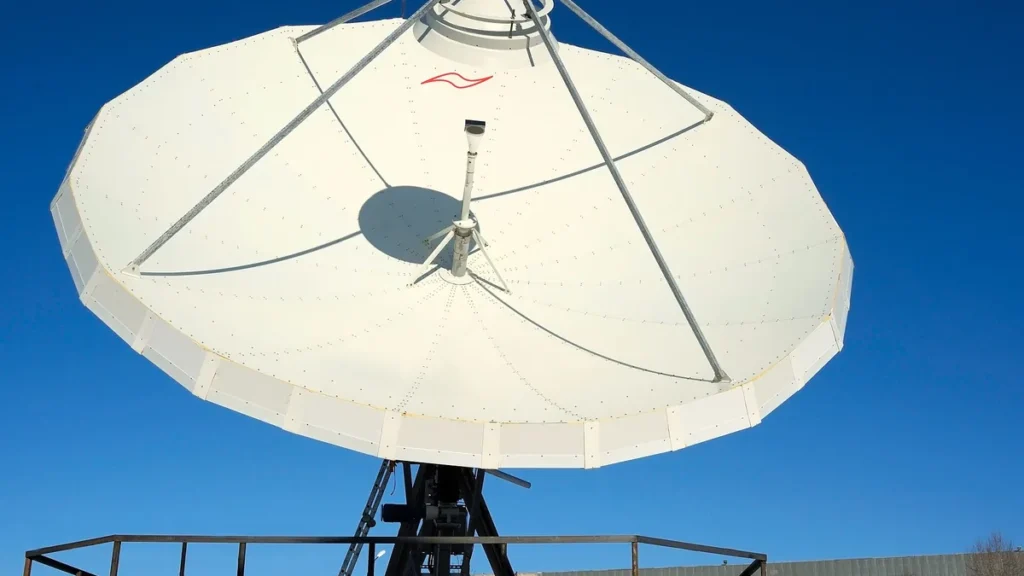
Key facts
- SpaceX imposed speed limits on its military Starshield satellite terminals in Ukraine on October 14, 2026, causing sudden communication losses during active combat missions.
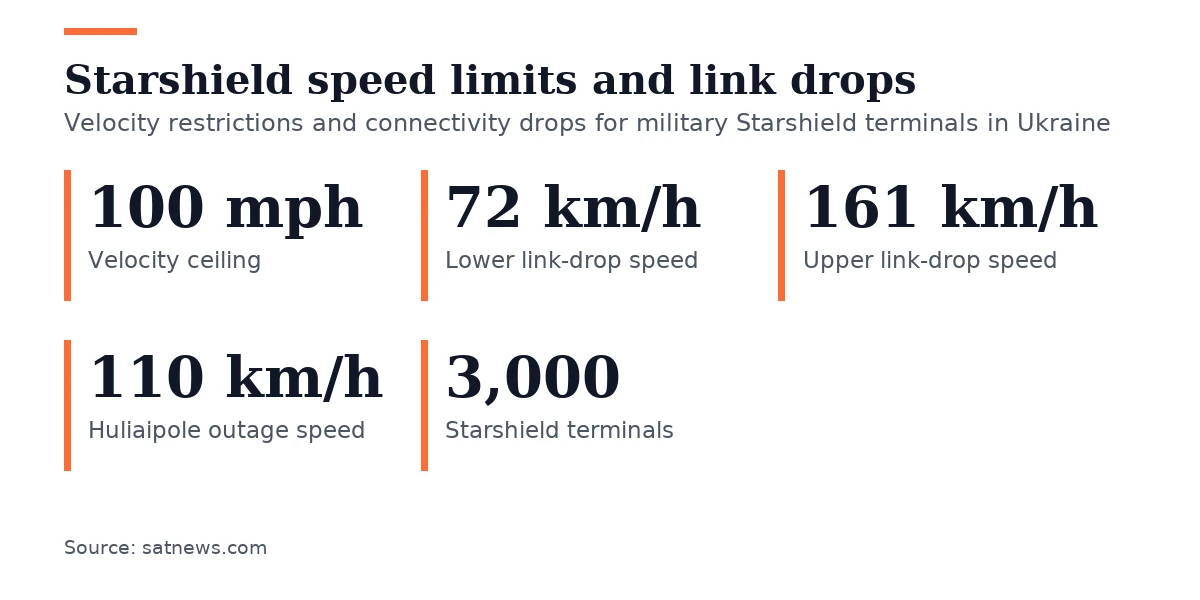
- The imposed velocity ceiling is 100 miles per hour, equivalent to 160 kilometres per hour.
- When a terminal’s onboard sensors detect motion faster than the ceiling, the transceiver automatically disconnects from the Starlink low‑Earth‑orbit constellation.
- Field units reported data link drops at speeds ranging from 72 kilometres per hour to 161 kilometres per hour.
SpaceX imposed speed limits on its military Starshield satellite terminals in Ukraine on Oct. 14, 2026, causing sudden communication losses during active combat missions, according to a report by satnews.com. The restriction took effect overnight between Oct. 13 and Oct.
14, setting a velocity ceiling of 100 miles per hour (160 kilometers per hour). When a terminal’s onboard sensors detect motion faster than that ceiling, the transceiver automatically disconnects from the Starlink low-Earth-orbit constellation, a network of satellites providing broadband internet.
Field units reported data link drops at speeds ranging from 72 kilometres per hour to 161 kilometres per hour. In the Huliaipole sector, the 7th Air Assault Corps observed outages lasting 10 to 20 seconds when ground speed reached as low as 110 kilometres per hour. Consumer Starlink dishes have previously used speed caps to block high-speed munitions, but this marks the first time such throttling was applied to the encrypted, government-grade Starshield tier without prior technical coordination.
The Starshield service in Ukraine operates under a formal defense contract managed and funded by the United States Department of Defense. The Pentagon-backed agreement supplies roughly 3,000 hardened military Starshield terminals to guarantee bandwidth for Ukrainian frontline communications. Ukrainian forces embed compact satellite antennas on mobile platforms to guide mid-range strike drones and maintain video downlinks, because electronic warfare blocks traditional line-of-sight radios.
The velocity limit disrupts Ukraine’s recently fielded drone interceptor, which needs high sprint speeds to intercept Russian jet-powered Shahed strike drones. The restriction removes a low-cost airborne defense layer for cities and energy sites.
Serhii Beskrestnov, technology adviser to the President of Ukraine, said on Oct. 14, 2026 that SpaceX introduced the speed limit on moving Starlink terminals without prior notice, disrupting missions and linking the move to the current political situation. A spokesperson for Ukraine’s Ministry of Defence said the military had begun emergency outreach to the United States, SpaceX and NATO partners, gathering unit data and setting up backup communication channels.
Polish Foreign Minister Radosław Sikorski publicly questioned on social media whether commercial satellite services were used for arbitrary geopolitical leverage and said European allies are monitoring contractor reliability. Pentagon spokespeople declined to detail discussions about the speed cap, directing questions to broader administration statements on defense technical support.
The incident has renewed European debate about dependence on a single U.S. commercial satellite vendor for national security communications. Discussions at SmallSat Europe concluded that technological sovereignty should replace dual-use reliance on commercial systems. Ukrainian technicians are working to create secondary communications links while the event speeds up European efforts such as the EU’s IRIS2 constellation and national military satellite programs aiming for sovereign, resilient non-terrestrial networks free from unilateral commercial limits.



Join the discussion