Key facts
- NASA tapped Redwire, Honeybee Robotics (a Blue Origin subsidiary), and Yank Technologies on Nov. 7, 2026 to build components of the Mini-Communications and Solar Tower (miniCAST) during a Moon Base update at MAX POWER.
- Honeybee Robotics will store the power generated by miniCAST.
- Under the miniCAST project, Yank Technologies will supply flight hardware to power payloads including rovers.
- Yank Technologies' dust-tolerant connectors transport as much as 6 kW through cables that have insulated ends.
NASA tapped Redwire, Honeybee Robotics (a Blue Origin subsidiary), and Yank Technologies on Nov. 7, 2026 to build components of the Mini-Communications and Solar Tower (miniCAST) during a Moon Base update at the MAX POWER expo and air show at Kennedy Space Center in Florida. The agency framed the tower as part of building a sustained presence at the lunar South Pole before astronauts arrive.
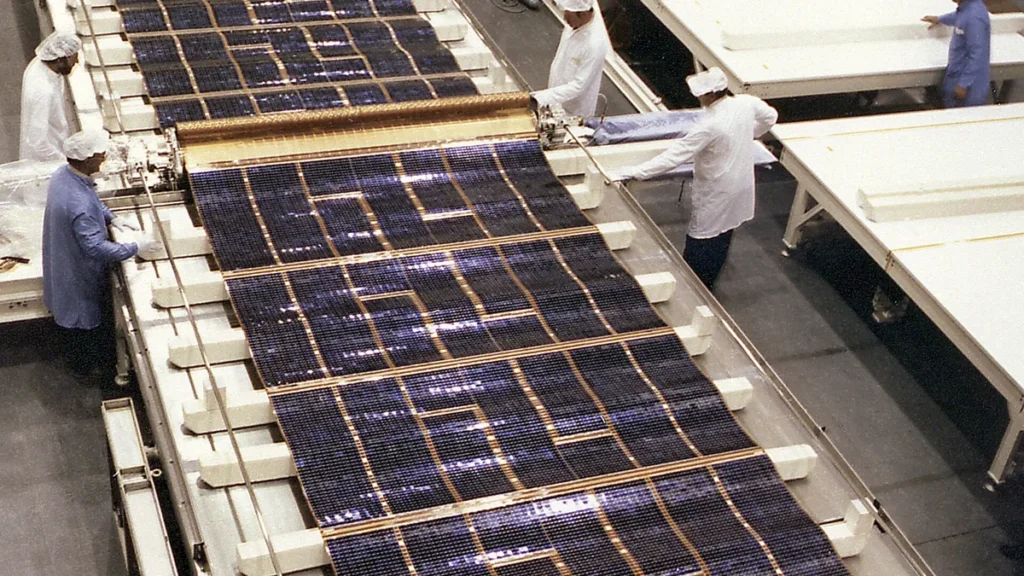
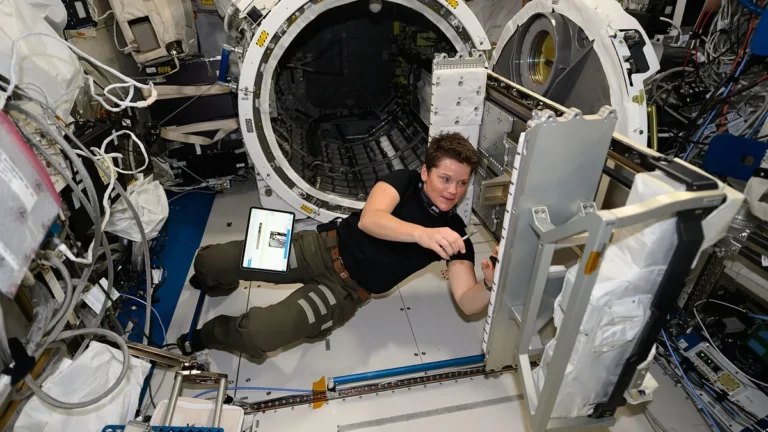
Redwire will generate power for miniCAST using its roll-out solar arrays (ROSA), technology flown previously in Earth orbit and already powering the International Space Station. Honeybee Robotics will store the power generated by the tower. Yank Technologies will supply wireless power transfer hardware for miniCAST and flight hardware to power payloads including rovers. Marshall Space Flight Center will assemble and test the miniCAST pieces before they head to the lunar surface, integrating the separate vendor contributions into a single tower system.
Under the $40 million award, Redwire’s ROSA arrays on the Moon will pull back during launches and landings to steer clear of regolith raised by engine plumes, then extend again. The company plans to add panel-cleaning scrubbers and manage power delivery to future rovers and habitats. Mike Gold, Redwire President of Space, called regolith the number one enemy on the Moon and said it will attack people and machines.
[The] number one enemy on the Moon…is not China, it's regolith
Mike Gold, Redwire President of Space, Payload
Yank Technologies, based in Brooklyn, builds wireless chargers mainly for automakers whose factories battle dirt on charging pads. The company says its first wireless plates delivered up to one kilowatt at better than 80% efficiency in terrestrial testing. For miniCAST, Yank is adapting contactless plates that have so far only been used terrestrially, marking the company’s first adaptation of the technology for space. Yank Technologies’ dust-tolerant connectors transport as much as 6 kW through cables that have insulated ends.
Josh Yank, Yank Technologies CEO, said regolith accumulation means a connector could only be plugged back in several times before becoming unusable, because electrostatic dust sticks to metal terminals on power connectors. Yank said his company could be a core piece not just for one mission but arguably for every mission. The company is discussing its hardware with other prime contractors for use on their lunar missions and plans to raise additional funds and grow manufacturing to support its new space objectives.
NASA awarded contracts covering components to Honeybee Robotics, Redwire and Yank Technologies for the planned lunar power and communications tower on Nov. 7, 2026. The $10 billion combined maximum of the Commercial Lunar Payload Services framework spans 10 years and is a ceiling for future task orders rather than money already awarded. NASA raised its current CLPS contract ceiling from $2.6 billion to $4.2 billion to support the first phase of its Moon base plans.
Through 2029, the Moon Base project is in its first phase, with the current timeline targeting an operational base around 2032. NASA anticipates a separate request for proposals covering fully integrated power systems in early 2027.
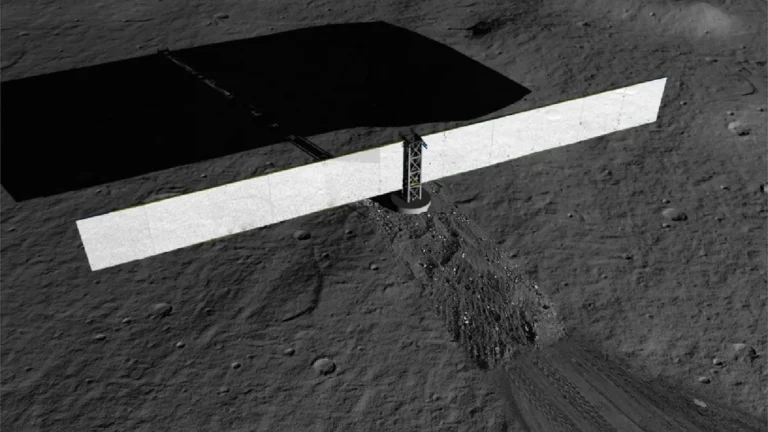
Blue Origin’s Power Tower stands 20 meters tall, deploys vertically, and uses solar arrays to put more than 10 kilowatts into lunar surface operations at the Moon’s South Pole. The company first showed its Power Tower animation in September 2026, and a real deployment test of the concept was conducted on Earth on July 22, 2026. The Power Tower’s modular architecture could eventually become part of a larger network distributing electricity to lunar equipment and assets rather than serving a single spacecraft.
Honeybee Robotics developed LAMPS (Lunar Array Mast and Power System) and tested it at NASA’s Johnson Space Center in Houston in 2024. The company has also been involved in NASA’s Vertical Solar Array Technology (VSAT) project, which focuses on developing solar arrays to help generate power for a sustained lunar presence.
NASA gave six transportation task orders totaling about $1.3 billion to Arrow Science and Technology, Blue Origin and Impulse Space on Nov. 7, 2026. Blue Origin won a separate $94 million base contract from NASA to deliver the nuclear-powered PROMISE rover to the lunar South Pole, with $140 million more available through a performance-based option. Under an existing lunar logistics contract, NASA chose SpaceX for a separate 2028 demonstration that will use its Starship rocket to deploy communications satellites between Earth and the Moon.
The agency says miniCAST will support a lasting U.S. presence at the Moon’s South Pole, where commercial partners will deliver equipment and infrastructure before astronauts arrive. NASA hopes its lunar operations will someday serve as the basis for crewed missions to Mars.



Join the discussion