Key facts
- Quan said neutrinos resist direct detection, yet their total mass shapes how cosmic structure grows, offering an indirect probe of that imprint over the universe's history.
- The collaboration plans to use South Pole Telescope observations to clean BICEP experiment data from the South Pole and is analyzing six years of SPT-3G data to advance both the neutrino and gravitational-wave searches.
- Bender said the laboratory's involvement shows its long history of work in precision cosmology.
- Yuuki Omori said the map can lower the noise seen by the BICEP experiment and reveal the true signal.
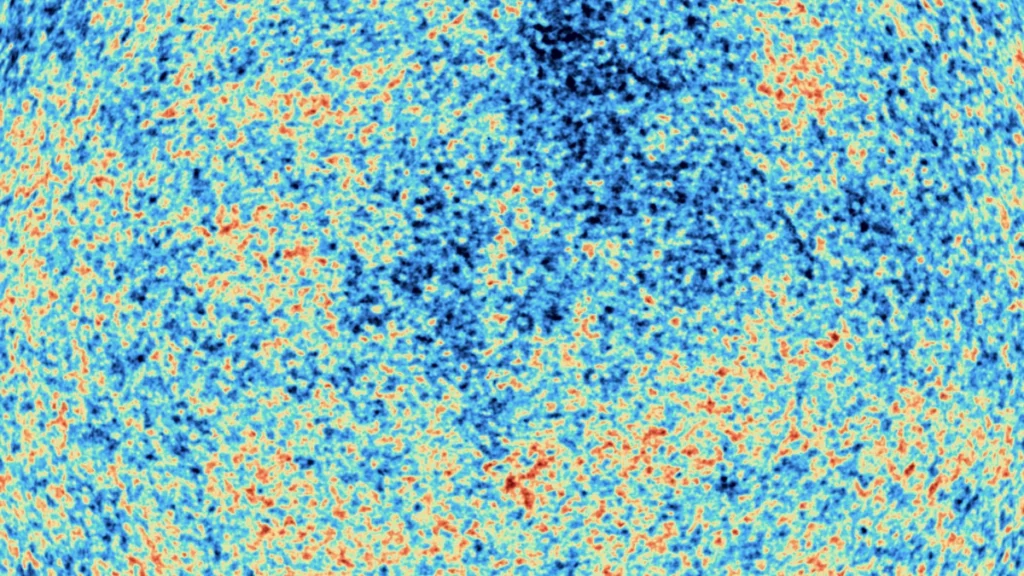
A group of scientists from 30 institutions published the sharpest map ever produced of mass across the distant universe on Nov. 25, 2026, using South Pole Telescope data gathered at the NSF Amundsen-Scott South Pole Station in Antarctica.
The group constructed the chart by gauging how the cosmic microwave background, ancient light journeying for more than 14 billion years, was bent by the gravity of galaxies and galaxy clusters as it moved through space. That bending, called gravitational lensing, lets researchers reconstruct all matter between Earth and where the CMB light originated.
The collaboration described the new mass map as the most sensitive measurement of this lensing effect so far. Yuuki Omori, a University of Chicago research scientist and lead author, described it as the deepest chart of the cosmos to date, comparable to a long-exposure photograph with minimal background noise. The team posted the paper, SPT-3G D1: Quadratic-Estimator CMB Lensing Reconstruction and Cosmology, to arXiv on Sept. 1, 2026.
University of Chicago leads the collaboration running the telescope at the Amundsen-Scott station, where clear Antarctic skies help researchers study the cosmic microwave background. John Carlstrom, an Argonne physicist and University of Chicago professor who directs the South Pole Telescope project, said the results show “We are entering the new era of cosmology promised by these instruments.”
Argonne National Laboratory leads Department of Energy work on South Pole Telescope operations. Laboratory scientists examined observations from 2019 and 2020 that covered roughly 1,500 square degrees of sky. Processing ran on Argonne’s Leadership Computing Facility and the Crossover cluster.
Amy Bender, an Argonne physicist and co-author, serves as the laboratory’s Department of Energy liaison for SPT-3G operations. SPT-3G is the third iteration of the South Pole Telescope project. Wei Quan, an Argonne postdoctoral appointee and co-author, led the team that converted raw microwave-sensor data into a sky image, measured lensing across sections of it, and rebuilt the mass map from those results.
Quan said the data quality allowed the team to reconstruct the lensing signal with remarkable precision, and the work depends on processing raw telescope data and comparing it with realistic simulations, so the map reflects real matter rather than instrument or foreground artifacts. For validation, the team ran simulated microwave sky images with cosmic microwave background signals and realistic noise, described as random detector and observing-condition shifts that can obscure faint signals; Quan prepared those noise simulations.
The new measurements agree closely with Planck satellite results and ground-based Atacama Cosmology Telescope findings in Chile, giving researchers a way to check whether an unidentified factor is causing an error in a single experiment. Researchers can also contrast the map with baryon acoustic oscillation measurements, which track the universe’s expansion through time, and that comparison may reveal flaws in today’s leading cosmological models.
Researchers can use the map to examine unresolved cosmological questions, including one key measurement of how matter groups together across space, revealing how cosmic growth happened and casting light on a poorly understood middle period of cosmic history. The collaboration said the middle years marked the start of serious star and galaxy formation, and researchers can trace much of today’s cosmic structure back to that period. Using the new South Pole Telescope findings together with Dark Energy Survey data yields the strongest current limits on how cosmic structure developed over time.
Quan said neutrinos resist direct detection, but their overall mass influences how cosmic structure grows, offering an indirect probe of that imprint across the universe’s history. They pass through the universe all the time without usually producing noticeable effects, and scientists long treated the mass as zero since it is so tiny.
The other major goal is detecting primordial gravitational waves, which are ripples in gravity from the opening nanoseconds of the universe and could provide the first concrete measurement of cosmic inflation or help reconcile gravity with quantum mechanics. Researchers plan to clean BICEP experiment data gathered at the South Pole using South Pole Telescope observations, and they are analyzing six years of SPT-3G data to move both the neutrino and gravitational-wave searches forward.
Yuuki Omori said the map can reduce the noise observed by the BICEP experiment and uncover the true signal. Tom Crawford, a University of Chicago research professor and deputy director of the South Pole Telescope, said a future upgrade will be stronger and boost the odds of detecting those waves, calling the period an exciting time. Bender said the laboratory’s involvement reflects its long record of work in precision cosmology.


Join the discussion