Key facts
- The researchers call the proposed process gravitational reconnection and published it in Physical Review D in 2026.
- The study was published in Physical Review D, a publication of the American Physical Society.
- The researchers describe the sheets as mathematical structures or representations used to visualize the gravitational field, not physical objects or fabric that literally tears apart.
- Gravitational reconnection remains a theoretical finding and has not been observed in nature, and scientists have not established how it operates in actual astrophysical environments.
Physicists Luca Comisso of Columbia University and Felipe A. Asenjo of Adolfo Ibáñez University in Chile propose that gravitational fields can break and reconnect in new arrangements. Their study appeared in Physical Review D on October 28, 2026. The work remains a theoretical proposal and has not been observed in nature. Scientists have not established how it operates in actual astrophysical environments.
The paper titled Reconnection of Gravitational Fields appeared in Physical Review D, volume 114, issue 8, in 2026, with DOI 10.1103/lmqy-pf9k. Physical Review D is a publication of the American Physical Society. On October 31, 2026, The Debrief reported that Einstein did not explicitly describe gravitational reconnection. The researchers identified previously unrecognized implications by examining the equations in a new way.
Comisso told ScienceAlert on November 10, 2026 that the team is not modifying general relativity or introducing new physics beyond it. The proposal operates inside Einstein’s existing theory rather than among approaches that alter its foundations. The physicists are identifying physical principles overlooked for more than a century. “We are not modifying general relativity or introducing new physics beyond it.”
Luca Comisso
The researchers describe the sheets involved as mathematical structures used to visualize the gravitational field, not physical objects or fabric that literally tears apart. Because spacetime has four dimensions rather than three, gravity involves field sheets rather than the field lines familiar from ordinary magnetic configurations, Comisso explained. He compared the idea to combining many lines into a single sheet. The distinction means the proposal does not describe physical fabric tearing apart.
When conditions preserving gravitational field connections break down, the sheets can reconnect, allowing energy to pass from the gravitational field into matter. The sources present energy transfer into matter as the physical consequence of the rearrangement. The transfer occurs when conditions preserving connections break down. This process is the proposed gravitational equivalent of magnetic energy release in plasma.
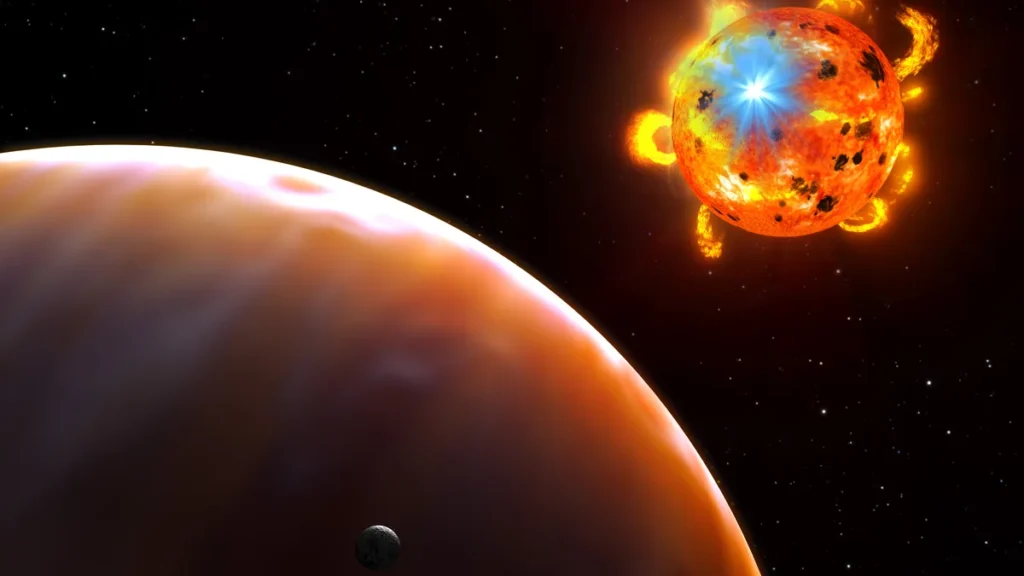
In plasma, magnetic field lines can break and reattach in a different configuration, releasing stored magnetic energy into particles and powering events such as solar flares. Magnetic reconnection ranks among the most important mechanisms for releasing energy throughout the universe. The researchers use this familiar plasma process as an analogy for the proposed gravitational phenomenon. Comisso defined magnetic reconnection as field lines breaking and reattaching to release energy.
“Magnetic reconnection is when these field lines, in some specific configuration, break and reattach in a different configuration,” Luca Comisso
These charged gases make up the Sun and fill much of the space between stars; fusion experiments use them. Comisso has devoted his career to understanding plasma behavior. His background in plasma physics helped him recognize similarities between magnetic and gravitational equations. ScienceDaily describes magnetic reconnection’s cosmic significance while introducing the gravitational analogy.
The researchers expressed Einstein’s equations using a mathematically equivalent formulation with different variables that resembles equations used to study plasmas. This alternative version reveals plasma-like relationships less obvious in the conventional form. Rewriting the equations without changing their content can reveal a different route to understanding how powerful events release energy. Knowridge emphasizes the value of re-expressing the old theory.
Those constraints let researchers infer how gravitational fields behave without tracing every detail of their evolution, according to SciTechDaily. Researchers can use underlying rules to determine which spacetime behaviors are physically possible instead of relying entirely on complex numerical calculations. The method reveals possible spacetime behaviors without full calculations. SciTechDaily says the constraints reduce the need for full calculations.
The new study extends a 2026 Physical Review Letters paper by Comisso, Asenjo, and Maricarmen A. Winkler titled Frozen-In Gravitational Fields. That earlier paper appeared in Physical Review Letters, volume 136, issue 16, in 2026, with DOI 10.1103/6c4q-kx6f. It found that gravitational field connections can remain frozen in place under certain conditions, preserving links between regions as spacetime evolves. ScienceDaily attributes the earlier finding to the pair alongside Winkler of Adolfo Ibáñez University.
Asenjo said Einstein’s equations contain constraints on how space-time can evolve that are not apparent. Comisso said the equations contain some implications that are not straightforward to capture just by looking at them. Researchers need to rewrite the equations differently to exploit that behavior. “Einstein’s equations contain constraints on how space-time can evolve that are not immediately apparent,” Felipe A. Asenjo “Some implications are hidden in the equations, and they are not straightforward to capture just by looking at them,” Luca Comisso
Gravitational waves are ripples in spacetime detected by instruments such as LIGO, which measures extraordinarily small distortions. Colliding black holes alter LIGO’s 4-kilometer arms by an amount smaller than a proton’s width. These faint signals illustrate why any new gravitational phenomenon would require sensitive detectors to confirm. The sources cite LIGO sensitivity to illustrate how weak gravitational signals are.
The researchers plan to investigate gravitational reconnection in specific situations, especially black hole mergers, to estimate energy release and determine whether the process produces recognizable gravitational wave signatures. One possibility is that gravitational reconnection might leave a distinctive signature in gravitational waves emitted by colliding black holes. ScienceAlert calls the signature possibility tantalizing but does not report a found signature. Comisso said numerical simulations could identify conditions for gravitational reconnection and show what signals to seek in LIGO-Virgo-KAGRA data.
According to the researchers, gravitational reconnection could happen in astrophysical settings including merging black holes or collapsing stars. Further research can explore where gravitational reconnection conditions might occur and how the process affects observable phenomena. The newly identified rules could complement supercomputer simulations by revealing hard-to-recognize patterns and helping explain energy transfer during extreme gravitational interactions. Knowridge says future work can connect the theory to observations and simulation predictions.
Physicists currently use supercomputers to simulate dramatic spacetime changes during massive events such as black hole collisions or core-collapse supernovae. Calculating how spacetime evolves does not necessarily reveal the underlying physical mechanisms responsible for energy transfer. The approach could help uncover fundamental rules governing gravitational fields, especially where gravity severely distorts spacetime. ScienceDaily says the work is especially valuable in extreme gravity regions because current simulations are hard to interpret there.
If developed and tested, the approach could offer a powerful new way to investigate gravity under extreme conditions and reveal more physics hidden in Einstein’s century-old equations. ScienceDaily concludes that testing the predictions could uncover concealed physics in Einstein’s equations. The approach lets physicists identify patterns and restrictions governing spacetime without necessarily solving every part of Einstein’s equations.
Luca Comisso is an associate research scientist in Columbia University’s Departments of Astronomy and Physics and the Columbia Astrophysics Laboratory. He has devoted his career to understanding plasma behavior. Funding for the research came from the National Science Foundation and NASA.
Solar flares can contribute to space weather disturbances affecting Earth, so improving flare prediction is essential for timely mitigation, according to The Debrief. NASA’s Parker Solar Probe allows researchers to study solar flare processes in greater detail. The Debrief links solar flare research to Earth-based space weather risks.
Join the discussion