Key facts
- NASA Science published an Astronomy Picture of the Day item titled Night on a Spooky Planet on October 31, 2026.
- Hverir, a geothermally active area in northeastern Iceland's volcanic landscape, is where the ghostly scene was photographed.
- Auroral activity on planet Earth stays in a high state while the Sun is in early phases of decline from its solar activity cycle peak.
- The text ends with a Halloween greeting and the note that other ghostly apparitions may soon dance in your neighborhood.
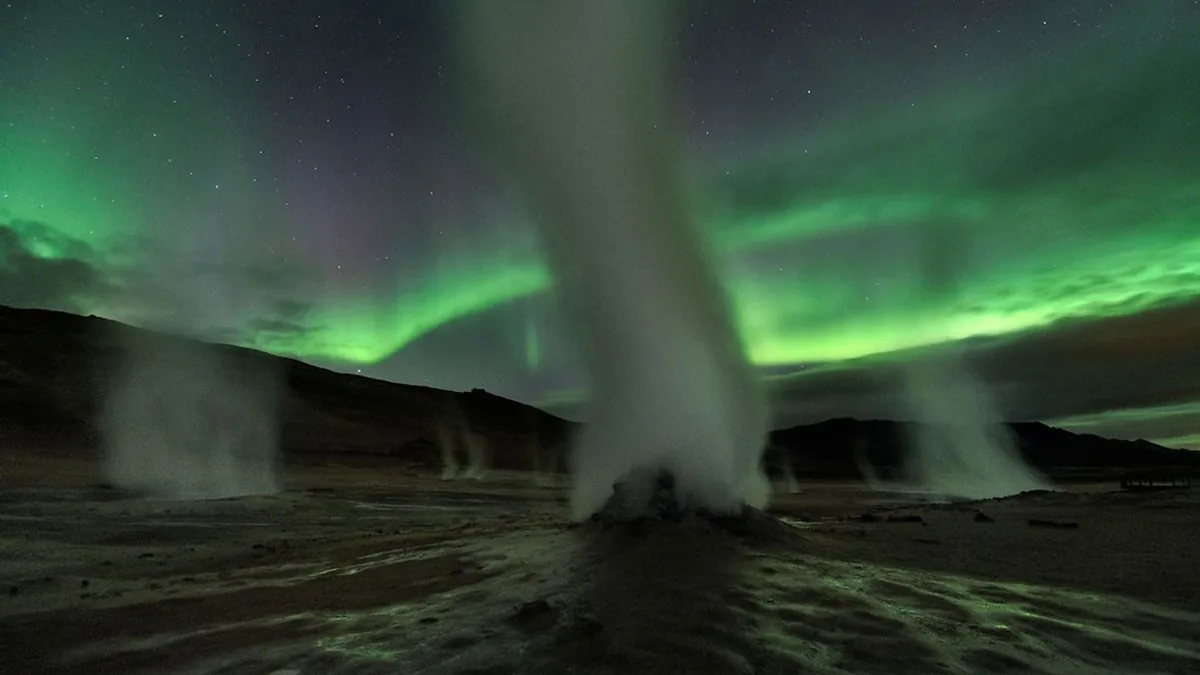
NASA Science published the Night on a Spooky Planet entry for its Astronomy Picture of the Day series on Oct. 31, 2026, showing Earth during a stormy night at Hverir in northeastern Iceland.
APOD operates as a daily NASA series. A professional astronomer writes a short explanation for each selected universe photograph. This Halloween 2026 entry connects to NASA’s APOD archive. The series pairs one photograph with an astronomer’s explanation every day.
The photograph shows Planet Earth beneath stormy skies at night. The explanation poses a question about a spooky planet and identifies Earth as the answer. Earth appears under stormy skies in the image. The answer identifies our own planet as the spooky world.
The photographer captured the image at Hverir, a geothermally active area in Iceland’s volcanic northeast. Hverir lies in northeastern Iceland’s volcanic region and shows geothermal activity. The site sits in northeastern Iceland. The area combines volcanic terrain with geothermal activity.
Solar activity triggers geomagnetic storms that release particles trapped in Earth‘s magnetic field. The particles come from the magnetic field, and solar storms release them. High-latitude particles entering the upper atmosphere generate northern lights across the starry night sky. The process generates northern lights against the stars in the photograph, and Earth’s magnetic field holds the particles before storms release them.
Earth’s auroral activity remains high while the Sun moves past its activity cycle peak. The explanation links the strong aurora to the Sun’s place just after the activity cycle peak. The Sun has passed its activity cycle peak and entered its declining phase. Auroral activity remains high during this early decline from the solar maximum after the cycle peak.
Fumaroles near Hverir release towers of steam and gas that drift past the greenish aurora. Steam and gas rise from fumaroles and drift beside the greenish aurora. The fumaroles are at Hverir in Iceland, and their vapor forms ghostly towers near the aurora in the night sky.
The entry closes with a Halloween greeting and a note that ghostly apparitions may soon dance nearby. Readers are told that ghostly apparitions may appear nearby on Halloween. The text ends with Happy Halloween and a note about ghostly apparitions in the reader’s neighborhood. The explanation closes with the greeting.
ISS Tracker names Sunday’s Childe as the next APOD picture. The tracker adds a line after the explanation that names the image for the next day. The next APOD entry will feature Sunday’s Childe. The tracker identifies the image for the following day.
Sunday’s Childe is tomorrow’s selection.
KhanList dates the photograph to Oct. 31, 2026 and credits Stéphane Vetter (Nuits sacrées). It supplies the credit and copyright line for the image along with its date. The photographer is Stéphane Vetter from Nuits sacrées. The credit line includes Nuits sacrées.
KhanList names Jerry Bonnell, Cecilia Chirenti, Robert Nemiroff, and Keighley Rockcliffe as authors and editors. The site names the people credited as authors and editors for this APOD entry. The entry credits four people by name. These individuals serve as authors and editors for the NASA series.
The credit covers four named contributors.
The APOD service is provided by ASD at NASA / GSFC, NASA Science Activation, and Michigan Tech. U. KhanList identifies the organizations behind the APOD service. The service involves ASD at NASA / GSFC. It also involves NASA Science Activation and Michigan Tech.
U. in its operations. The organizations support the daily series.
Space Launch Schedule says NASA published the item on 10/31/2026. The outlet republishes the APOD entry and provides its NASA publication date. The outlet confirms the NASA publication date for the item. It carries the APOD item from NASA on its schedule.
Join the discussion