Key facts
- An earlier fast radio burst AI system built on NVIDIA Holoscan and IGX hardware processes data 600 times faster than current methods and operates 160 times faster than real time.
- The setup shifts radio astronomy from recording data for later offline analysis to in-flight processing while signals stream in, cutting lag and enhancing anomaly detection.
- The project illustrates a broader trend in which AI agents are trusted to take actions rather than only answer questions, as in software development and security tools.
- The announcement fits a trend including Google DeepMind's Co-Scientist on July 7, 2026, FutureHouse's AI-for-Science fellowship on February 13, 2026, and Edison Scientific's Kosmos launch on November 5, 2025.
Breakthrough Listen and the SETI Institute brought agentic AI into the daily search at the Allen Telescope Array in Northern California on October 30, 2026, when NVIDIA announced the integration.
Under the new setup, agents can steer the telescope, enhance and correct incoming data, and run AI models on the stream from a single natural language request. Researchers had to line up instruments, clean data, and choose analysis steps by hand. The system now triggers those operations automatically from ordinary sentences.
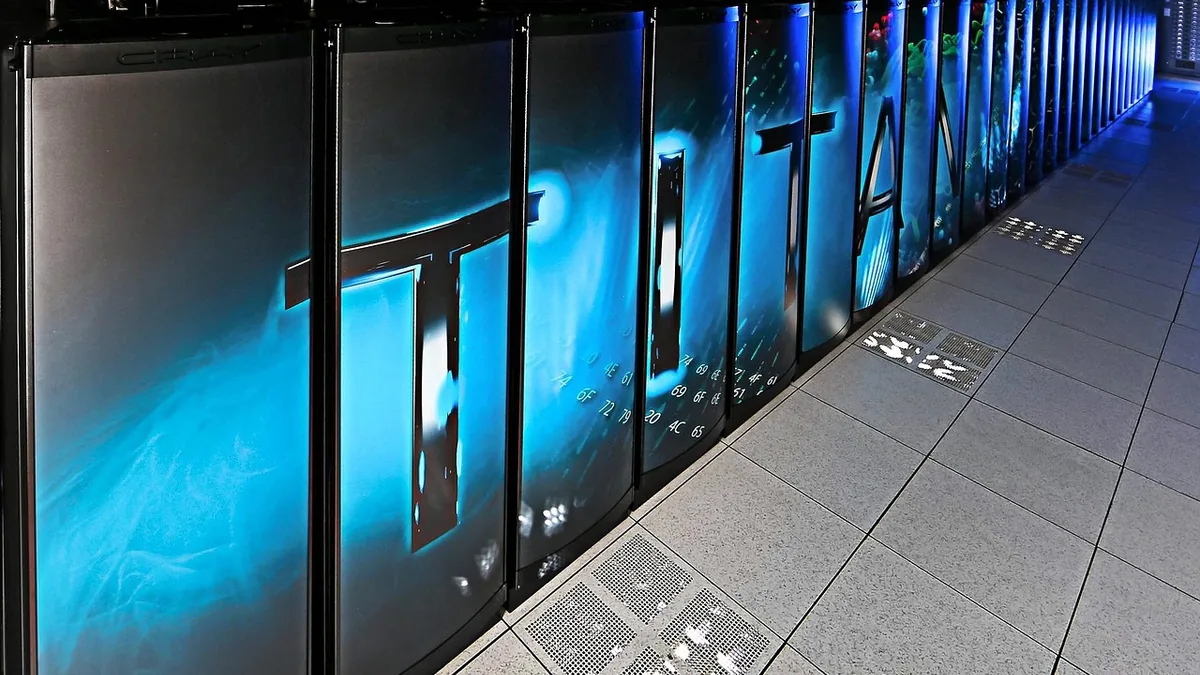
NVIDIA Holoscan processes the massive streams of sensor data, giving the agents live information to act on. The Holoscan library DAQIRI pulls terabits per second straight into GPU memory so observations are processed in flight instead of being written to disk. On NVIDIA RTX PRO 6000 Blackwell GPUs the pipeline handles 2.4 terabits per second, and inference runs on premises next to the instrument. Keeping inference on site avoids moving raw telescope data to another location before it can be studied.
The pipeline achieved the first real-time AI detection of a pulsar in the Crab Nebula. Its confirmed result is pulsar detection, not an alien signal, and the system has not reported any detection tied to extraterrestrial intelligence.
The combined software lets an agent move the telescope’s antennas, calibrate and adjust focus, detect and correct data faults, and plot the findings without step-by-step human control. CyberEther, built at the SETI Institute, runs signal-processing math through NVIDIA’s CUDA-X libraries such as cuFFT and cuBLAS. Nexus, a web-based observatory orchestrator, serves as the agent harness and gives agents one shared view of instrument state, computing resources and pipelines. Andrew Siemion, Bernard M. Oliver chair for SETI at the SETI Institute and principal investigator of Breakthrough Listen, called the work a breakthrough in translation and described it as a translation layer between researcher intent and telescope action rather than proof of alien intelligence.
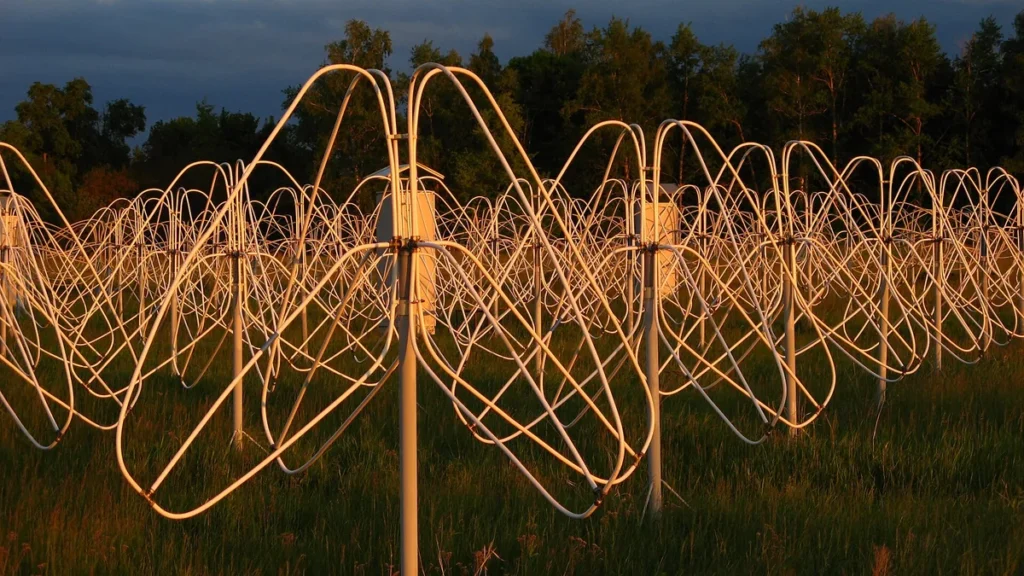
The Allen Telescope Array comprises 42 antennas, each 6 meters in diameter, used simultaneously for SETI and radio astronomy research searching for technosignatures. The array’s 42 six-meter antennas support both SETI and other radio astronomy work at the same time.
Breakthrough Listen researchers built a fast radio burst system on NVIDIA Holoscan and IGX hardware that processes data 600 times faster than current methods and operates 160 times faster than real time. In earlier tests it detected giant pulses from the Crab Pulsar while handling data streams up to 86 gigabits per second. A peer-reviewed 2025 pipeline described real-time detection of those pulses from February 2025 with roughly a 600-fold speed-up. The researchers worked with NVIDIA to build that earlier detection system at the same telescope array.
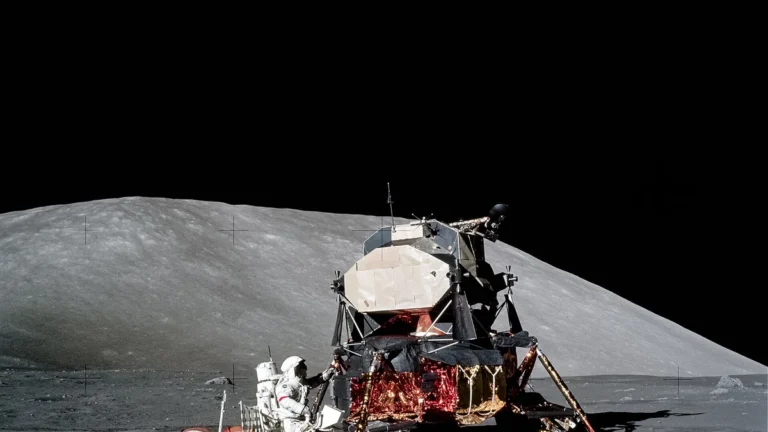
The team is evaluating open models including NVIDIA Nemotron for data locality and turnaround, and for observatories that may run offline on the far side of the moon. Agents compress work that would take humans weeks or years into hours. The setup shifts radio astronomy from recording data for later offline analysis to in-flight processing while signals stream in, cutting lag and enhancing anomaly detection. Older radio astronomy workflows recorded data first and analyzed it afterward, which risked missing short-lived signals.
Some scientists have suggested extraterrestrial civilizations could be billions of years older than humanity and might have developed technologies including forms of AI. The idea that alien civilizations could be far older and more technologically advanced underlies the decision to search for possible machine-made signals. NVIDIA describes the reported capabilities as vendor- and collaborator-reported capabilities, not independently established benchmarks. NVIDIA’s own disclosure cautions that the performance claims come from the vendor and collaborators rather than independent verification.
GCN reports that the project reflects a broader trend in which AI agents are trusted to take actions rather than only answer questions, as in software development and security tools. Letting an agent control a multimillion dollar instrument and judge anomalies carries scientific stakes because a false alarm could draw global attention before independent verification. The announcement fits a trend that includes Google DeepMind’s Co-Scientist on July 7, 2026, FutureHouse’s AI-for-Science fellowship on February 13, 2026, and Edison Scientific’s Kosmos launch on November 5, 2025.
GCN says the earlier fast radio burst system improves accuracy by 7 percent and reduces false positives tenfold. Running the Allen Telescope Array traditionally required careful manual work such as lining up instruments, cleaning bad data, and choosing which analysis to run. GCN reports the agentic AI system is now running at the array in Northern California, citing an NVIDIA blog post published October 30, 2026, and points to GitHub Copilot letting AI approve its own terminal commands and Google urging Gmail users to run a two minute security checkup as examples of agentic action. GCN says the older offline practice of recording radio data and analyzing it well after an observation ended could overlook weak or short-lived signals completely, and describes fast radio bursts as brief flashes of radio energy lasting only milliseconds.



Join the discussion