
Key facts
- NASA opened applications for its next class of astronauts and set the deadline for completed materials at 11:59 p.m. EST on Thursday, Dec. 3.
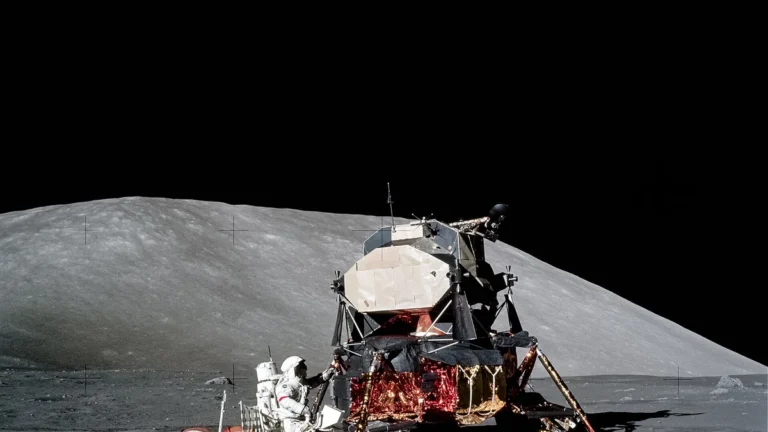
- Selected astronauts will train for operations on the lunar surface, life and work beyond Earth, and missions pushing human exploration farther.
- The master's requirement can also be met by two or more years of doctoral study in an appropriate technical field including engineering, physical science, computer science, biological science, or mathematics.
- Alternative qualifications include a Doctor of Medicine, an osteopathic medicine degree, a physician assistant credential, a Doctor of Nursing Practice, a Family Nurse Practitioner degree, or a related medical degree.
The space agency began accepting applications for its next astronaut class on Nov. 7, 2026, and will accept completed materials until 11:59 p.m. EST on Thursday, Dec. 3.
NASA expects to complete the selection process in late 2027, so training can start for the incoming candidate class. Those chosen will prepare for work on the lunar surface, life and work away from Earth, and missions that extend human exploration farther. NASA describes the push as part of a Golden Age of innovation, tying Artemis missions close to the lunar South Pole and a lasting lunar presence to the first crewed Mars mission.
People applying must be U.S. citizens and hold a master’s degree in STEM subjects such as computer science, physical science, biological science, or engineering from an accredited school. NASA lists these as the basic requirements for joining the astronaut corps.
The master’s rule can also be satisfied with two or more years of doctoral work in a suitable technical field including engineering, physical science, computer science, biological science, or mathematics. The release from NASA outlines several paths to meet the advanced-degree requirement other than a standard master’s degree. Other acceptable credentials include a Doctor of Medicine, an osteopathic medicine degree, a physician assistant credential, a Doctor of Nursing Practice, a Family Nurse Practitioner degree, or a related medical degree. These medical credentials count as additional ways to satisfy the master’s degree requirement.
Finishing or enrolling in a nationally recognized Test Pilot School course can substitute, as long as it ends by July 2027. The release links Test Pilot School completion to a July 2027 cutoff. If Test Pilot School is the only advanced technical credential, the applicant must still hold a STEM bachelor’s degree in computer science, physical science, biological science, or engineering. A Test Pilot School credential by itself still demands a bachelor’s degree in a STEM field.
Candidates must finish at least three years of relevant professional work after completing their qualifying degree. The experience requirement takes effect only after the candidate finishes the qualifying degree. Pilots may satisfy the experience standard using 750 pilot-in-command hours (the pilot in charge of the aircraft) in high-performance jets, 1,500 total hours with 750 as pilot in command in other fixed-wing aircraft, or 1,000 total hours with 300 as pilot in command in rotary-wing aircraft. These flight-hour rules give pilots different ways to meet the professional experience requirement.
Physicians may apply residency training toward the experience requirement if it ends by July 2027. The residency cutoff matches the July 2027 deadline for completing Test Pilot School. Candidates chosen for the program must pass NASA’s long-duration astronaut flight physical and demonstrate strong leadership, teamwork, and communication abilities. These represent extra standards beyond education and experience that candidates must satisfy.
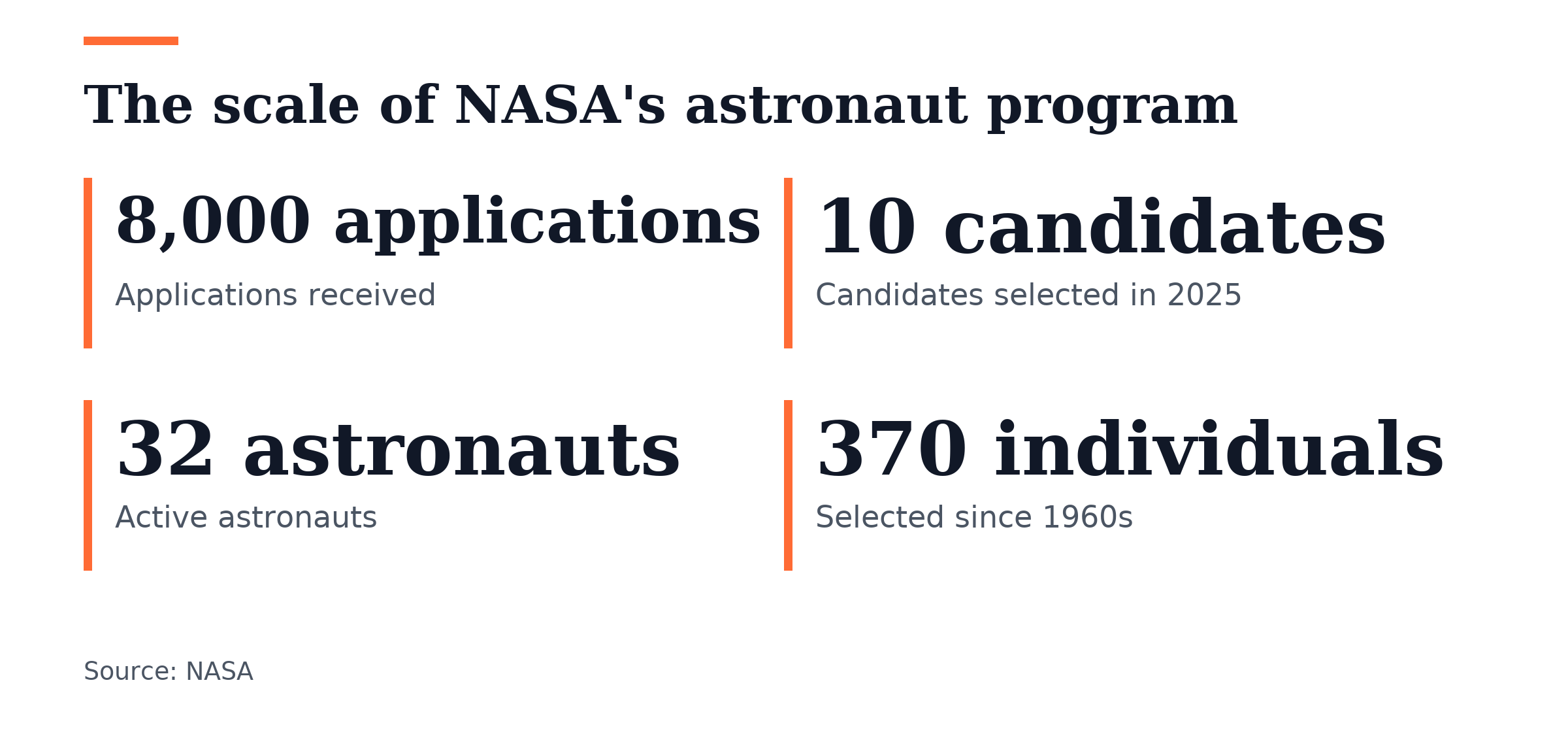
NASA opened astronaut applications in 2024, drew more than 8,000 applications, and selected 10 candidates in 2025 who are finishing nearly two years of training. Beginning in the 1960s, the agency has picked 370 people for astronaut-candidate training, and 32 astronauts now serve on the active corps. New applicants would enter the active corps to study spacewalking, lunar geology, and high-performance aircraft operations.
NASA Administrator Jared Isaacman described it as an extraordinary time to join the astronaut corps. Isaacman said the missions will call for technical excellence and sound judgment as well as teamwork and courage.


Join the discussion