Key facts
- The experiment indicates time can emerge from changes inside the quantum system itself rather than depending on an external clock.
- Giovanni Barontini of the University of Birmingham published the findings in Physical Review Research in 2026 as volume 8, issue 2, with DOI 10.1103/1h9j-df4k.
- Researchers observed repeated cycles of expansion and contraction in the bright region, resembling simplified versions of the Big Bang and Big Crunch, though the experiment did not recreate the actual cosmic events.
- Entropic time moves consistently in one direction to establish an arrow of time, orders events correctly during expansion and contraction, and the rate changes as entropy moves around.
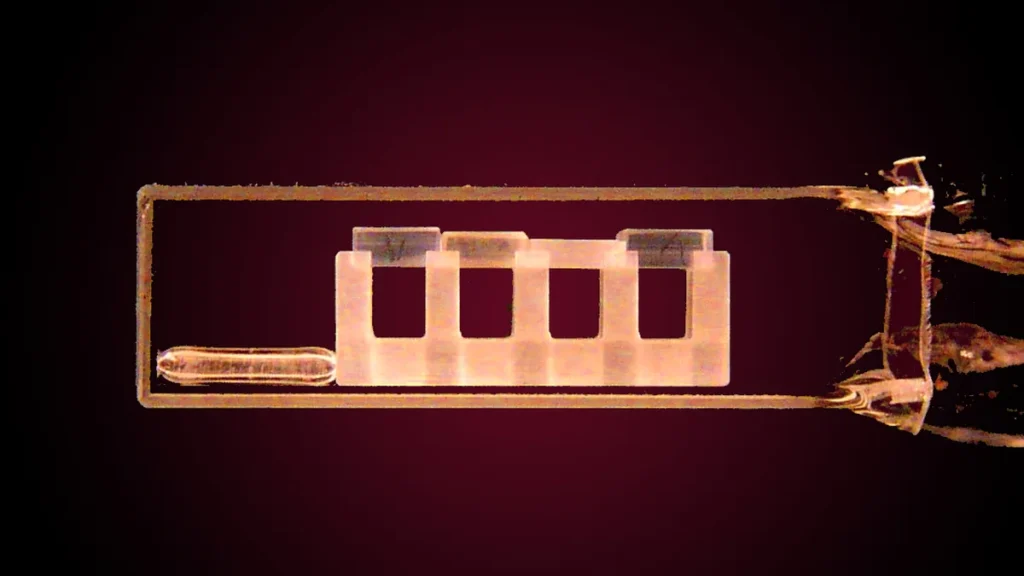
University of Birmingham physicist Giovanni Barontini built a sealed quantum apparatus of about 24,000 ultracold atoms in 2026, cycling it between expansion and contraction as an analog of the Big Bang and a possible Big Crunch.
University of Birmingham researchers cooled rubidium atoms to within a few billionths of a degree of absolute zero, forming a Bose-Einstein condensate, a state in which the cloud’s atoms act as one quantum object and quantum behavior shows across the cloud. At these low temperatures, quantum behavior becomes visible across the entire cloud, letting physicists treat many atoms as one object. The apparatus operated close to absolute zero, a point where quantum effects become especially important across the atoms.
Two laser beams operating at different frequencies formed a thin barrier dividing the isolated system into an observed bright region and an unobserved dark region, while atoms moved between them. Barontini trapped the atoms in a conservative potential, so the cloud could evolve with little energy leaking away during the experiment. This isolation mattered because a clockless test needs behavior that comes from the system’s own internal dynamics.
Researchers observed repeated cycles of expansion and contraction in the bright region, resembling simplified versions of the Big Bang and Big Crunch, though the experiment did not recreate the actual cosmic events. The apparatus indicates that time can emerge from changes inside the quantum system itself rather than depending on an external clock. Barontini defined an internal measure of time called entropic time, meaning time measured by change inside the system, based on changes in atom distribution in the bright region.
When the distribution changed, the system advanced, and when it stayed unchanged, this internal time stopped. Entropic time moves consistently in one direction to establish an arrow of time, the idea that time has a preferred direction, orders events correctly during expansion and contraction, and its rate changes as entropy moves around. Barontini showed that a version of the Schrödinger equation, a fundamental equation of quantum mechanics, can use the system’s internal entropic time, enabling predictions of how the quantum system’s probability cloud will change.
The central idea behind relational time is that researchers infer time from how parts of a system change relative to each other. Researchers could mark before and after from inside the experiment by watching changes in the observed region, without needing an external clock. The bright region represented the part of the universe an observer can access, while the dark region served as everything outside that observer’s direct view. This division let researchers ask how someone inside a sealed system could reconstruct time from changes in the observed region.
The arrow of time comes from the relationship between what is observed and what remains hidden, because the bright region exchanges atoms and information with the dark region even though the whole system stays isolated. Some quantum gravity frameworks, such as the Wheeler-DeWitt equation, describe the universe as one unchanging quantum state lacking any external clock, which creates a problem about event ordering.
ScienceWireDaily says Einstein’s relativity treats time as a dimension woven into spacetime, while quantum mechanics struggles to incorporate time in the same way, leaving physicists uncertain whether time is fundamental or emergent. ScienceWireDaily says this tension is the decades-old problem the Birmingham experiment addresses. ARGO.net Science says the study sought to build a cold-atom system, a cloud of ultracold atoms used as a quantum simulator, for testing how researchers can construct time relationally inside a quantum system.

ARGO.net Science summarized the aim directly: “We realize a cold-atom system to quantitatively test relational constructions of time.” Barontini said the study provides the first controlled experimental evidence that changes within a system define time instead of an external ticking clock. The experiment does not show time is an illusion or prove the universe lacks fundamental time, but it demonstrates a quantum system can hold a meaningful internal measure of time without an external clock.
ScienceDaily frames this as a new experimental tool for investigating what makes time flow, a question challenging physicists and philosophers for centuries. Giovanni Barontini of the University of Birmingham published the findings in Physical Review Research in 2026 as volume 8, issue 2, with DOI 10.1103/1h9j-df4k. The paper is titled “Testing the problem of time with cold atoms” by Giovanni Barontini. ScienceDaily identifies the materials as provided by the University of Birmingham.
ScienceWireDaily reports the work is an early-stage demonstration with limitations because the mini universe contains far fewer particles than the cosmos and runs on much shorter timescales, requiring further development to scale to cosmological scales. Future work could extend the approach to more complicated quantum systems to explore Big Bang and Big Crunch models, and similar techniques might eventually simulate black holes or test competing explanations of how time emerges.
Future versions might adjust the barrier, change the interactions, or alter how atoms move between the observed region and the hidden region to check whether internal time remains robust under new conditions. Future tests may use larger or more intricate systems, with each version checking whether internal time remains robust under new conditions. Laboratory analogs let researchers test tough questions about gravity and cosmology using systems built on related mathematical rules, and this version combines a Bose-Einstein condensate, laser barriers and an isolated atomic cloud.
Analogs across modern physics use related mathematical rules to explore gravity and cosmology, turning cosmic questions into lab measurements. ScienceWireDaily says if time emerges rather than exists eternally, asking about pre-Big Bang events becomes meaningless because time itself would not exist before the universe’s birth. ScienceWireDaily says the results point to time arising from how far the system’s quantum state has moved away from its starting condition. This matches quantum gravity predictions that treat time as derived rather than foundational.


Join the discussion