Key facts
- NASA Administrator Jared Isaacman appointed Troy Asher as director of the Armstrong Flight Research Center in Edwards, California.
- Troy Asher has served as acting director of the Armstrong center since March.
- Armstrong is NASA's Flight Test and Aircraft Operations Center of Excellence.
- As a NASA pilot, Troy Asher conducted flight research aboard the F-15, F/A-18, Gulfstream III, and X-56A unmanned aircraft system.
NASA Administrator Jared Isaacman appointed Troy Asher as director of the Armstrong Flight Research Center in Edwards, California, on Oct. 29, 2026.
Asher has served as acting director of the Edwards center since March, taking over after Bradley Flick retired in March following nearly 40 years of NASA service. Isaacman’s appointment makes the position permanent, and Asher will manage the center’s workforce and operations.
Armstrong serves as NASA’s Flight Test and Aircraft Operations Center of Excellence. In that role, the center helps expand NASA’s experimental aircraft work, pushes the limits of high-speed flight, develops new aircraft and technologies, and supports airborne science missions across the agency.
Asher brings decades of experience as a test pilot and aerospace engineer. Before his acting role, he ran the center’s Flight Operations office, overseeing pilots, engineers, maintainers and aircraft used for aeronautics research and airborne science. He came to the agency in 2008 as a research test pilot and aerospace engineer.
As a NASA pilot, Asher flew research missions aboard the F-15, F/A-18, Gulfstream III, and X-56A uncrewed aircraft system. He served as lead test pilot during development of the Stratospheric Observatory for Infrared Astronomy, known as SOFIA, and flew missions aboard NASA’s DC-8 to support airborne science campaigns around the globe.
Asher’s 24-year U.S. Air Force career ended with his retirement as a lieutenant colonel. He served as an instructor at the Air Force Test Pilot School at Edwards Air Force Base, led the 419th Flight Test Squadron, and directed the Bomber Combined Test Force. During 2003, he posted 25 world speed records while flying the B-1B bomber.
He earned a bachelor’s degree in astronautical engineering from the U.S. Air Force Academy. He also holds a master’s degree in mechanical engineering from California State University, Fresno.
Armstrong traces its founding to 1946. For eight decades the center has led American flight research, from the Bell X-1’s first supersonic flight to the X-59 quiet supersonic work. The center also backs airborne science missions and flight research across the agency, and it holds central responsibility for expanding NASA’s X-plane portfolio and high-speed flight research.
The jets arrived from the Oregon Air National Guard’s 173rd Fighter Wing at Kingsley Field on Dec. 22, 2025, following their final Air Force flights.
The pair will support supersonic flight research activities at the Edwards center. The jets will support work tied to the Quesst mission and its X-59 quiet supersonic research aircraft under NASA’s Flight Demonstrations and Capabilities project. One will return to flight status as a research aircraft; the other will supply parts to sustain the fleet long term.
Asher, who ran flight operations at NASA Armstrong at the time, said the jets will provide data collection and chase-plane support for the X-59 for the life of the Low Boom Flight Demonstrator project. He added that the aircraft will allow NASA to resume flight operations with outside partners, including other government agencies and commercial aviation companies.
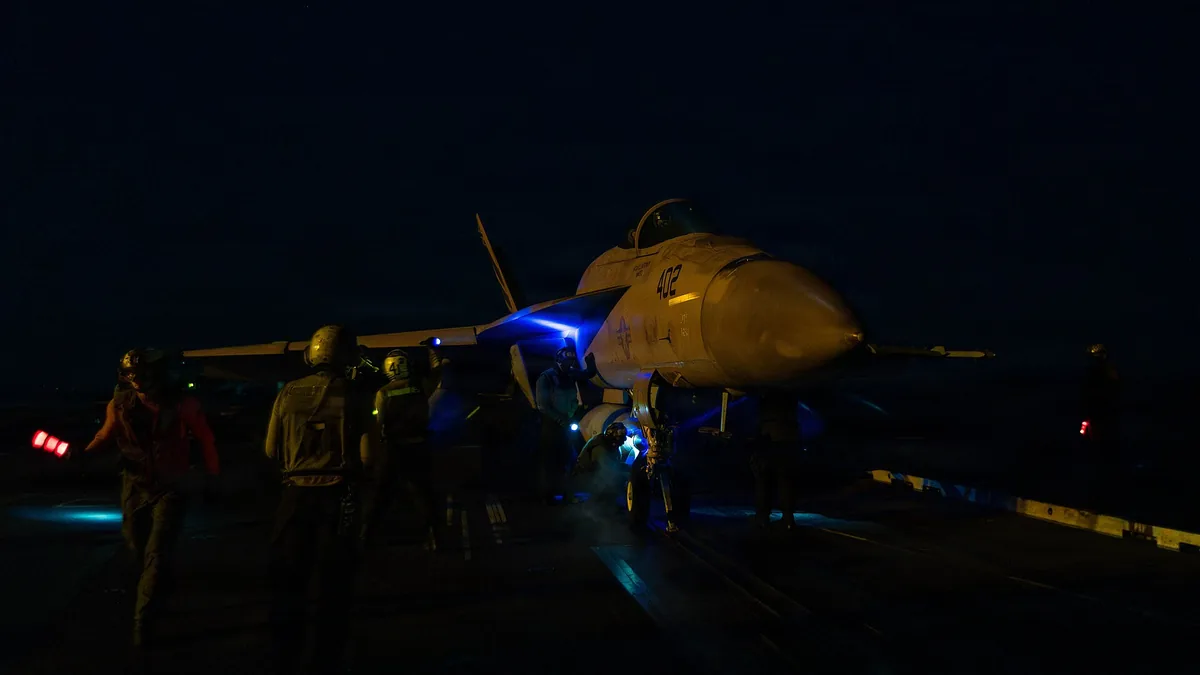
NASA said the F-15 fits high-speed, high-altitude testing and can carry experimental hardware outside the aircraft; NASA can modify it for research flights. NASA has flown F-15s before at sustained altitudes up to 60,000 feet, close to the X-59’s expected 55,000-foot cruising envelope, and the newly added jets will receive similar modifications so researchers can install instrumentation and run flight tests beyond what many standard aircraft can do.
The agency took the SR-71 Blackbird, tail number 844, off static display outside Armstrong on Sept. 28, 2026. Satellite photos from providers show the jet had left its usual Armstrong spot by at least May 17, 2026. Aviation Week reported that it had gone into a hangar earlier in 2026 for an inspection. The Aviationist points to 64-17980, while California Post points to 61-7980.
Jared Isaacman showed an image of a mysterious high-speed aircraft at the All-In Summit in Los Angeles. Asked if the aircraft was an SR-71, Isaacman doubted it was truly a Blackbird and would not identify what it actually was. “You sure that’s a Blackbird?” Isaacman said.
Isaacman said NASA will fly at high speed and high altitude again.
According to The Aviationist, sources said NASA looked into whether the SR-71 could return to flight, but the agency said it had nothing more to share. The Aviationist also reported that Aviation Week found NASA had reached out to former SR-71 program members about a possible return-to-flight effort, and that it identified no funding line for such an effort in available budget documents.
The Air Force lent SR-71 #844 to NASA in 1990. NASA’s final SR-71 flight took place on Oct. 9, 1999. NASA flew its SR-71 Blackbirds to study aerodynamics and propulsion along with structures and thermal protection materials, and it also used them for high-speed instrumentation and atmospheric research, plus sonic booms; the Blackbird’s design called for cruising near Mach 3.2 at altitudes approaching 85,000 feet. No current NASA aircraft can match that mix of extreme speed and altitude.
The Blackbird could serve as a bridge between conventional supersonic testing and the harder hypersonic flight regime. Returning one to flight would be an enormous undertaking, given the major maintenance effort and lost support infrastructure from its retirement.
Isaacman told TWZ on Sept. 25, 2026, that the agency is rebuilding its fleet of X-planes and that the X-59’s quiet supersonic research is just the beginning. He said NASA would soon fly as high and as fast as in decades past, and then go even further.
The X-59 has already flown faster than Mach 1 during tests at Edwards. NASA plans more X-59 flights to study the quiet thump the aircraft makes instead of the ear-splitting boom of traditional supersonic jets. The program’s ultimate aim is to gather data that could clear the path for commercial aircraft able to slash cross-country flight times. NASA has not confirmed any possible SR-71 return-to-flight scenario, pointing instead to Isaacman’s push for experimental aircraft that advance high-speed and high-altitude flight.



Join the discussion