Key facts
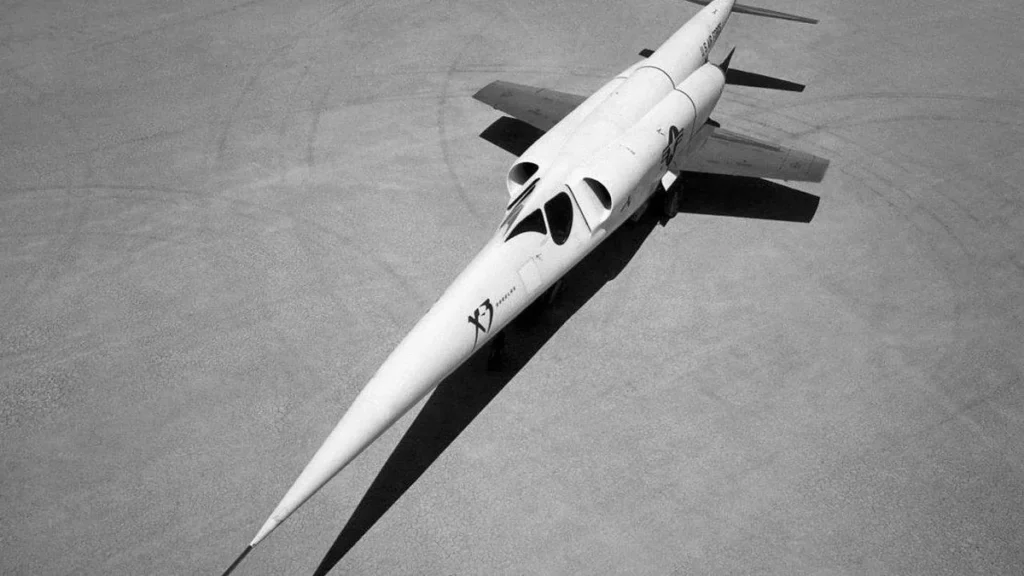
- The X-59 is intended to fly at supersonic speed while producing only a quiet sonic thump instead of a loud boom.
- The X-59 made its first flight on Oct. 28, 2025, from Lockheed Martin Skunk Works in Palmdale, California, to NASA's Armstrong Flight Research Center in Edwards, California, which has been its home base since.
- With NASA now the owner, Lockheed Martin will provide extra support only when needed as X-59 flight testing continues.
- Cathy Bahm, manager of the Low Boom Flight Demonstrator project, called the transfer a major milestone and said it moves NASA closer to data needed for commercial supersonic flight over land.
NASA formally accepted ownership of the X-59 quiet supersonic research aircraft from Lockheed Martin Skunk Works on Nov. 18, 2026, marking a milestone for the agency’s Quesst mission.
For its Quesst mission, NASA chose Lockheed Martin to collaborate on the X-59’s design and to lead vehicle building and testing. Lockheed Martin held title to the jet while the flight-test campaign continued out of NASA’s Armstrong Flight Research Center in Edwards, California. Finishing the acceptance review moved the design, build and test contract toward closeout. With NASA now the owner, Lockheed Martin will provide extra support only when needed as X-59 flight testing continues.
Cathy Bahm, manager of the Low Boom Flight Demonstrator project, called the transfer a major milestone and said it moves NASA closer to data needed for commercial supersonic flight over land. “To someone outside the flight test, this might seem like a subtle change,” she said. Bahm added that the change might look minor to outsiders but shows how far the program has come and how much the team’s work has paid off. NASA describes the X-59 as part of its effort to use experimental X-planes to strengthen U.S. leadership in aviation.
The X-59 is intended to fly at supersonic speed while producing only a quiet sonic thump instead of a loud boom. The FAA banned commercial supersonic travel over land in 1973, and NASA wants quieter-boom evidence to support revising it; the agency expects less than 75 perceived decibels on the ground, roughly a third below the Concorde’s reported 100–110 decibels. Community overflights will collect data on the aircraft’s sound and on public perceptions from the ground, with NASA saying the boom should sound like a car door shutting at roughly 20 feet away.
Next comes acoustic validation testing, with NASA measuring the X-59’s sound signature using ground-based and airborne equipment before flights over selected communities gather public responses. NASA will give the acoustic results to U.S. and international regulators as they consider changing limits on civilian supersonic flight over land. Larry Cliatt, NASA’s Quesst acoustic validation technical lead, said in September that this is the phase the team has been working toward and that the real research now begins. “This is the phase we’ve been working toward,” Cliatt said.
The X-59 made its first flight on Oct. 28, 2025, from Lockheed Martin Skunk Works in Palmdale, California, to NASA’s Armstrong Flight Research Center in Edwards, California, which has been its home base since. Nils Larson piloted the 67-minute maiden flight, which checked basic flying qualities and systems. Flights resumed in March 2026 after scheduled maintenance.
The X-59 broke the sound barrier for the first time on June 5, 2026, reaching about Mach 1.1 at 43,400 feet during an 81-minute flight flown by Jim “Clue” Less. A NASA F-15 served as safety chase, and its booms drowned out the X-59’s sound. The June 5 flight came after flying resumed in March 2026 following scheduled maintenance.
On June 12, 2026, the jet flew at its planned mission conditions for the first time: Mach 1.4 at 55,000 feet, the baseline for future community overflights. In September 2026, the X-59 completed six flights in three days, a campaign record, and hit Mach 1.53, roughly 1,010 mph, its fastest speed to that point. The team also set a weekly flight record that month.
After scheduled maintenance, NASA test pilot Mike Lippert flew the X-59 for the first time on Oct. 21, 2026. By Oct. 28, 2026, the first-flight anniversary, the X-59 had flown 40 additional times and reached altitudes above 56,000 feet. The total counts flights since the Oct. 28, 2025, maiden flight.
NASA began ferrying the X-59 from California to Kennedy Space Center in Florida on Oct. 28, 2026, with stops in El Paso, Texas, and Naval Air Station Joint Reserve Base Fort Worth. NASA Administrator Jared Isaacman confirmed by social post that the aircraft was headed to Kennedy Space Center. The aircraft reached Birmingham-Shuttlesworth International Airport in Alabama on Oct. 29, 2026, after leaving Fort Worth at 9:48 a.m. CDT and landing at 11:03 a.m. on a 539-nautical-mile flight that followed earlier stops at Edwards Air Force Base, El Paso, and Fort Worth.
The Florida trip came before NASA’s MAX POWER aerospace exhibition and air show at Kennedy Space Center on Nov. 7–8, 2026. NASA expected the X-59 to be among the assets at the show, which ran over the Nov. 7–8 weekend at Kennedy Space Center.
A tapered nose spanning almost a third of the X-59’s length breaks up shock waves so they cannot merge into a conventional sonic boom. With no room for a normal windshield, the cockpit sits nearly halfway back and relies on NASA’s eXternal Vision System, which sends camera views to a 4K monitor. The X-59 uses an F414-GE-100 engine adapted from the F/A-18 Super Hornet’s F414, providing 22,000 pounds of thrust from a position on top of the aircraft. Mounting the engine on top keeps the underside smooth, helping stop shockwaves from merging behind the aircraft.
The ejection seat and canopy are adapted from a U.S. Air Force T-38 trainer. NASA equipped the seat and canopy with a first aid kit, radio, and water.
The newly announced X-70 will join the X-59 in a growing, revitalized X-plane portfolio meant to expand flight research and accelerate emerging aviation technology. NASA said it is expanding capacity for experimental flight research and for accelerating emerging technologies and capabilities for future American aviation.


Join the discussion