Key facts
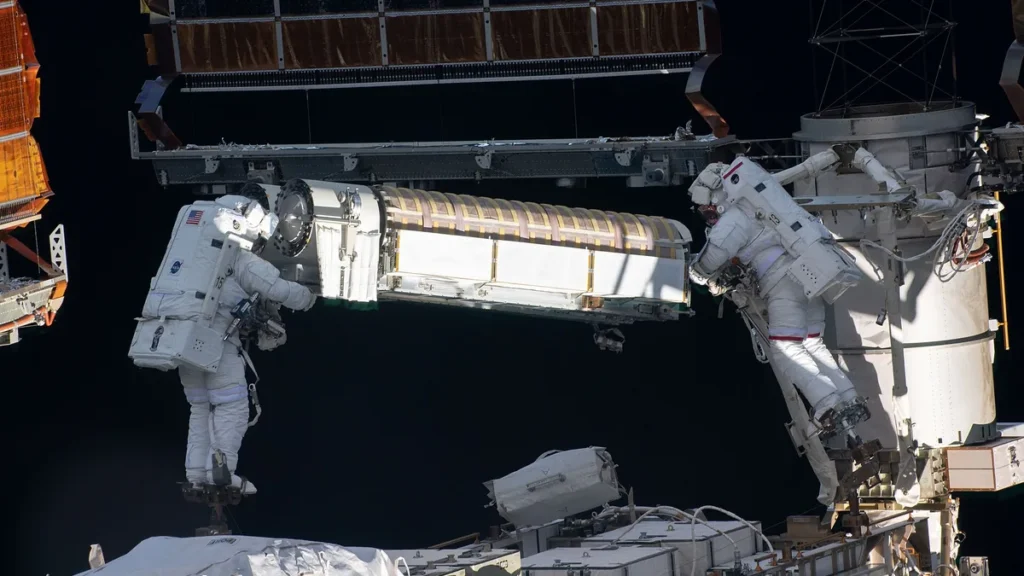
- NASA flight engineer Anil Menon and CSA flight engineer Joshua Kutryk prepared for a spacewalk starting Thursday at 8 a.m. EDT, with NASA+ coverage beginning at 6:30 a.m.
- NASA+ will provide live coverage of the spacewalk beginning at 6:30 a.m. EDT.
- Watkins and Delaney each spent one hour on Wednesday reviewing spacewalk tasks and configuring the Quest airlock for spacesuit operations.
- Watkins and Delaney packed a failed Canadarm2 wrist joint replaced during a June 30 spacewalk, photographed it, wrapped it in protective covers, and loaded it into a SpaceX Dragon spacecraft for November return.
On Tuesday, Oct. 27, 2026, Expedition 75 crew members aboard the International Space Station prepared spacewalking tools, completed two robotics jobs, configured botany research hardware, and set up advanced Earth observation gear, NASA reported.
NASA flight engineer Anil Menon and CSA flight engineer Joshua Kutryk organized spacewalking tools inside the Quest airlock, the airlock where spacesuits are readied, for a Thursday spacewalk to install one of two roll-out solar arrays, flexible solar panels that unroll outside the station, on the port side truss structure. They printed their procedures and slipped them into a small checklist book worn on their spacesuit cuffs so they could consult the steps during the excursion. The pair also checked their emergency spacesuit jetpacks for fuel quantity, battery power, and thruster functionality.
NASA flight engineers Jessica Watkins and Luke Delaney each spent one hour on Wednesday reviewing spacewalk tasks and configuring the Quest airlock for spacesuit operations. During the planned six-hour and 45-minute spacewalk, Watkins and Delaney will help the spacewalkers with their suits and command Canadarm2, the station’s robotic arm. Watkins also helped Kutryk verify that spacesuit cooling and water systems were safely configured before Thursday’s outing.
The spacewalk begins Thursday at 8 a.m. EDT, and NASA+ will provide live coverage starting at 6:30 a.m. Menon will ride Canadarm2 to retrieve the roll-out solar array from an external pallet and travel to the worksite while Kutryk remains tethered to the truss. After installation, controllers will power up the array.
Watkins and Delaney packed a failed Canadarm2 wrist joint replaced during a June 30 spacewalk, photographed it, wrapped it in protective covers, and loaded it into a SpaceX Dragon spacecraft scheduled to return in November. All four NASA and CSA crew members practiced Canadarm2 maneuvers together on Monday to prepare for supporting the Thursday spacewalk. Roscosmos flight engineer Sergey Teteryatnikov operated the European robotic arm from inside Nauka to visually inspect Rassvet’s Earth-facing docking port.
SpaceX Dragon docked autonomously to Harmony’s space-facing port on Oct. 15 and will return to Earth in mid-November with science and hardware. The spacecraft is on NASA’s 35th commercial resupply mission. Watkins and Menon transferred supplies between the station and the Dragon cargo spacecraft as part of cargo operations.
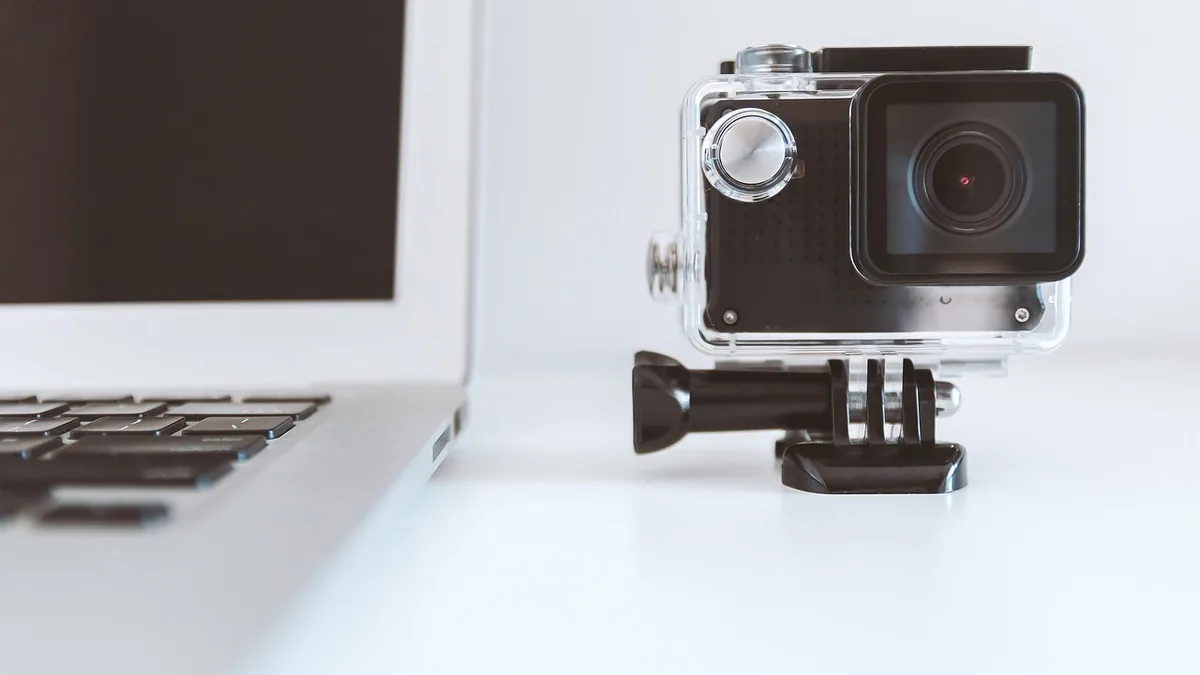
Delaney set up a camera and connected a computer inside Kibo’s Life Science Glovebox for an investigation to prevent plant diseases and improve spacecraft life support. The camera and computer configuration supports plant-disease prevention research inside the Japanese module.
Delaney treated and nourished bioprinted blood vessel tissues to support research on creating customized patient tissues using microgravity. He also tracked his sleep patterns on a tablet for the RelaxPro investigation into stress reduction during long-duration spaceflight.
Watkins prepared a specialized camera to film thunderstorm electrical activity at a speed of up to 100,000 frames per second for research inside the Columbus laboratory module. The high frame rate captures electrical activity associated with thunderstorms.
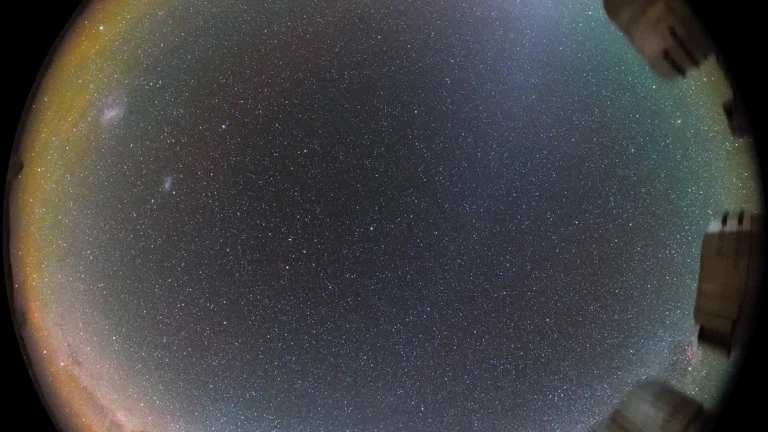
Station commander Pyotr Dubrov and Roscosmos flight engineer Anna Kikina installed Earth observation gear to capture multi-wavelength imagery of southern Pacific and Atlantic islands and Patagonia. The pair also wore arm, wrist, and finger cuffs to measure how the circulatory system responds to weightlessness.
Teteryatnikov studied superintelligence tools for possible advances in crew operations and communications with mission controllers. The research looks at whether advanced artificial intelligence tools can improve crew-controller communication and operations.
Expedition 75 opened the week on Monday preparing for the spacewalk while also conducting bioprinted blood vessel research, relaxation studies, and cargo work. The day’s schedule combined upkeep tasks with science activities across the station’s modules.


Join the discussion