Key facts
- Five or fewer ignitions in one test day create significant coordination demands for the test stand systems.
- ArianeGroup develops Prometheus as prime contractor for ESA.
- For the first time in the P5 facility's history, the methane-oxygen engine was started multiple times in one test day and maintained stable operating points during a single continuous test sequence.
- DLR said the campaign was the first for P5 because the facility had not previously managed repeated methane-oxygen engine ignitions in one day.
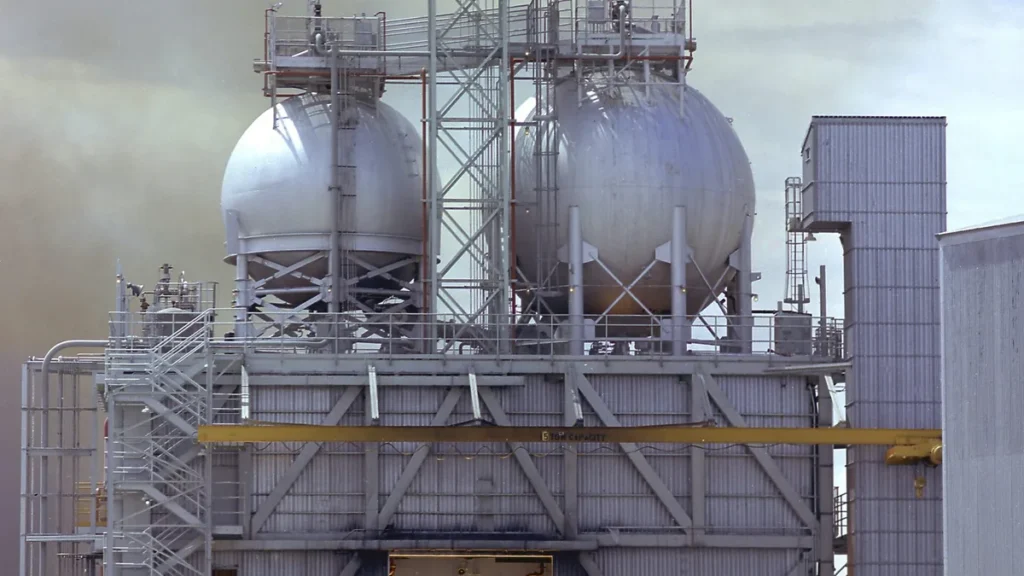
DLR completed multiple hot-fire tests of the reusable Prometheus rocket engine on the upgraded P5 test bench in Lampoldshausen, Germany, on Oct. 29, 2026, starting the methane-oxygen engine several times in one day. The tests were supported by ESA through its Future Launchers Preparatory Programme and implemented by ArianeGroup as prime contractor, validating operation integrated with the P5 test bench owned by ESA and operated by DLR.
The campaign marked the first time in the P5 facility’s history that operators started the engine more than once in a single test day and held stable operating points across one continuous sequence. DLR achieved this at the modernized P5 test stand in Lampoldshausen, Baden-Württemberg, and the engine runs on liquid methane and liquid oxygen.
DLR said the achievement was the first for P5 because the facility had not managed repeated methane-oxygen engine ignitions in one day, placing the statement within the latest ground-test campaign at the upgraded P5 test site. The runs examined engine operation across thrust levels, including shutdowns followed by new ignitions, a key highlight of the DLR test campaign on the upgraded P5 stand.
Prometheus burns liquid oxygen and liquid methane and sits in the 100–120-tonne thrust category, equivalent to roughly 220,000 pounds of thrust, comparable to the Vulcain 2.1 engine currently used on Ariane 6. Methane was chosen rather than liquid hydrogen because it is denser and tolerates higher storage temperatures, and the engine can restart during flight and be reused on multiple flights.
Prometheus demonstrated it can restart multiple times without a high-pressure starter system by using engine inlet pressures, and the test showed the engine can start without a separate starter system. ArianeGroup calls this a European first for a gas-generator-cycle engine in its thrust class.
Testing repeated starts helps assess engine performance for reusable stages that must restart to return or land, because reusable rocket engines need repeated ignitions during a mission, such as shutting down after launch and re-igniting for a return or landing maneuver. Reusable booster stages still require variable throttle control to manage high-thrust and low-thrust phases of stage recovery.
These capabilities matter because the engines may need to restart after launch to return to Earth and perform controlled landings, with adjustable thrust and precise control during descent and landing of returning rocket stages.
DLR modified the P5 test stand to manage liquid methane and enable repeated engine starts, and Prometheus became the first engine fired on the bench using liquid oxygen and liquid methane. The upgrade added cryogenic methane feed lines, higher supply pressures, and fast ground cycle turnaround.
P5 originated under ESA’s Ariane 5 development programme to test full cryogenic propulsion systems and has qualified Vulcain engines for Europe’s Ariane family and the complete Ariane 6 upper stage. The bench now ranks among Europe’s biggest test facilities for cryogenic rocket propulsion, belongs to ESA, and is run by DLR.
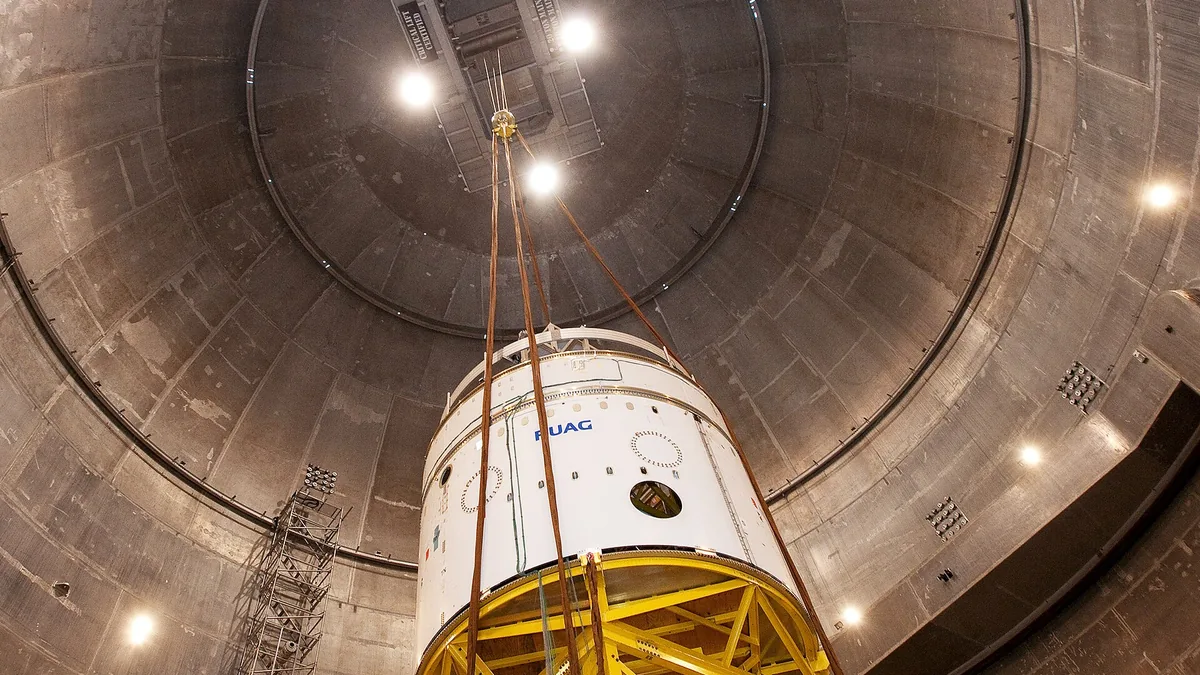
Running five or fewer ignitions in one test day creates significant coordination demands for the test stand systems, because after each hot run teams shut down the engine and supply systems and prepare them for the next start, including draining, purging, and re-establishing pressure and temperature conditions. Anja Frank, head of the DLR Institute of Space Propulsion, said, “Up to five ignitions in a single test day place high demands on the coordination of the test stand systems,”
Geraldine Naja, ESA’s Director for Space Transportation, said, “Repeated starting of engines and reduced manufacturing costs are key to expanding launcher supply and diversifying access to space for Europe,” Philippe Clar, Head of Space Transportation Programmes at ArianeGroup, said, “Reusability is more important than ever in space transportation.”
ArianeGroup develops Prometheus as prime contractor for ESA, and ESA supports the program through its Future Launchers Preparatory Programme. Germany provides about 80 million euros to the program through the Federal Ministry of Research, Technology and Space, and the German Space Agency at DLR coordinates the funds.
The P5 campaign follows earlier trials at ArianeGroup’s French site in Vernon, and a future campaign will test an enhanced version called Prometheus Mark 2 at the company’s Vernon test center in France.
The test series included the first test of a Prometheus combustion chamber built with cold gas spray, an additive manufacturing technique that sprays metal powder at high speed onto a chamber body so it bonds firmly to the surface. ArianeGroup applies 3D printing broadly after redesigning production processes, a move intended to shorten production times, simplify complex component manufacture, and cut costs, with additive manufacturing central to the Prometheus programme.





Join the discussion