Key facts
- The study by Brindley and Whiter was published in the Journal of Geophysical Research: Space Physics in 2026 with DOI 10.1029/2026ja035658.
- The research was published in Nature Communications under the title "Evidence for Alfvén waves powering auroral arc via a static electric potential drop" on 13‑Jan‑2026.
- Professor Zhonghua YAO of HKU stated, "This discovery not only provides a definitive answer to the physics of Earth's aurora, but also offers a universal model applicable to other planets in our solar system and beyond.".
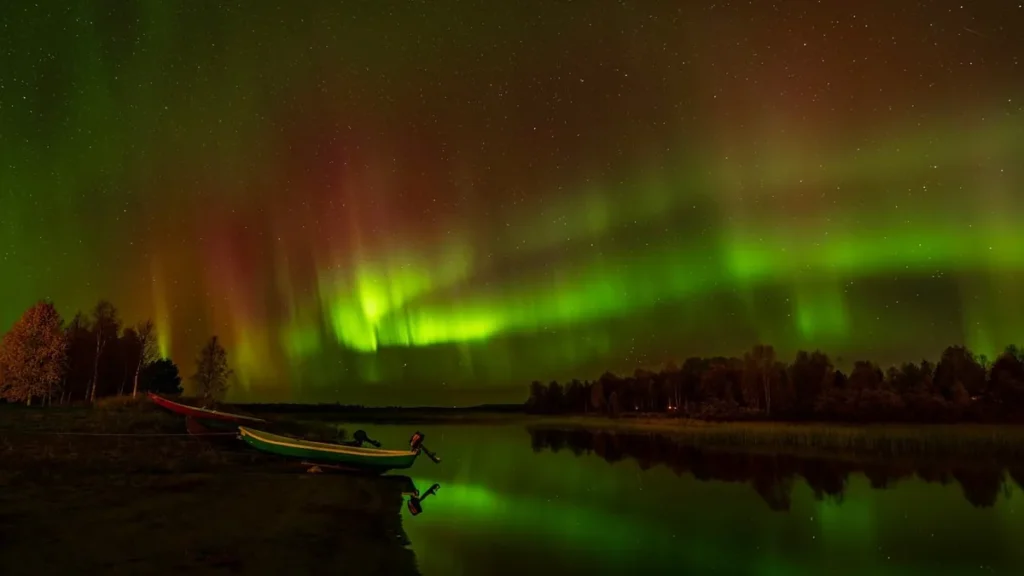
N. Brindley and D. Whiter analyzed detailed optical measurements collected in Svalbard, Norway, then built a straightforward mathematical model. Their work, published in the Journal of Geophysical Research: Space Physics in 2026, demonstrated that fine auroral structures including curls and folds may arise when electrons rebound off Alfvén waves, which are magnetic plasma waves that travel along magnetic field lines, traveling above the ionosphere, which is a charged layer of Earth’s upper atmosphere. The findings, reported in 2026, tackle a persistent challenge: scientists understand how the aurora forms, but small-scale features have resisted explanation with conventional models. The research links the microscopic behavior of individual electrons to the large-scale light patterns, and it offers a path toward improved space-weather forecasting.
By tracking how auroral features move, researchers can infer the electric fields present in the magnetosphere, the region of space dominated by Earth’s magnetic field.
To capture rapid changes in the magnetosphere, the region of space dominated by Earth’s magnetic field, researchers turned to the Auroral Structure and Kinetics (ASK) instrument deployed in Svalbard, Norway. The ASK instrument, operating from Svalbard, Norway, delivered spatial and temporal data showing how electric fields change across a 25-second window. This 25-second window proved to capture phenomena that satellite-based studies typically overlook. Satellite passes over auroral regions are brief, limiting their ability to resolve sustained electric field variations, but a 25-second observation window on the ground captures the continuous evolution of these fields.
The high-resolution optical emissions measured by ASK during its deployment allowed researchers to track how auroral features change from moment to moment, rather than relying on the snapshots that passing spacecraft provide. Researchers combined this high-resolution optical data from ASK with satellite data to investigate how plasma waves influence auroral structures and the electric fields that drive them.
The team applied two methods to derive electric fields from the optical data, one of which assumed a U-shaped potential, a type of electric potential shape. The approaches yielded matching results. Where they diverged, the researchers attributed the differences to electrons gaining energy by bouncing off Alfvén waves, which are magnetic plasma waves that travel along magnetic field lines, above the ionosphere, which is a charged layer of Earth’s upper atmosphere. Comparing different modeling assumptions helped isolate the effect of wave-particle interactions on the inferred electric field.
Alfvén waves shape auroral dynamics by adjusting electric potentials and accelerating charged particles, according to optical measurements taken on the ground in Svalbard together with satellite data. This approach, relying solely on optical data with spatial and temporal resolution, provides a promising avenue for studying small-scale aurora and other space weather phenomena, and the authors suggest their technique can investigate fine-scale processes in the magnetosphere, the region of space dominated by Earth’s magnetic field, beyond auroral research.
A research project co-directed by HKU’s Department of Earth and Planetary Sciences and UCLA’s Department of Atmospheric and Oceanic Sciences revealed that Alfvén waves function as an invisible energy source, driving the spectacular auroral displays. Nature Communications published the research on Jan. 13, 2026, under the title “Evidence for Alfvén waves powering auroral arc via a static electric potential drop.” The peer-reviewed article provides the detailed evidence supporting the role of Alfvén waves in auroral generation, addressing the long-standing question of what powers the electric fields that accelerate particles into the atmosphere. Data from the Van Allen Probes and THEMIS show that Alfvén waves continuously supply energy to the auroral acceleration region, preserving the electric fields that would otherwise fade.
Data from satellites provided the direct measurements that confirmed this mechanism. The Van Allen Probes and THEMIS mission, operated by NASA, detected Alfvén waves in the magnetosphere, the region of space dominated by Earth’s magnetic field, and showed they steadily deliver energy to the auroral acceleration region. By studying how charged particles move and gain energy, researchers showed that Alfvén waves function as a natural accelerator, providing the energy that propels charged particles into the atmosphere and creates the glowing auroral lights. This mechanism explains how magnetospheric waves transfer energy to the particles that create aurora.
The HKU-UCLA study and the Brindley-Whiter study together paint a coherent picture: Alfvén waves power the aurora at large scales, and the bouncing of electrons off these waves shapes the fine structures that have puzzled researchers.
The two studies complement each other by addressing different scales of the auroral phenomenon. The HKU-UCLA research, published in January 2026, established that Alfvén waves serve as the primary energy source for auroral arcs, while the Brindley and Whiter study, published in 2026, explains how the fine structures within those arcs arise from the detailed behavior of individual electrons interacting with the waves. Together, they close a gap in auroral physics by connecting the large-scale energy transfer mechanism to the small-scale structures that observers see. The HKU team’s expertise in planetary magnetospheres, the region of space dominated by a planet’s magnetic field, particularly on Jupiter and Saturn, provided a valuable comparative framework for understanding the processes at work near Earth.
The research exemplifies interdisciplinary cooperation. The UCLA team, led by Dr. Sheng Tian, brought deep knowledge of Earth’s auroral physics, while the HKU team contributed the wider perspective of planetary space physics. Professor Zhonghua Yao of HKU heads a specialized research group focused on space and planetary science, known for influential work on planetary auroras. The HKU group, drawing on extensive knowledge of how planetary magnetospheres, the region of space dominated by a planet’s magnetic field, behave on Jupiter and Saturn, contributed an important comparative viewpoint.
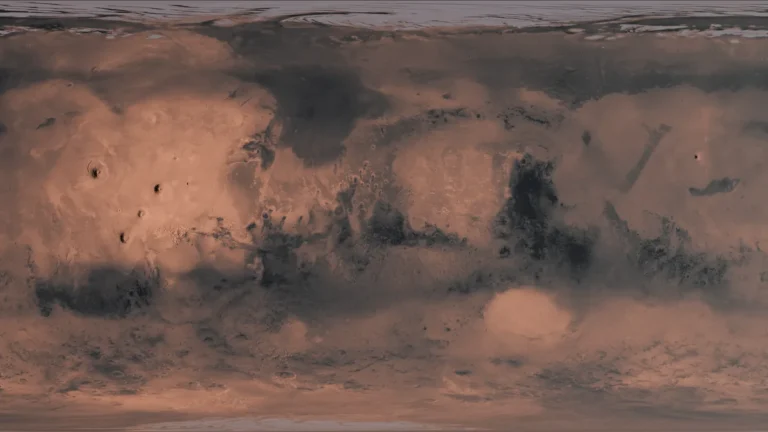
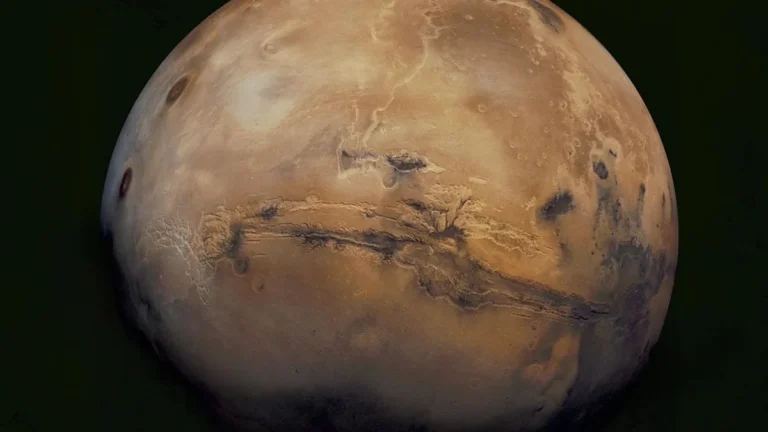
They noted that using this expertise to analyze high-resolution data from near Earth helped connect Earth science with planetary exploration. Professor Zhonghua Yao of HKU stated, “This discovery not only provides a definitive answer to the physics of Earth’s aurora, but also offers a universal model applicable to other planets in our solar system and beyond.”
The findings link microscopic particle behavior to large-scale light patterns, offering a path to better space-weather forecasting models. Publishing in a peer-reviewed journal ensures the findings are available for further scientific scrutiny and use in space-weather modeling. The Brindley and Whiter study, published in the Journal of Geophysical Research: Space Physics with DOI 10.1029/2026ja035658, provides the detailed observational evidence that complements the theoretical framework established by the HKU-UCLA collaboration. This optical approach, with its high spatial and temporal resolution, provides a promising tool for studying small-scale aurora and other space weather phenomena, and may investigate fine-scale processes in the magnetosphere, the region of space dominated by Earth’s magnetic field, beyond auroral research.

Join the discussion