Key facts
- Damanveer Grewal co-authored the study; he is an assistant professor in Yale's Faculty of Arts and Sciences focusing on Earth and planetary sciences.
- This study offers the first observational estimate of carbon's isotopic composition in Earth's core.
- Tantalus Rift lava samples show a normal mantle carbon signature of approximately minus 7 per mil, while Kīlauea samples from the plume center show a much heavier signature of approximately minus 1 per mil.
- Earth's core contains carbon estimated at 0.09% to 2.0% by weight, which makes up two-thirds of the planet's total carbon budget.
A study led by researchers at Yale University and Columbia University concludes that most of Earth’s carbon came from the outer solar system during the late stages of planetary development, in research published in 2026 in the Proceedings of the National Academy of Sciences.
Scientists once thought observing carbon in Earth’s core and analyzing its isotopic composition was impossible. “This is the first observational estimate of the isotopic composition of carbon in Earth’s core,” said Damanveer Grewal, an assistant professor in Yale’s Faculty of Arts and Sciences focusing on Earth and planetary sciences.
Grewal co-authored the research. The team was led by Yves Moussallam, an associate professor in Columbia University‘s Department of Earth and Environmental Sciences at Lamont-Doherty Earth Observatory, who is the study’s lead author.
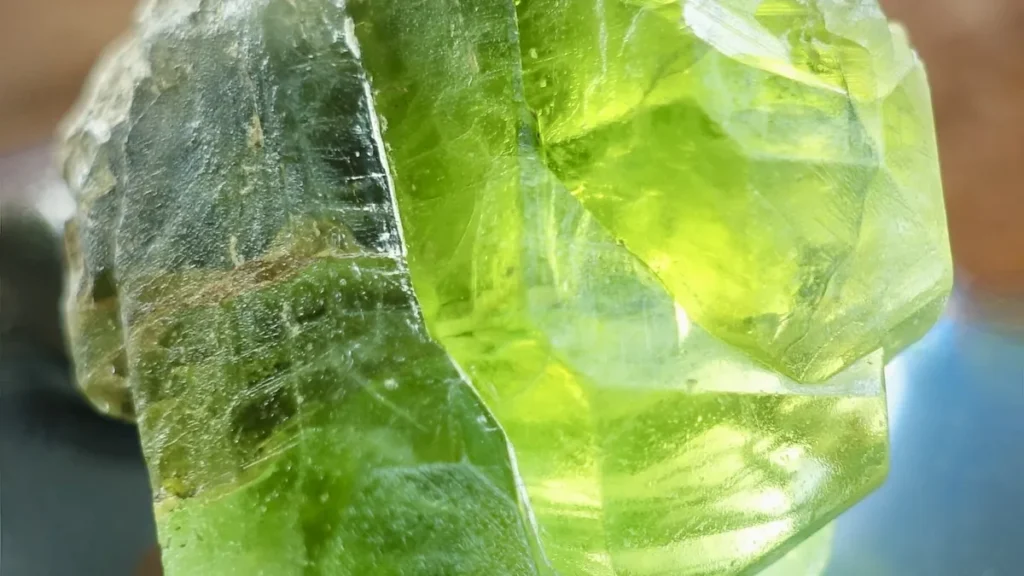
The team measured carbon isotopes inside microscopic magma droplets trapped in green olivine crystals from eruptions in Hawaii. These undegassed melt inclusions form when crystals trap tiny pockets of molten material before gases escape, and they keep a chemical record of the magma while preserving dissolved gases such as carbon dioxide. The samples came from the Keanakākoʻi eruptions from 1500 to 1840 and the Kīlauea Iki eruption in 1959. The researchers analyzed them with a recently developed analytical technique.
Hawaii suits the investigation because its volcanoes receive magma tied to a deep mantle plume. These rising columns, called mantle plumes, begin near the boundary between Earth’s core and mantle; as they ascend, some rock partially melts and can erupt through volcanoes. The researchers targeted Kīlauea because its magma may sample material from deeper in the plume than the Tantalus Rift eruptions.
Lava from Tantalus Rift, on the outer margins of the Hawaiian mantle plume, shows a normal mantle carbon signature of approximately minus 7 per mil, or parts per thousand. Samples from the center of the Kīlauea plume show a much heavier signature of approximately minus 1 per mil. Ordinary mantle carbon lies between approximately minus 5 and minus 7 per mil, making the Kīlauea value highly unusual.
“We interpret this as carbon leaking from the core,” Grewal said. Moussallam said the trapped melt droplets are like fossils because they retain information from deep inside the planet.
“We think that we found evidence of carbon from Earth’s core leaking into the core-mantle boundaries and traveling all the way to the surface,” Moussallam said. He cautions that the core-carbon evidence is not yet definitive and that additional measurements are necessary. The team does not really know and needs more measurements because the core origin remains uncertain.
The researchers propose carbon arrived in the giant impact or late accretion phase of Earth’s main assembly, which culminated around 4.5 billion years ago when Theia, a Mars-sized protoplanet, collided with Earth. Moussallam said the isotopic makeup of carbon in Earth’s core should retain the signature of Earth’s building blocks from the time of its creation.
Carbonaceous chondrites are primitive meteorites formed more than 4.5 billion years ago in colder regions farther from the Sun than Earth; they contain organic compounds, water, and early solar system material. Scientists distinguish them from noncarbonaceous chondrites from the inner solar system, though how much each type contributed to Earth’s formation remains debated.
Earth’s core contains carbon estimated at 0.09% to 2.0% by weight, making up two-thirds of the planet’s total carbon budget. Earth holds roughly two billion billion tons of carbon, most of it located beneath the surface.
Direct sampling remains beyond current technology: beneath the crust, the mantle extends approximately 1,800 miles downward, and below it sits the outer core, a layer about 1,400 miles thick made of molten metal around the solid metallic inner core. Early Earth reached temperatures high enough for materials to separate. Dense metallic iron sank toward the center, lighter rocky material stayed above, and elements attracted to metal followed the iron into the core.
Earlier results support the idea that core material is not permanently locked in Earth’s center. A 2025 study in Nature identified unusual ruthenium and tungsten isotopic signatures in Hawaiian volcanic rocks, evidence that material from Earth’s metallic core had entered the rocky mantle and moved toward the surface. A study published in Science Advances in October 2026 suggested primordial hydrogen might also escape Earth’s core and potentially contribute water to the mantle.
The researchers caution that the carbon might not come straight from the core because it could gather carbon along the way, while mantle reservoirs and recycled surface carbon make distinguishing sources a major challenge. They have not conclusively shown that the unusual carbon originated in Earth’s core or determined exactly what share of the planet’s carbon came from carbonaceous meteorites.
Still, the authors say life on Earth may owe part of its existence to material delivered from the distant solar system and to geological processes thousands of kilometers beneath the surface.
Additional researchers on the team work at the Institut des Sciences de la Terre d’Orléans in France, the U.S. Geological Survey, the University of Oregon, the University of Hawaiʻi at Mānoa, Brown University, and the University of California-Santa Barbara. The U.S. National Science Foundation provided part of the funding. Columbia Climate School released information about the study on November 23, 2026.

Join the discussion