Key facts
- Josef Aschbacher said the US government could downgrade NASA or block foreign access to public and private US spaceflights depending on who was in the White House.
- Four of Europe's 11 astronauts will travel to the International Space Station next year through NASA.
- ESA used NASA and Russian launchpads to send European astronauts to the International Space Station until 2022.
- ESA argued that relying on NASA for human space flights is risky because substantial parts of European taxpayers' money could end up in US coffers.
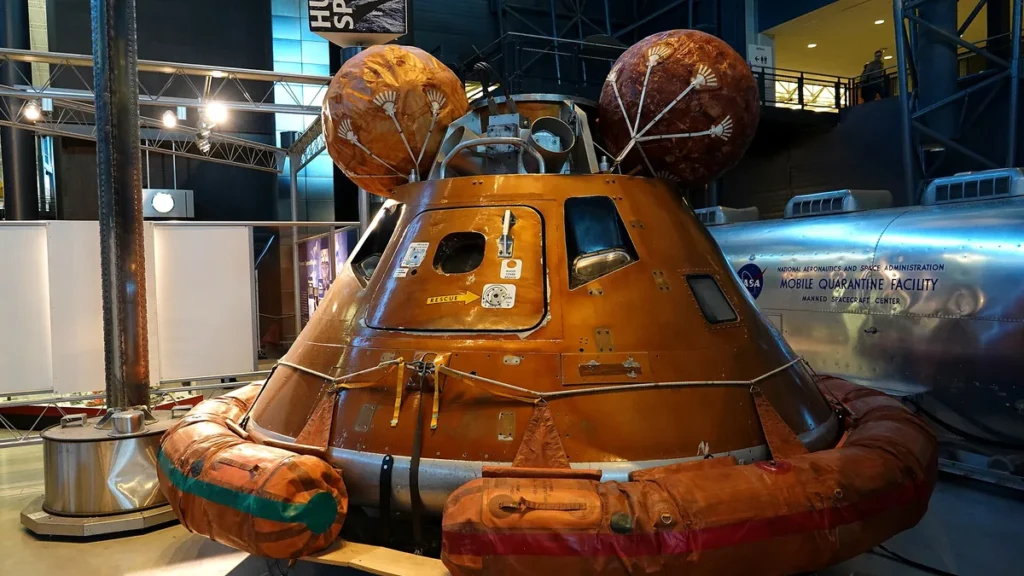
European space ministers will meet in Rome on 15 December to vote on whether to approve a roughly €10 billion (£8.4 billion) programme for Europe’s first independent human spaceflight, aimed at ending reliance on the United States for launching astronauts, The Guardian reported.
The Guardian reported that approval would require construction of a European space shuttle and launch and landing pads likely located in French Guiana, home of the Guiana Space Centre where Arianespace has sent satellites into orbit for Europe for around 45 years. The outlet identified French Guiana as the likely site because it already hosts the centre, from which Arianespace has launched European satellites for roughly four decades.
Josef Aschbacher, director general of the European Space Agency, said a positive decision would be quite a historic moment for Europe. Aschbacher made the remark while discussing the upcoming ministerial decision in Rome, and he leads the agency that would manage the programme if ministers approve it.
He said Europe’s desire for autonomy relates to geopolitical circumstances and uncertainties about how human spaceflight will continue in the United States. He said ties with NASA were good and strong, but conditions in the United States could change, so Europe had to be ready for every eventuality. The US government could downgrade NASA or block foreign access to public and private US spaceflights depending on who was in the White House, he said. He also cited commercialisation of space by tycoons such as Elon Musk and concerns over Russia’s military space plans, including a potential nuclear weapon, as exposing vulnerabilities in Europe’s space plans.
The plan is not to stop using NASA but to supplement it, Aschbacher said, making Europe a space power alongside Russia, China and the US, and establishing sovereignty and industrial opportunities with hi-tech engineering spinoffs. Aschbacher described the programme as additive rather than replacement-oriented, intended to position Europe as an independent space power while retaining cooperation with the United States. He has already been involved in talks with Japan and the United Arab Emirates as part of international discussions beyond Europe on the human spaceflight initiative.
The Guardian reported that four of Europe’s 11 astronauts will travel to the International Space Station next year through NASA. ESA used NASA and Russian launchpads to send European astronauts to the International Space Station until 2022. Since the Hermes project of 1992, European states have not pursued their own human spaceflight programme; Hermes was a space plane meant to rival NASA’s space shuttle.
ESA argued that relying on NASA for human spaceflight is risky because substantial parts of European taxpayers’ money could end up in US coffers. Josef Aschbacher said reliance on NASA funds US companies instead of European ones, and stronger US companies would weaken European firms by pushing them out of the market, citing the trickle-down effect of space exploration driven by extreme engineering.
Having control of its own space programme would make Europe, next to China, Russia and the US, capable of bringing its own astronauts to space, Josef Aschbacher said, stepping up European industry in a critical infrastructure domain. The ESA chief described independent human spaceflight as a marker of major power status and a boost to European industry in a strategically important future domain.
The Guardian reported that ESA will begin preparatory work using €280 million freed up by NASA project pauses after its 23 member states approve in December. A full funding call will follow at the next ESA ministerial budget session in 2028.
ESA’s founding mandate was changed from exclusively peaceful purposes to support non-aggressive defence and security missions last November, and its budget rose to a record €22.1–€22.3 billion, a 33% increase on past budgets, The Guardian reported. Aschbacher described the mandate change as complete, saying it now allows the agency to talk proactively to defence ministers and the military. Germany contributed 23% of the budget and France and Italy 16% each.
Josef Aschbacher said Europe had no say in the recent pause of two NASA projects, the Mars sample return project and the lunar gateway, which would have brought particles back from the planet. Despite strong relations with NASA, European influence over US project decisions remains limited, as shown by recent pauses affecting lunar and Mars initiatives.
The Guardian reported this week that Russia is considering the launch of nuclear weapons into space. In October, reports said Russia’s low-Earth satellite Kosmos 2612 came within one mile of a commercial satellite for Earth observation that could provide national security for countries including Ukraine. Josef Aschbacher said talks of space wars are raising concerns, and kinetic damage or weapons deployment would destroy and render whole orbits unusable for everyone because blowing up part of space would cause damage to all, including the aggressor. On defence and security, Josef Aschbacher said Europe was catching up very fast.
Recent limits on Ukraine’s access to Starshield, Starlink’s military variant developed by Musk’s company for the Pentagon, have raised questions about Europe’s military space capabilities and its ability to rival Starlink, a network central to Ukraine’s drone warfare, The Guardian reported. Limits on Starshield access have intensified debate over how quickly Europe can develop military space capabilities and rival commercial constellations such as Starlink.
The Guardian reported that Europe’s IRIS2 project, a Starlink rival, will only become operational in 2029 even though it was brought forward a year. IRIS2’s delayed operational date means Europe’s Starlink competitor will not be ready until the end of the decade, even after its schedule was accelerated by one year.
Josef Aschbacher said SpaceX was some years ahead but Europe has OneWeb, a UK-French-backed constellation of 600 satellites in low orbit, and IRIS2 would offer superior technology to Starlink when it launches. The ESA chief acknowledged SpaceX’s lead while pointing to OneWeb and future IRIS2 capabilities as European assets in the satellite communications market.


Join the discussion