Key facts
- Scientists found that 12 microscopic dust grains from the Kuiper Belt beyond Neptune carry chemical evidence of water enriched with heavy oxygen isotopes, based on samples collected from Earth's stratosphere.
- Solar energetic particle tracks, tiny scars left by energetic particles from the sun, helped trace the grains to the Kuiper Belt, which produces around a hundred times more such tracks than asteroid grains.
- Keller's team found that Kuiper Belt water has an oxygen-18 to oxygen-16 ratio about 15% higher than Earth's oceans, setting an upper limit on heavy oxygen water in the Kuiper Belt.
- The dust grains date to 4.5 billion years ago, forming as planets assembled from gas and dust in a disk around the young sun.
Keller’s team published the dust grain analysis on Nov. 11, 2026 in Science Advances, reporting that 12 microscopic grains from the Kuiper Belt beyond Neptune carry chemical traces of water containing heavy oxygen isotopes from material gathered in Earth’s stratosphere.
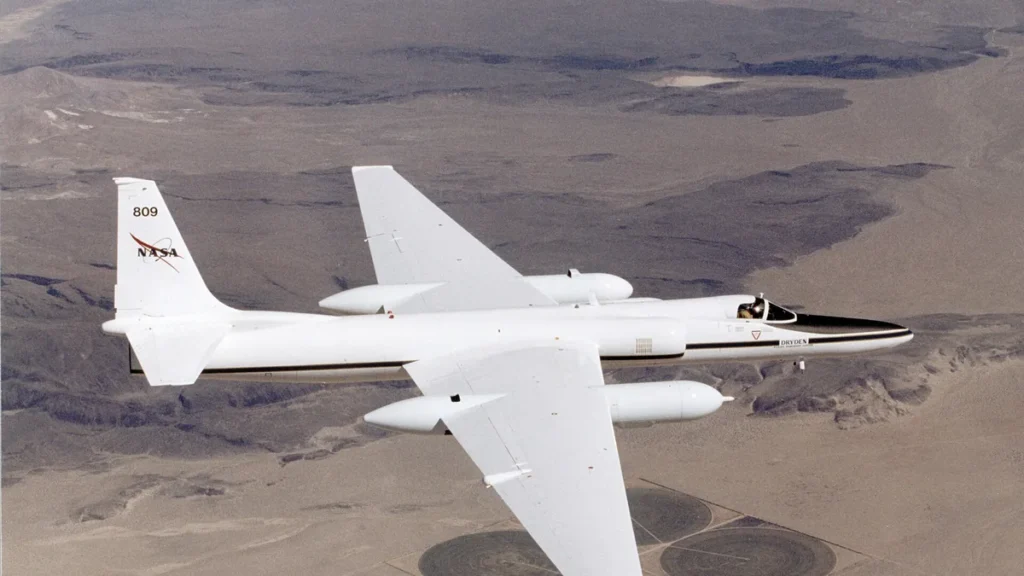
NASA’s ER-2 high-altitude research aircraft collected the particles through the agency’s Cosmic Dust program. Johnson Space Center hosts the airborne sampling effort, which has operated since 1981. The grains survived atmospheric entry because they are compact, lightweight, and slow-moving; without the aircraft’s interception, they could have fallen to the ground.
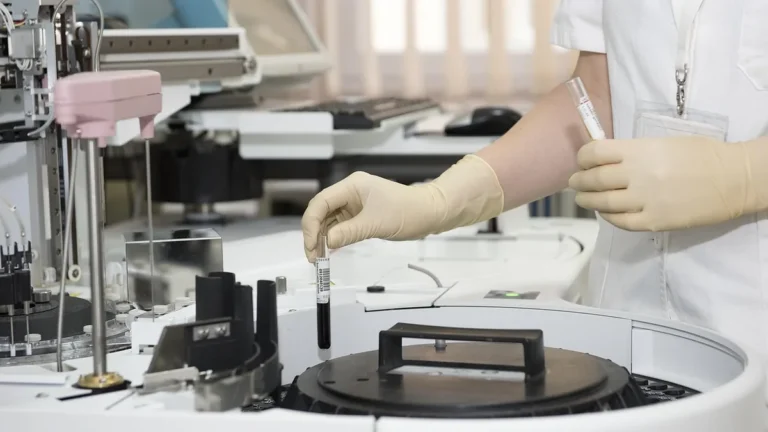
Researchers at NASA’s Johnson Space Center used advanced electron microscopy, while colleagues at the University of California, Los Angeles used an ion microprobe, to examine the minerals and oxygen isotopes in the grains. NASA researcher Lindsay Keller led the team. The tools revealed clays created when water with heavy oxygen reacted with silicate minerals holding iron-nickel and sulfide in cold conditions.
The grains contain hydrated clays such as saponite, iron-nickel sulfides, and about four times more carbon than a primitive meteorite normally holds. That suggests liquid water once moved through the Kuiper Belt body that acted as their parent. The water was probably warmed by radioactive decay or by the energy of another impact on the parent body, and the clays formed as heavy-oxygen water interacted with silicate minerals in cold temperatures.
In this research, heavy water means water built from heavier oxygen isotopes—oxygen-17 with nine neutrons and oxygen-18 with ten neutrons—rather than the deuterium form used in nuclear reactors. Ordinary light oxygen is oxygen-16, which has eight protons and eight neutrons.
Keller’s team found that water from the Kuiper Belt has an oxygen-18 to oxygen-16 ratio roughly 15% higher than Earth’s oceans, which sets an upper limit on heavy oxygen water in the Kuiper Belt. The figure comes from chemical modeling of the original water on the parent rock, using oxygen isotope ratios measured in the clays inside the dust grains.
The grains date to 4.5 billion years ago, when planets assembled from gas and dust in a disk around the young sun. That puts the material in the earliest stage of planet building, a period researchers study to learn how different substances spread through the young solar system.
NASA’s Genesis spacecraft launched in 2001 and collected solar wind particles before returning them to Earth. Researchers studying the material found that our star holds a higher share of ordinary light oxygen compared with Earth and most meteorites. That result implies heavy oxygen becomes more common farther from the sun and provides a benchmark for comparing isotope ratios in the Kuiper Belt samples.
Tiny scars left by energetic particles from the sun helped trace the grains to the Kuiper Belt, which produces around a hundred times more of these tracks than asteroid grains. The grains collect these marks during their long journey through interplanetary space, and counting them helps separate Kuiper Belt dust from dust that started in the asteroid belt.
Keller’s team wrote that the outer solar system’s heavy water reservoir was cut off from inner regions, most likely by Saturn or together with the ice giants, through a high-pressure disk ridge barrier. The authors propose that this barrier prevented heavy oxygen from moving inward to reach planetary bodies near the sun, which explains why most meteorites lack substantial heavy oxygen content.
Evidence from one carbonaceous chondritic meteorite and from comet 67P/Churyumov–Gerasimenko previously showed that minerals formed when silicate rock interacted with oxygen-heavy water, though it was unclear whether these cases stood alone. The new stratospheric dust grains offer a broader data point beyond these earlier isolated signs of heavy water far from the sun.
Researchers noted similarities between the dust grains and an unusual meteorite called Acfer 094, suggesting it might have come from the Kuiper Belt, though the idea remains unproven. Since the findings rely on just twelve grains, more samples could show whether the results apply more broadly.
Roughly 4.5 billion years ago in the early solar system, ultraviolet light split carbon monoxide molecules at the disk’s outer edge, releasing heavy oxygen that bonded with hydrogen to form water rich in oxygen-17 and oxygen-18. This self-shielding model is the leading explanation for oxygen sorting in the young solar system, though testing it proved hard because most meteorites come from the main asteroid belt rather than from farther out.
Poynting–Robertson drag pulls Kuiper Belt dust inward toward the sun because grains take in sunlight and send it back as infrared, which slows their orbital motion. This process carries outer solar system material to Earth’s vicinity without a spacecraft visiting the Kuiper Belt.


Join the discussion