Key facts
- Nearly 650 employees at ArianeGroup's Bremen plant walked out for 24 hours on November 24, 2026.
- The Bremen site manufactures the upper stage for the Ariane 6 launch vehicle.
- The union said the nearly 650 striking ArianeGroup workers in Bremen accounted for almost the entire workforce at the site, citing an October company update.
- ArianeGroup told European Spaceflight that the walkout left the Ariane 6 upper-stage delivery schedule unchanged.
Nearly 650 employees at ArianeGroup’s Bremen plant walked out for 24 hours on Nov. 24, 2026, in a warning strike called by German trade union IG Metall. A warning strike is a brief work stoppage during labor negotiations.
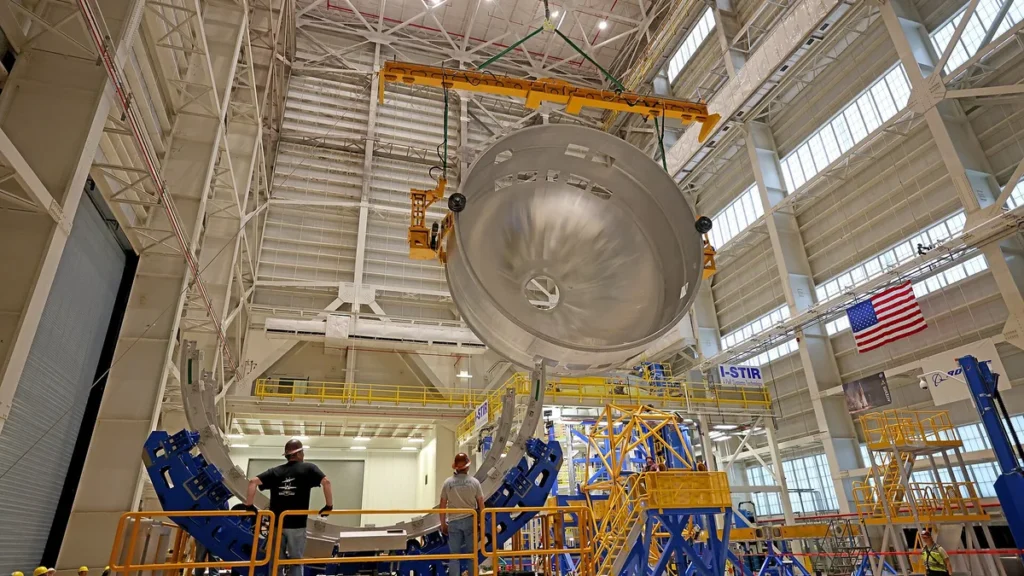
The Bremen facility is responsible for producing the upper stage for the Ariane 6 launch vehicle, the top section of the rocket that fires after the first stage to place a payload in orbit. European Spaceflight reported that the stoppage was part of a coordinated labor dispute across northern Germany’s metal and electrical industry. The union said on Nov. 24 that nearly 39,000 employees at 22 facilities across the region had joined the series of 24-hour walkouts.
IG Metall said the nearly 650 striking ArianeGroup workers in Bremen accounted for almost the entire workforce at the site. The union cited an ArianeGroup update published in October as the basis for that figure.
ArianeGroup told European Spaceflight that the walkout left the Ariane 6 upper-stage delivery schedule unchanged. The company said it adjusted production at the Bremen site to cope with the industrial action.
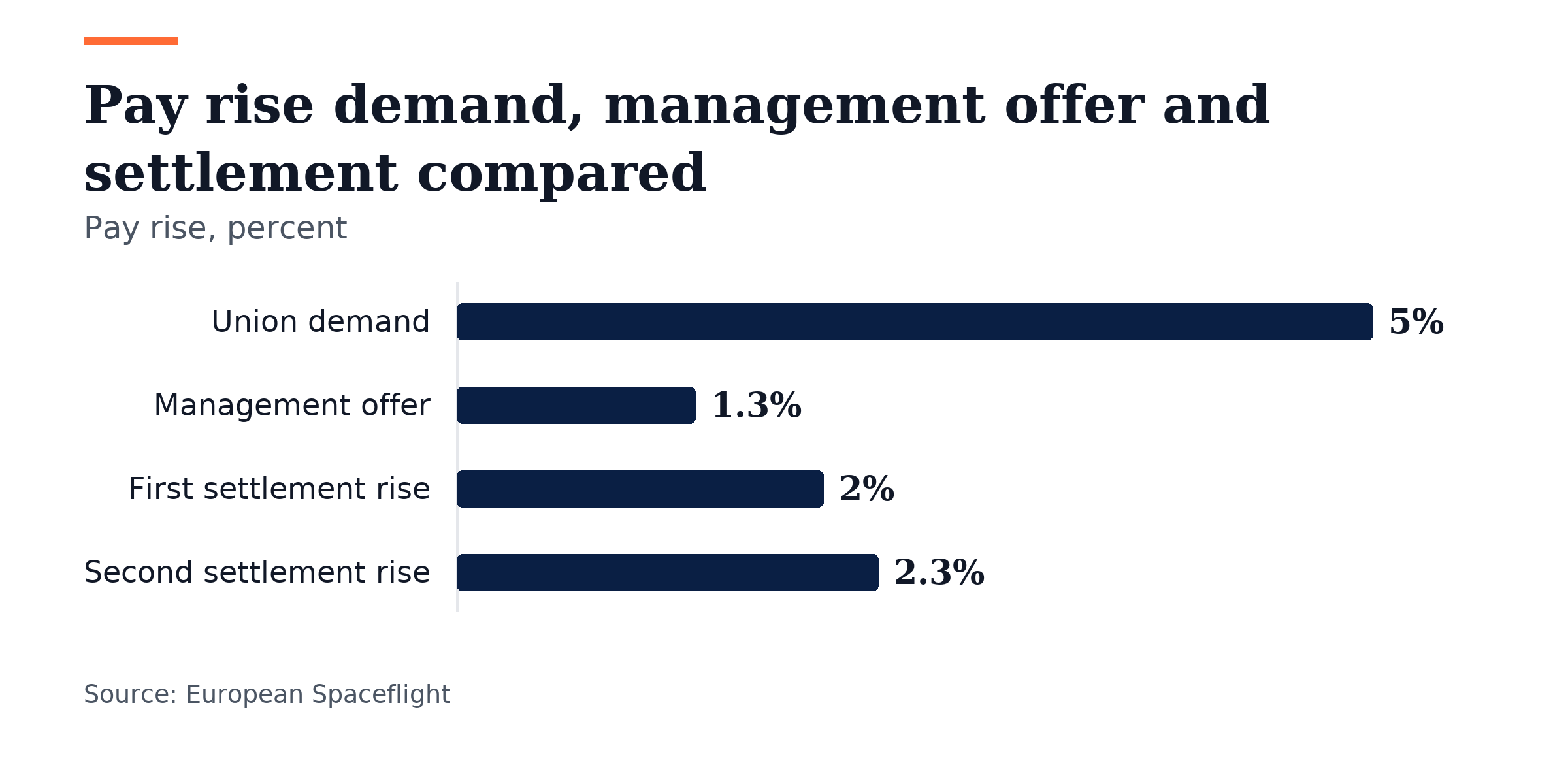
The union’s demands reached beyond pay. IG Metall called for a 5% pay increase and binding employer pledges on investment and job security during the collective bargaining talks that preceded the warning strikes. Collective bargaining refers to negotiations between unions and employers over wages and conditions.
Management had proposed no lasting wage increase during the initial 20 months of a new bargaining deal, followed by a 1.3% rise. That offer came before the extended negotiating session held in Mannheim.
After 26 hours of talks in Mannheim, IG Metall announced on Nov. 26, 2026, that it had reached a deal with employers’ associations. The agreement brought an end to the labor dispute behind the one-day stoppages across northern Germany.
The settlement provides a 2% pay rise beginning in May 2027 and a further 2.3% rise beginning in April 2028 under the terms of the new collective bargaining agreement. The deal also sets out new provisions meant to secure industrial investment and protect jobs.



Join the discussion