Key facts
- Using binoculars or a telescope can turn Thanksgiving sky watching into a memorable family tradition.
- As darkness falls on Thanksgiving, Saturn glows at first magnitude with sedate yellow-white light, noticeably brighter than Fomalhaut, about 40 degrees or four fist-widths to its lower right.
- A telescope magnifying above 30-power may show Saturn's rings on Thanksgiving night, as may high-power binoculars that are steadied or have image stabilization.
- About an hour later, the moon will stand roughly 10 degrees above the horizon, equal to a clenched fist at arm's length.
After dinner on Thanksgiving night, Nov. 26, 2026, you can look for Saturn, the waning gibbous moon and the International Space Station, Space.com skywatching columnist Joe Rao says.
Most American families sit down to a traditional Thanksgiving turkey dinner during mid-to-late afternoon hours on Thursday, Nov. 26, 2026, before darkness falls. Space.com frames the holiday evening as a chance to leave the dinner table or living room television and go outside if skies are mainly clear. Binoculars or a telescope can turn Thanksgiving sky watching into a memorable family tradition. The source suggests inviting family outside after dinner instead of watching football or other holiday fare on television.
Joe Rao teaches and lectures at New York’s Hayden Planetarium and writes about astronomy for publications including Natural History magazine and Sky and Telescope. He is Space.com’s skywatching columnist, a veteran meteorologist and eclipse chaser who worked in the Putnam Valley area of New York for more than 21 years and is 8-time Emmy-nominated. He is also identified as a veteran meteorologist and eclipse chaser who writes for multiple astronomy publications. Rao tracks lunar and solar eclipses, meteor showers and more on Twitter and YouTube.
As darkness falls on Thanksgiving, Saturn glows at first magnitude with sedate yellow-white light, noticeably brighter than Fomalhaut, about 40 degrees or four fist-widths to its lower right. No telescope is needed to see Saturn after sunset; it appears as a golden glow above the horizon in the southeast sky once darkness falls. This evening appearance is separate from the pre-dawn planet parade involving Mercury, Venus, Mars and Jupiter. The guide introduces Saturn first as the Lord of the Rings target for telescope viewers after darkness falls on Turkey Day.
Saturn’s famous ring system is tilted only about six degrees toward Earth on Thanksgiving night. The shallow tilt makes the rings a special sight that often draws astonished reactions from children seeing them for the first time. A telescope magnifying above 30-power may show Saturn’s rings on Thanksgiving night, as may high-power binoculars that are steadied or have image stabilization. The source describes Saturn’s rings as glowing with an inner light and says first-time viewers, especially children, often react with astonishment at the sight.
Joe Rao says, “No… that’s the real thing.” Rao’s guide treats the shallow ring tilt as the evening’s telescope highlight after Saturn itself is spotted with the naked eye.
The waning gibbous moon, 21⁄2 days past full, will first appear above the east-northeast horizon around 6:25 p.m. local time on Thanksgiving. After rising, the moon will climb higher and be better positioned for evening study about an hour later. About an hour after rising, it will stand roughly 10 degrees above the horizon, equal to a clenched fist at arm’s length.
Lunar features near the terminator, the line of darkness, stand out in bold relief on Thanksgiving night with stronger shadows and clearer details. Observers should pay particular attention to this border during Thanksgiving night viewing. Mare Crisium, the Sea of Crises, is a dark circular area cut by the terminator. Immediately above this dark lunar sea is a ring of rugged mountains mentioned in the same observing tip.
Above Mare Crisium lies a rugged mountain ring about 50 miles (80 km) wide, peaking at 14,400 feet (4,389 meters). It resembles a crater partly in shadow when the sun is low. The ring sits directly above the dark lunar sea that the terminator cuts across. Observers with a telescope can look for the mountain ring just above the Sea of Crises during the evening session.
Viewers outside the southern United States can see the International Space Station pass over on Thanksgiving evening. The source calls the station the biggest and brightest human-made object orbiting Earth. Local Thanksgiving ISS schedules are available from three websites, including one where users enter a city, click a map pinpoint, and sign up for email or text alerts when the station passes. The source presents these websites as the way to learn when and where to sight the station from a hometown.
The International Space Station orbits at 260 miles (420 km) and 17,500 mph (28,200 kph), appearing as a fast high-flying jet that may take six or seven minutes to cross the sky. At that speed the station can be confused with aircraft lights and appears white with a slight yellow tinge. It can shine at magnitude -5.6 at its brightest, twice as bright as Venus. The source provides this brightness comparison to help observers identify the station in the sky.
The full Beaver Moon in November rises just before Thanksgiving and is a supermoon, appearing larger and brighter than a typical full moon. WeatherBug frames Thanksgiving week as bringing crowded travel plus this lunar sight. Peak brightness for the Beaver Moon arrives on Tuesday, Nov. 24, at 9:53 a.m. Eastern Standard Time. Viewers should plan to watch on Monday, Nov. 23, or Tuesday, Nov. 24.
On Thanksgiving, Nov. 26, the moon will be technically waning yet still around 98% illuminated, appearing nearly full. Thanksgiving falls two days after the exact full moon, offering another viewing opportunity if clouds blocked Monday or Tuesday. The holiday therefore offers a second chance to see the lunar disk after the Monday and Tuesday viewing dates.
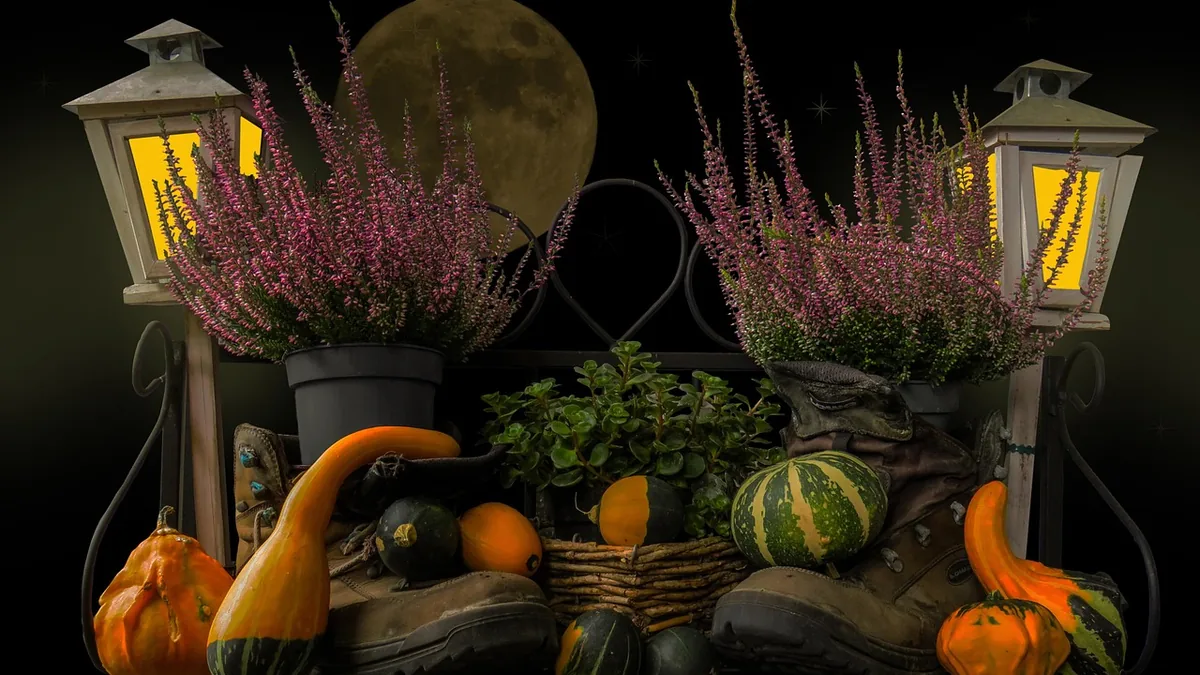
According to NASA, observers should look toward the east near sunset on Nov. 24 when the supermoon starts to rise. The Weather Channel says the moon illusion makes the supermoon appear biggest and brightest to the human eye when it sits low on the horizon, so that is the best time to view it. The Weather Channel connects this viewing tip to the Thanksgiving-week supermoon.
The full moon name comes from beavers preparing lodges and winter food, and November was traditionally tied to freezing waterways and beaver trapping. A full moon counts as a supermoon when it occurs near perigee, the nearest point in the moon’s slightly oval orbit around Earth. This full moon starts a run of three straight supermoons, with more in December and January. This places the Thanksgiving-week supermoon within a longer sequence of large, bright full moons.
Clouds matter most when watching the moon, though fog, rain, snow and wildfire smoke can also obscure it. A thin layer of clouds may create a glowing halo around the moon, while a solid overcast layer will likely block it entirely. Because moonrise differs by location, there is no nationwide viewing time; people should check local moonrise and go outside 10 to 15 minutes early.
Thanksgiving week 2026 brings two meteor showers, a planet parade and a supermoon into the sky. The Weather Channel frames the week as a show with multiple celestial events for families and friends to catch. A supermoon arrives on Nov. 24, two days before Thanksgiving, and remains about 95% full on the holiday. This is the first of four supermoons, meaning several more bright full moons are to come.
On the pre-holiday weekend of Nov. 20-22, Mercury, Venus, Mars and Jupiter aligned in a planetary parade visible toward the east-southeast. Mars and Jupiter are naked-eye objects just before sunrise in the southeast. Though more than 300 million miles apart, they look almost touching in what astronomers call a conjunction. The two planets look like really bright stars but are not stars, and they are actually far apart in space.
Two meteor showers appear through November. The Taurids are known for bright blazing fireballs and seem to come from the constellation Taurus. Northern Taurids can be seen into early December, while Southern Taurids last through Nov. 20. This distinguishes the two Taurid showers by their end dates in late autumn and early winter.
The Leonids last through the end of the month and are visible across the sky, with the eastern sky offering the best view. They appear to originate from the constellation Leo but can be viewed across the sky, not just from that point. Viewers do not need to face Leo itself to catch the meteors.
Viewers wanting to catch meteor showers should seek a dark, wide-open sky and let their eyes adjust to the dark. This is general observing advice from the source for catching meteors.
On Nov. 30 and the preceding weekend days, a crescent moon will appear near Jupiter and Mars, best viewed in the eastern morning sky before dawn. This crescent moon meetup occurs after Thanksgiving week and is best seen before dawn. Observers looking east before sunrise can watch the three objects hover near one another.
Face southeast after darkness falls for Saturn’s golden glow, turn toward the east-northeast after dinner for the moon’s first appearance, and check local listings if you live outside the southern United States for the space station’s pass. Moonrise differs by location, so there is no nationwide viewing time; observers should check local moonrise and go outside 10 to 15 minutes early.
Join the discussion