Key facts
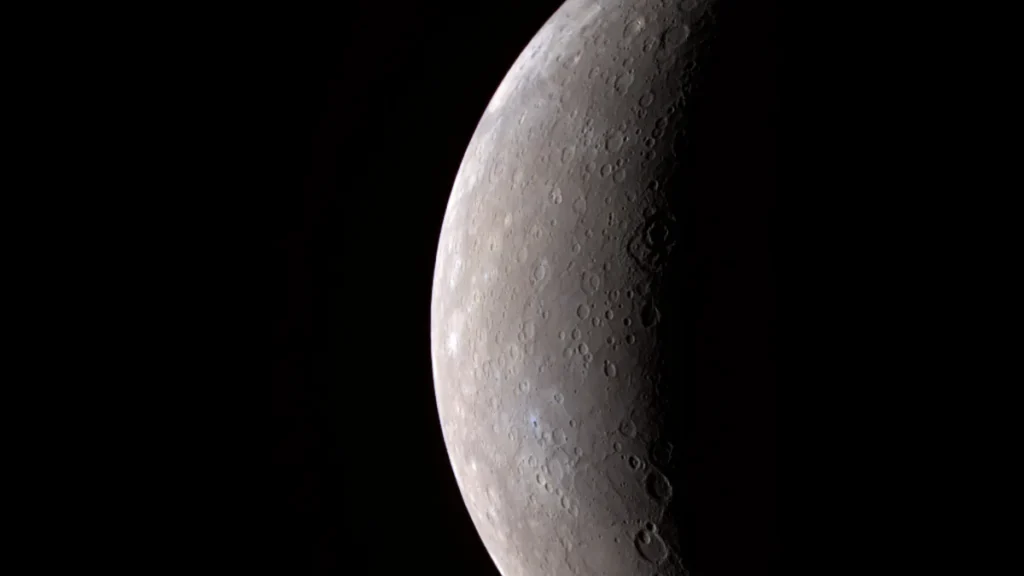
- BepiColombo entered orbit around Mercury on November 21, 2026, becoming only the second spacecraft to orbit the planet after NASA's MESSENGER.
- The November 21 thruster burn was planned for 37 minutes but delivered only 77% of the intended velocity change because of a software issue.
- The software problem affected the craft's orientation and thruster control, and the cause remains under investigation by ESA and Airbus.
- BepiColombo achieved Mercury orbit in 75 hours rather than the scheduled 58 hours.
BepiColombo entered orbit around Mercury on Nov. 21, 2026, becoming only the second spacecraft to orbit the planet after NASA’s MESSENGER, which orbited Mercury from 2011 to 2015. ESA confirmed orbital capture after the engine burn.
The mission’s Nov. 21 thruster burn was planned to last 37 minutes but delivered only 77% of the intended velocity change because of a software issue. ESA stated the burn was automatically interrupted and the probe entered safe mode once contact was restored, and the shortened burn still achieved orbital capture.
The software problem affected the craft’s orientation and thruster control, and the cause remains under investigation by ESA and Airbus. BepiColombo achieved Mercury orbit in 75 hours rather than the scheduled 58 hours. Mission controllers revised the remaining maneuvers without adding extra thruster burns, and the orbit is stable.
On Nov. 21 at 17:51 CET, BepiColombo reoriented itself as part of the maneuver sequence before the thruster burn, causing a planned loss of communications with Earth. At 19:24 CET, the spacecraft fired four chemical thrusters while passing approximately 635 kilometers above Mercury’s surface. Communications were expected to resume at 22:37 CET, but public confirmation came later.
Internal confirmation of orbital capture came at about 01:00 CET on Nov. 22, but ESA did not publicly confirm re-established contact until 03:02 CET that day. When contact was restored, teams discovered the spacecraft had entered safe mode, a protective status in which a spacecraft pauses non-essential activity and awaits instructions. Ignacio Tanco, ESA’s BepiColombo flight operations director, said, “Upon finding Bepi in safe mode, it was like flipping a switch.”
ESA disclosed at 20:15 CET on Nov. 22 that the burn fell short of plan because of a software problem. ESA’s initial update confirmed orbital capture and said teams were assessing telemetry, while a later account fixed the internal capture time at about 01:00 CET; the 23 November breakdown then disclosed the safe-mode discovery and the velocity shortfall.


Join the discussion