Key facts
- NATO announced STARLIFT at the NATO EDGE 26 event in Turkey on Nov. 17, 2026, as a multinational initiative to help secure satellite launches for military purposes.
- Starlift will give military users a launch service to help obtain slots on commercial rockets, using spaceports across NATO territory and South Korea.
- STARLIFT has been under development since 2024.
- France, Hungary, Luxembourg and the United States, original STARLIFT participants from 2024, are omitted from the current funding list.
NATO announced STARLIFT, a multinational satellite launch initiative, on Nov. 17, 2026, at the NATO EDGE 26 conference in Izmir, Turkey.
The alliance framed assured access to space as a critical priority during the Izmir conference because threats from Russia are increasing. Planning for the initiative began in 2024. NATO declared space an operational domain in 2019. Reliable access to space is essential for NATO military operations including communications, navigation and intelligence missions.
Ten NATO allies and the Republic of Korea signed funding commitments for Starlift on Oct. 29, 2026, during a meeting of NATO’s National Armaments Directors, channeling money through the NATO Support and Procurement Agency. The allies are Belgium, Canada, Finland, Germany, Italy, the Netherlands, Norway, Sweden, Türkiye and the United Kingdom. NATO announced the pledges at the NATO Edge conference in Izmir after the October signing. The 11 nations pool funding for a lean administrative cell at the procurement office, creating a centralized clearinghouse to pair military and institutional payloads with allied launch infrastructure.
The alliance created a small coordination office inside the NATO Support and Procurement Office to manage the Starlift brokerage. The office matches alliance launch demand with available flight slots at allied spaceports. Starlift is meant to link allies with commercial launch firms and spaceports so satellite access becomes steadier, faster and more affordable. It will give military users a launch service for obtaining slots on commercial rockets, using spaceports across NATO territory and South Korea.
Work on STARLIFT began in 2024, building on the alliance’s 2019 decision to declare space an operational domain. The initiative has been under development since 2024 as a way to match military and institutional demand with commercial launch capacity. The brokerage spreads demand across a broader network of allied spaceports rather than relying only on traditional, congested launch ranges. The service builds on a network of spaceports from across the Alliance and South Korea.
France, Hungary, Luxembourg and the United States participated in the original STARLIFT effort in 2024 but are absent from the current funding list. Spain, one of the 14 Allies that launched the initiative in 2024, is also not among the funders. NATO’s public statement did not disclose program costs or the financial contributions of partner nations. The United States remains part of the effort as an associated member, offering expertise and lessons from U.S. launch initiatives, including interoperability work.
An alliance official said American leadership in the launch sector helps inform STARLIFT’s development, and more allies and partners are expected to join in the future. The alliance extended invitations to South Korea, Japan, Australia and New Zealand to join STARLIFT in May 2026. Canada’s Defence Minister David McGuinty said in March 2026 that the country intended to join as a full member. NATO later counted Canada as STARLIFT’s 15th participant at a July 2026 summit in Ankara.
Canada’s National Defence said on Oct. 21, 2026 that Canada had joined as a full member, and Canada now ranks among the 10 Allies and South Korea paying for the initiative. Canada’s National Defence holds a ten-year lease for a dedicated pad at Maritime Launch Services’ Spaceport Nova Scotia, an agreement signed in March 2026. The country also signed a ten-year standby pact with NordSpace at the Atlantic Spaceport Complex in St. Lawrence, N.L., in October 2026. Maritime Launch Services operates the Nova Scotia facility, while NordSpace operates the Atlantic Spaceport Complex.
Seoul’s defense ministry signed an MOU with NATO on STARLIFT in Brussels on Oct. 29, 2026, making South Korea the first non-Alliance participant. South Korea’s inclusion deepens space security coordination between NATO and major Indo-Pacific defense partners and shifts demand from traditional congested launch ranges. Seoul is studying the construction of a second launch site to expand local capacity and reduce reliance on foreign services. Europe operates launch sites such as Norway’s Andøya Spaceport and the UK’s Spaceport Cornwall.
Starlift will draw on launch capabilities in Europe, Canada and partner states such as the Republic of Korea to create geographical diversity beyond Europe. More than one route to orbit during a crisis or conflict strengthens collective resilience, though launch sites also need protection and the ability to operate through disruption. Daniel Hilgert, head of section for Space Defence Industry in NATO’s Innovation and Armaments division, described launch access as a genuine constraint for defense users and industry. He said industry wants more control over launch within its own supply chains.
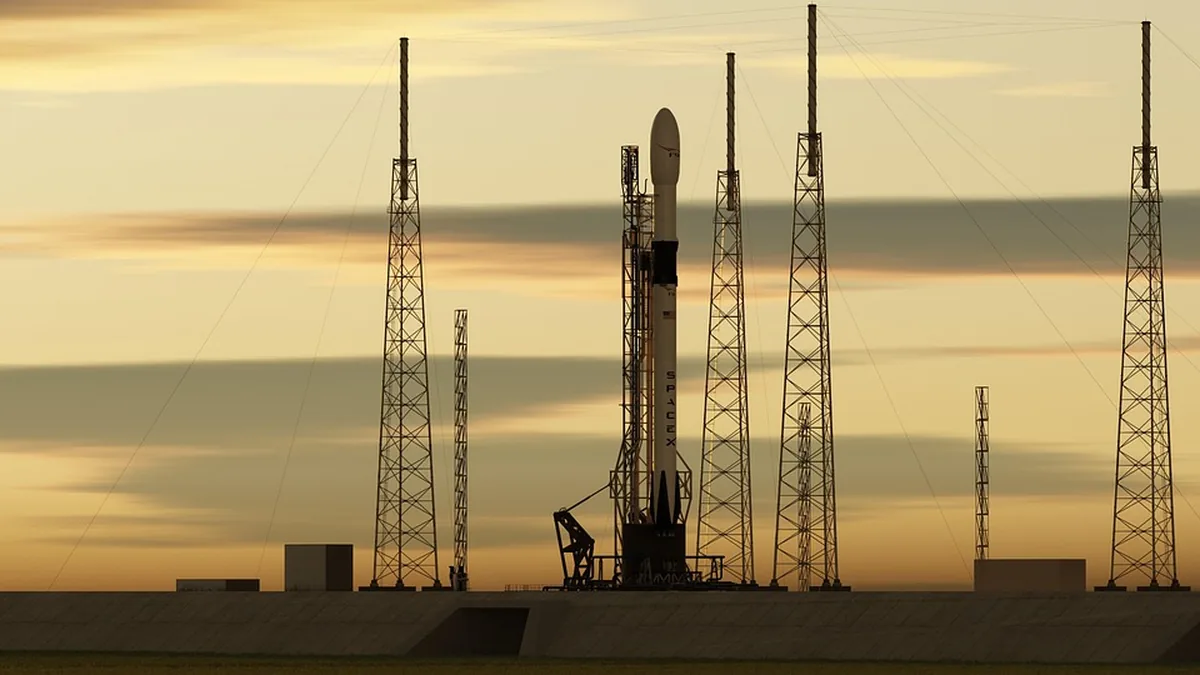
NATO called access to space one of the biggest industry issues and a critical priority as threats from Russia rise.
“We need more launch capacity and reliable access for companies of all sizes across the alliance,” Hilgert said. He said the alliance requires additional launch capacity and dependable access for firms of every size to sustain a diverse and resilient transatlantic space industrial base. Hilgert added that spending on satellite capabilities is now a key driver of industrial development in this domain, so launch access must keep pace as allies invest more.
Hilgert said Starlift cannot create additional rockets overnight but can help organize demand and provide launch firms with a clearer basis for investment. The initiative brings military demand together and improves access to commercial launch services rather than building new rockets immediately. He said Starlift improves certainty but is not a solution for all companies, and that organizing demand helps launch providers plan investment. Hilgert said Starlift could cover rideshare operations, which are affordable for planned deployments though urgent missions may require other approaches.
The brokerage aggregates military requirements and connects them with commercial launch services. NATO seeks tangible progress toward a working launch brokerage linking coordinated military requirements and tested arrangements for responsive space operations. Allies will set the initial operating capability timeline. Hilgert said success depends on whether member states arrange suitable launches more effectively and retain more reliable options as circumstances change.
The official said success means participating countries arrange suitable launches more effectively and have more reliable options when circumstances change. Hilgert said the European Union plays a major part in financing and backing investment in Europe’s space sector, including spaceports. He said any alliance investment in spaceports would stay subject to program eligibility rules and allied approval. NATO may later fund spaceports through the NATO Security Investment Programme, he said.
At a recent summit in Ankara, Turkey, NATO launched a front door for industry that grew out of work with the space industry group Spacenet and U.S. Space Force engagement models. Starlift aims to give companies one place to find opportunities and engage with the alliance. The program will offer a forum to create and test responsive space operation concepts, such as urgent satellite launches, while trials strengthen allied launch infrastructure and logistics and spread effective practices. The NSPO office under Starlift will list defense and institutional launch needs and match them with available launch slots at spaceports run by the 11 nations.
Starlift seeks to help spaceports develop their flight cadence and business viability while giving allied payload planners access to varied orbital insertion options (the different orbits or paths satellites can reach). Aggregated demand visibility is meant to support emerging spaceports across allied territory. Members intend to broaden Starlift’s scope to add quick-response space test procedures at allied launch sites, including standard rapid-call-up and launch readiness protocols. The brokerage responds to rising defense demand for assured distributed space access.
Keeping several qualified launch sites across allied jurisdictions cuts single-point bottlenecks and boosts collective launch resilience. Air and maritime traffic management will support safe routine and short-notice launches. Combining demand and aligning requirements will improve launch service access and back industry investment. European allies and Canada are assuming greater responsibility for shared space security.





Join the discussion