Key facts
- The unpiloted SpaceX Dragon spacecraft left the International Space Station's Harmony module at its space-facing port at 12:05 p.m. EST on November 20, 2026, after SpaceX ground controllers issued a command.
- NASA will not stream the splashdown and will post updates on its space station blog instead, while the departure webcast lacked live undocking footage due to a high-bandwidth signal coverage gap.
- The flight is CRS-35, the 35th cargo mission SpaceX has flown for NASA's Commercial Resupply Services program.
- Dragon launched from Florida on October 13, 2026, and arrived at the International Space Station on October 15, 2026.
The unpiloted SpaceX Dragon spacecraft left the International Space Station’s Harmony module at its space-facing port at 12:05 p.m. EST on Nov. 20, 2026, after SpaceX ground controllers issued a command, while the station flew about 260 miles above western China.
NASA set the splashdown for about 4:55 p.m. Eastern time on Saturday, Nov. 21, 2026, or 1:55 p.m. Pacific, off the California coast in the Pacific Ocean. Space.com listed 2155 GMT for the landing and noted no livestream for reentry. The agency will not stream the reentry live and will post updates on its space station blog instead, with updates appearing on the blog rather than a live broadcast. NASA and Space.com said the landing would be off California.
The reentry target is in the Pacific Ocean.
The departure itself was not seen live. The undocking webcast lacked live footage of the moment because a high-bandwidth signal coverage gap left the video link unavailable. NASA said the departure happened at the Harmony module after controllers sent the command, and The News International confirmed the undocking followed a ground controller command.
Dragon launched from Florida on Oct. 13, 2026, and arrived at the International Space Station on Oct. 15, 2026. It carried more than 6,300 pounds, or 2,860 kilograms, of food and scientific gear along with other supplies for the station’s crew. Space.com said the delivery included food, scientific gear and other supplies for the astronauts aboard the orbiting lab, while The News International put the amount at over 6,300 pounds. The News International said the supplies were delivered while Dragon was docked after lifting off from Florida.
NASA officials wrote in a Nov. 17 update that thousands of pounds of cargo, including research samples, are returning from the space station. NASA officials said researchers used a 3D-bioprinted blood vessel construct to study vascular aging and cardiovascular disease both in space and on Earth, and they described the construct as part of the returning research. Space.com said scientists used it to study vascular aging and cardiovascular disease in both environments.
The spacecraft is also bringing back sensitive items such as antibiotic-resistant bacteria and a field-proven lighting system. “Thousands of pounds of cargo are returning from the space station, including research samples that could advance future space exploration and improve life on Earth,” NASA officials said.
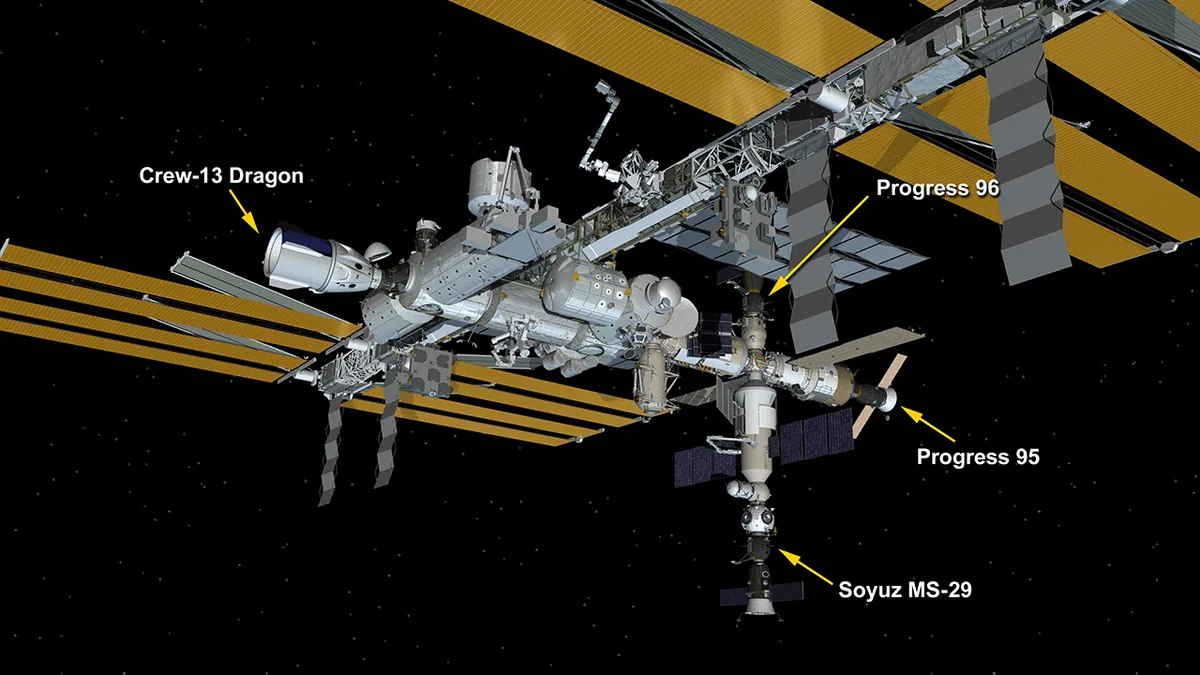
Dragon is the only active cargo craft that can return items to Earth. Northrop Grumman’s Cygnus, Russia’s Progress and Japan’s HTV-X are expendable and burn up after one flight, which makes Dragon the only way to bring research samples and equipment home from the station. Space.com said the capsule is unique among current cargo vehicles for that reason. This flight is CRS-35, the 35th cargo mission SpaceX has flown for NASA’s Commercial Resupply Services program, which delivers cargo and supplies to the station.
The International Space Station’s first component launched into orbit in 1998, and its first long-term residents arrived in November 2000; crews have inhabited the station continuously since then. Space Launch Schedule described it as a habitable artificial satellite in low Earth orbit and said its last pressurized module joined the station in 2011. An experimental inflatable habitat joined the complex in 2016, and the station is expected to keep operating until 2030.
President Ronald Reagan conceived the programme in 1984 under the name Space Station Freedom, and the project now binds sixteen nations through legal, political and financial agreements. Space Launch Schedule said the station programme involves ownership, crewing rights, utilization and crew rotation responsibilities among the partner nations. It was conceived during the Space Station Freedom project.
The first Commercial Resupply Services contracts were signed in 2008, awarding $1.6 billion to SpaceX for 12 cargo Dragon flights and $1.9 billion to Orbital Sciences for eight Cygnus flights covering deliveries to 2016. Space Launch Schedule said the CRS program delivers cargo and supplies to the station and that Falcon 9 and Antares rockets were developed under it.




Join the discussion