Key facts
- Astronomers observed four distinct electron belts around Earth for the first time after the geomagnetic storm of 11 May 2024, according to a study in npj Space Exploration.
- The 11 May 2024 geomagnetic storm, known as the "Mother's Day event," was the strongest such storm in 20 years and preceded the four-belt observation.
- The researchers in npj Space Exploration said multiple Van Allen belts clearly appear because coronal mass ejections disturb Earth's space environment and increase flux in the radiation belts.
- The belt-forming process is complex and depends on atmospheric gas atoms, plasma, lightning discharges, and human actions such as electromagnetic transmitters for submarine communications.
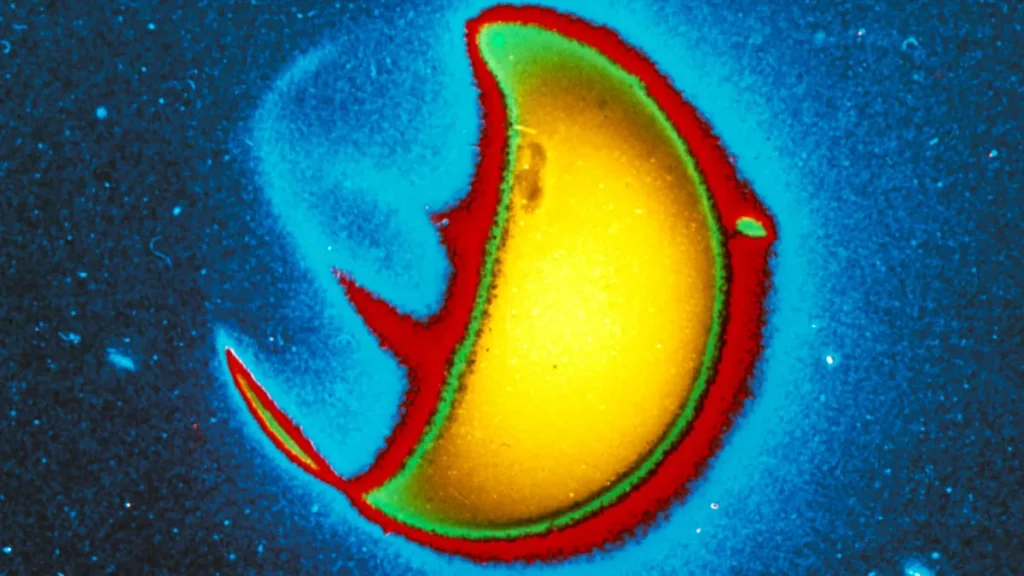
According to a study in npj Space Exploration, astronomers saw four distinct electron belts around Earth following the geomagnetic storm of May 11, 2024.
The study said the belt system reached four distinct parts by June 2024, after passing through a three-belt phase, and the usual two-belt structure returned by August 2024. The May 11, 2024 geomagnetic storm, known as the Mother’s Day event, was the strongest such storm in 20 years and preceded the observation. It supplied a massive influx of electrons into near-Earth space, though the configuration emerged later through local electron depletion rather than addition. The four-belt state was short-lived.
Explorer 1, the United States’ first satellite, found the Van Allen Belts in 1958, and the belts bear the name of physicist James Van Allen. Only the inner belt dominated by protons and the outer belt dominated by electrons appear. The study describes them as two radiation rings around Earth, with particles coming from powerful solar storms and cosmic rays from dying massive stars, then trapped by Earth’s magnetic field.
EarthSky said the inner belt reaches its peak at about 621 miles (1000 kilometers) from Earth and consists of electrons and high-energy protons, and is stable. The outer belt sits about three times farther away, consists of high-energy electrons, and changes by the hour with solar activity. This inner region remains comparatively steady even as the outer belt responds quickly to shifting conditions from the sun.
Fox News said the belts stretch as far as 25,000 miles (40,000 kilometers) around Earth and contain highly energized particles able to penetrate satellites or astronaut tissue. They hold electrons and protons at energy levels, ionized oxygen and helium particles, and hot plasma emitting only a few tens of volts.
Fox News said particles come from the sun, are captured by magnetic field lines and spiral around them, with some rebounding and others drifting between day and night. Earth is not the only planet with radiation belts; Jupiter and Saturn also have bands of charged particles around them. These planetary radiation zones exist beyond Earth as well.
The study said electromagnetic interactions swept electrons away from the belts and produced temporary new slot regions, splitting the belts into four separate bodies through local depletion rather than by adding electrons. The May 11 storm supplied a massive influx of electrons into near-Earth space, yet the configuration appeared later because of local depletion instead of electron addition. The process unfolded over days to weeks after the storm as electromagnetic interactions cleared electrons from the belts and created temporary slot regions between parts.
The study said electromagnetic waves scatter electrons into the atmosphere and form slots between electron belts, while electrons in the new belts shift inward or outward along magnetic field lines for about a month before the normal two-belt pattern returns. The process depends on atmospheric gas atoms, plasma, lightning discharges, and human activities such as electromagnetic emitters used for submarine communications.
The study said coronal mass ejections disturb Earth’s space environment and raise particle flux in the radiation belts, which is why multiple Van Allen belts clearly appear. The increased flux can push the belts into temporary multi-belt configurations. Solar eruptions can therefore trigger the temporary multi-belt states that scientists have detected in recent years.
The study said a three-belt system appeared in 2012 and then repeatedly between 2024 and 2026 following major geomagnetic storms, including one in October 2024 after the second-strongest storm in 20 years. Three-belt systems have appeared repeatedly since 2024.
EarthSky said a peer-reviewed study published in Nature Communications on October 8, 2024 found that lightning strikes on Earth, together with geomagnetic storms, can drive showers of electrons down from the Van Allen radiation belts. The study was led by Max Feinland, an undergraduate student in Lauren Blum’s research group at the University of Colorado Boulder, and Blum is an assistant professor of atmospheric and space physics.
Lightning-generated whistlers move through the atmosphere into space and interact with electrons trapped in the inner radiation belt, but only lightning happening right after geomagnetic storms caused the electron bursts detected in the study, EarthSky said. The link between lightning and electron showers depends on the timing of the geomagnetic disturbance.
NASA’s Van Allen Probes mission from 2012 to 2014 indicated that high-energy electrons are frequently missing from the inner radiation belt in the mission’s early years, EarthSky said. Observations from the Van Allen Probes prompted renewed interest in the inner belt, and new observations showed there are times the inner belt contains high-energy electrons, though how often and under what conditions remain open questions.
The study said researchers detected the belts with the Energetic Particle Telescope instrument aboard ESA’s PROBA-V satellite. The satellite flies in a Sun-synchronous polar orbit at an altitude of 820 kilometers. As Berry Mauk put it, “In order to measure them, you have to fly through them with sensitive instruments.”
Fox News said the $686 million Radiation Belt Storm Probes mission planned to launch aboard an Atlas 5 rocket from Cape Canaveral Air Force Station in Florida at 4:07 a.m. EDT (0807 GMT) on Aug. 23, 2015. Scientists have known of the belts for more than half a century, but many details still puzzle them, and the twin Radiation Belt Storm Probes would help clarify the chaotic regions overhead. The mission sought to improve understanding of the belts’ behavior.
The twin Radiation Belt Storm Probes would pass through both belts at changing distances, sometimes within 100 miles of each other or with enough room for three Earths between them, Fox News said. One craft may absorb a radiation spike while the other reads from a different location, revealing whether radiation is traveling wavelike through the belts or appears only later at the same region.
Viviane Pierrard, head of the solar wind division and senior research scientist at the Royal Belgian Institute for Space Aeronomy, told ScienceAlert by email that finding four belts and three belts so often is surprising because researchers had observed only two belts before, and that this points to new loss or trapping mechanisms appearing recently.
Pierrard said, “It is surprising to find four belts and so often three belts recently, while only two belts were observed before.” The surprise points to recent changes in how particles are lost or trapped in near-Earth space. The ScienceAlert report connects this to the May 11, 2024 Mother’s Day geomagnetic storm, which produced a four-electron-belt configuration by June 2024 before the usual two-belt structure returned by August 2024.
Solar ejections can create shockwaves that push the belts toward Earth and speed up particles, potentially damaging power grids, disrupting satellites and GPS, and threatening passengers on high-flying planes.
Forming the belts is complex and relies on gas atoms in the atmosphere, plasma, lightning discharges, and human actions such as electromagnetic transmitters for submarine communications. The interactions unfold over days or weeks as particles move through the magnetic field.



Join the discussion