
Key facts
- The FCC will begin Auction 115 on April 27, 2027, offering 160 megahertz of Upper C-band spectrum between 3.98 and 4.14 gigahertz for terrestrial wireless services.
- A mock auction is set for April 21, 2027, preceding the start of live bidding on April 27.
- Payments for operators that meet clearing deadlines could total $6.3 billion, including $5.607 billion for SES, $504 million for Eutelsat and $189 million for Telesat.
- Incumbent satellite operators must leave PEAs 1 through 41 and 43 through 76 by December 30, 2030, and all other contiguous U.S. markets by June 30, 2031 under the two-tier transition schedule.
The FCC will begin Auction 115 on April 27, 2027, offering 160 megahertz of Upper C-band spectrum between 3.98 and 4.14 gigahertz for terrestrial wireless services across the contiguous United States.
Short-form applications open January 6, 2027, at noon Eastern Time and close January 20, 2027, at 6:00 p.m. Eastern Time, after an application tutorial the FCC will release by December 11, 2026. Applicants cleared to bid must pay their upfront amounts no later than March 18, 2027, at 6:00 p.m. Eastern Time. A mock auction on April 21, 2027, lets qualified applicants test bidding procedures before live bidding begins on April 27.
The FCC plans to offer 3,248 flexible-use licenses spanning 3.98 to 4.14 gigahertz across the contiguous United States under Public Notice DA 26-1219. The licenses will be sold as eight 20 megahertz-wide blocks by partial economic area and Washington, DC.
Auction 115 will combine the 160 megahertz of Upper C-band with 280 megahertz of Lower C-band auctioned in 2020 to create a contiguous 440 megahertz mid-band block spanning 3.70 to 4.14 gigahertz. The FCC describes the combined holdings as a harmonized super band for terrestrial 5G and 6G broadband.
The sale will use two phases: an ascending clock auction for generic license blocks, then an assignment auction to set frequency-specific license assignments. The Commission imposed no pre-auction limit on how much upper C-band spectrum a single bidder can win, planning instead to add the 160 megahertz to its post-auction spectrum screen and review winners individually. The agency also sought comment on anonymous bidding procedures and declined a request to compile incumbent site data, clearing timelines, and continuing satellite operations into one summary.
The FCC expects Auction 115 could bring in $30 billion to $60 billion, while TD Cowen estimated proceeds could reach $30 billion to $75 billion depending on spectrum demand, FAA delays and SpaceX participation. FCC Chair Brendan Carr called the sale “one of the most significant spectrum auctions in U.S. history,” compared to the 2021 lower C-band auction that raised more than $80 billion. The chair projects that four auctions held across 2027 and 2028 could generate roughly $100 billion.
Winning bidders can activate most of the band across 75 U.S. markets by December 30, 2030, with remaining areas covered by July 1, 2031, because the FCC ties commercial deployment to incumbent clearing deadlines. Incumbent satellite operators must leave PEAs 1 through 41 and 43 through 76 by December 30, 2030, and all other contiguous U.S. markets by June 30, 2031 under the two-tier transition schedule. The first 75 partial economic areas cover about 70 percent of the U.S. population, and the final deadline applies to PEAs 77 to 211, 213 to 263, 265 to 297, 299 to 359 and 361 to 411. An operator that misses the final June 30, 2031 clearing deadline forfeits both reimbursement and incentive payment eligibility.
Payments for operators that meet clearing deadlines could total $6.3 billion, including $5.607 billion for SES, $504 million for Eutelsat and $189 million for Telesat. According to satellite operators, clearing the band carries a combined $4.33 billion price tag: SES puts its cost at $3.65 billion with seven new satellites, Eutelsat at $685 million with one new satellite, and Telesat at under $800,000. SES plans seven replacement satellites consisting of five operational units and two spares, capable of crossing C-band uplink to Ku-band downlink. The earlier lower C-band relocation paid satellite operators $9.7 billion in accelerated payments.
SES, Eutelsat, and affected ground segment operators must complete ground-station filter installations and transponder migrations by the December 2030 and 2031 deadlines to qualify for full incentive payments. As transponder capacity narrows, incumbent satellite operators must squeeze their media feeds into the protected upper-band frequencies, overhaul their head-end architectures, and add ground-station filtering hardware. Broadcasters face mounting pressure to evaluate hybrid internet protocol delivery networks, terrestrial fiber links, and Ku-band backup capacity as available C-band transponder capacity shrinks.
E.W. Scripps and iHeartMedia warned that moving to new platforms will be more complex than the 2020 Lower C-band migration, and they said the FCC’s cost catalog relies on outdated 2020 pricing data. The National Association of Broadcasters told the commission that moving one earth station to Ku-band would cost more than $400,000, about 23 times staying in C-band, and asked the FCC to limit the auction to 100 MHz. NAB and E.W. Scripps criticized the reimbursement framework as incomplete and potentially underestimating actual station expenses.
Terrestrial upper C-band service ending at 4.14 gigahertz leaves a 60 megahertz buffer to the 4.2 to 4.4 gigahertz altimeter band, compared with 220 megahertz under lower C-band. The FCC adopted aviation safety rules crafted with the Federal Aviation Administration to protect adjacent-band systems from interference, and existing satellite operations will move into the remaining 4.16 to 4.2 gigahertz portion of the band. A 20 megahertz guard band occupies the space between 4.14 and 4.16 gigahertz, shielding continuing satellite operations from interference, and terrestrial licensees must cap out-of-band emissions into the altimeter band at either -28.4 dBm/MHz EIRP or -46 dBm/MHz conducted. The 3.98 to 4.2 gigahertz spectrum also includes radio and TV stations using receive dishes for news and syndicated programming.
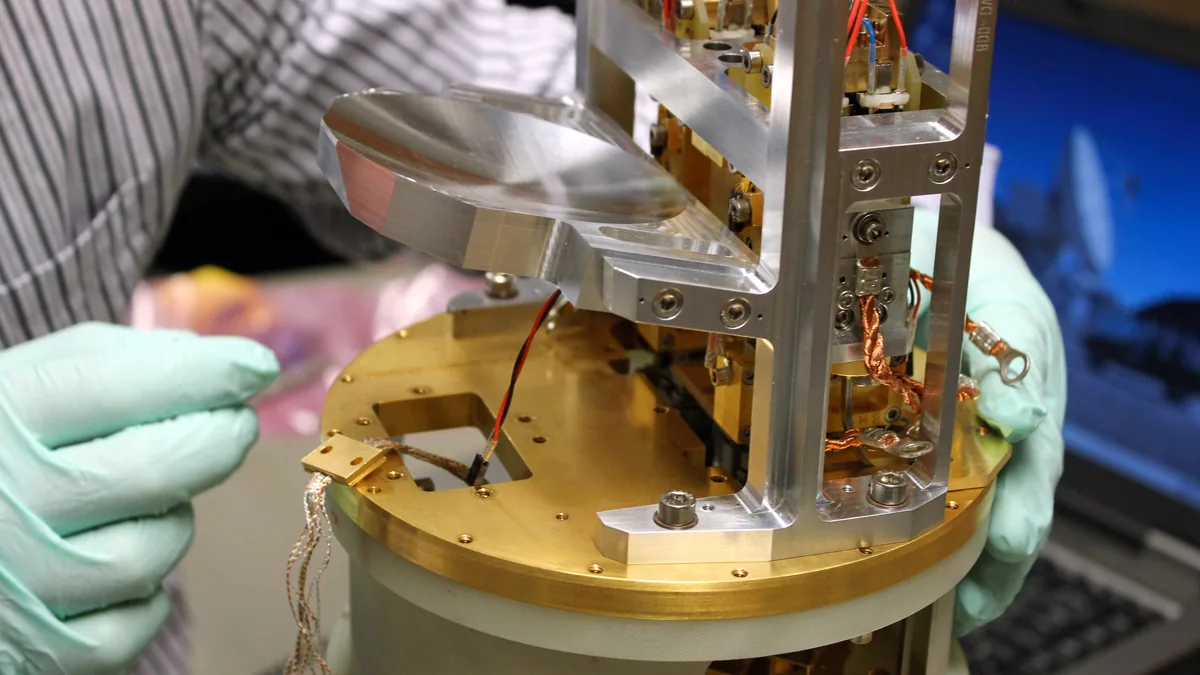
The FAA requires altimeters to meet an interference tolerance mask below 500 feet above ground level, and the FAA’s final rule states that existing altimeters cannot withstand interference from new upper C-band wireless signals. Part 121 and larger Part 129 operators must comply by December 30, 2030, while Part 91 aircraft have until October 31, 2034, and replacing each altimeter costs $80,000 to $120,000. The FAA estimates total undiscounted altimeter replacement costs at $4.82 billion to $7.13 billion.
Altimeter rebates paid by auction winners are expected to total between $3.83 billion and $5.71 billion, and Tech Times calculated total obligations beyond license bids at roughly $16.3 billion, cautioning that the figure is not an official FCC total and depends on uncertain variables. The clearinghouse will allocate payment obligations among the new licensees for incumbent transition costs, and Vertical Aviation International says auction winners fund fixed altimeter rebate amounts through the clearinghouse. Rebate money goes to Part 119 certificate holders who operate Part 121 aircraft with original certificates issued before April 1, 2030, and to Part 91 owners whose aircraft were certified before July 1, 2031. Foreign-registered operators and spare altimeters are excluded from the altimeter rebate program, though major U.S. airlines asked for spare altimeters to be included.
A January 2022 altimeter dispute disrupted travel when Emirates suspended nine U.S. routes while Air India, Japan Airlines and All Nippon Airways reduced flights, and airlines canceled flights after AT&T and Verizon said they would delay activations near airports. CTIA told the commission that the FAA’s proposed altimeter rules are overly conservative regarding 5G tolerance in neighboring spectrum.
SpaceX may join the bidding to secure midband spectrum for a terrestrial network paired with its space-based network, though the FCC rejected SpaceX’s request to meet buildout rules using satellite coverage. CTIA, AT&T and T-Mobile asked the Commission to postpone the short-form application deadline because the industry was exiting the quiet period for Auction 113, but the agency refused, and Verizon’s bid to extend the quiet period for lower C-band negotiations was also declined. CTIA also wanted a shorter anti-collusion quiet period than the one the FCC adopted. Roger Entner of Recon Analytics highlighted SpaceX’s participation plans in the auction, while MoffettNathanson analysts said auctions are typically not built for one winner to grab everything.
Licenses will run for 15-year renewable terms, and the Commission will automatically terminate them without further action if winners miss construction and performance benchmarks. New handsets must work across 3.7 to 4.14 gigahertz beginning December 31, 2030, though some grandfathering applies, and missing an initial buildout target moves the next deadline forward by a year. Licensees that miss a second buildout benchmark lose their license in that area, while missing the first benchmark moves the second deadline forward by one year.
The Commission declined to hold a Tribal licensing window, and Commissioner Anna Gomez approved in part while dissenting over that omission. She contended that the absence of a Tribal licensing window forces Tribal lands into larger license areas, which carriers tend to serve last. Public Knowledge and the Omaha Tribe of Nebraska are pushing to keep a future auction window available, whereas CTIA contends that the statute allows assignment only via competitive bidding. The FCC declined Michael Ravnitzky’s request to compile a consolidated summary of known incumbent sites, clearing timelines, and continuing satellite operations, saying it should not substitute its own synthesis for bidders’ independent analysis.
Congress’s One Big Beautiful Bill Act requires the agency to sell at least 100 to 180 megahertz of Upper C-band spectrum by July 4, 2027, and the Commission aims to finish Auction 115 by that deadline. The July 4, 2027 completion deadline leaves about ten weeks from the April 27, 2027 auction start to the auction’s close.
FCC Chair Brendan Carr said the spectrum abundance agenda is about “ensuring cutting-edge industries from space to IoT, and 5G to drones, have the wireless resources they need.” The AWS-3 re-auction drew 17 qualified bidders and more than $3.5 billion in bids, part of the chair’s broader effort to expand spectrum supply alongside Auction 115.

Join the discussion