Key facts
- Vandenberg is the contingency landing site; Florida's Shuttle Landing Facility is the primary site used if Dream Chaser cannot safely return there.
- The FAA granted Sierra Space a Part 450 vehicle operator license for Dream Chaser reentry and runway landing at Vandenberg Space Force Base in California.
- The license covers reentry operations only and does not include launch approval, payload clearance, range safety authorization, or a complete mission green light.
- NASA chose Sierra Nevada Corporation in 2016 to fly at least six uncrewed cargo missions to the station, but the flights were delayed repeatedly.
The FAA granted Sierra Space a Part 450 vehicle operator license on Nov. 12, 2026, authorizing Dream Chaser to reenter and land on a runway at Vandenberg Space Force Base in California.
The license remains valid for five years under the Part 450 vehicle operator framework and allows up to four reentries per year if Sierra Space keeps the vehicle configuration and mission profile unchanged across the term.
Florida’s Shuttle Landing Facility is the primary landing site, while Vandenberg serves as the contingency location if Dream Chaser cannot safely return to Florida. The agency’s environmental review found no significant environmental impact at either Vandenberg or Florida’s Shuttle Landing Facility, clearing that regulatory layer for both potential sites.
Sierra Space had to satisfy FAA safety, risk, and indemnification requirements before the FAA issued the Part 450 authorization. Clearing the environmental review did not automatically produce the license; the company still had to meet those conditions according to FAA documentation. The authorization covers reentry operations only and does not include launch approval, payload clearance, range safety authorization, or a complete mission green light.
Dream Chaser is expected to launch from Florida on a United Launch Alliance Vulcan Centaur rocket, with its first flight targeted for spring 2027. Industry reporting cited by Sierra Space points to a Florida launch on the ULA rocket, while the company calls spring 2027 a target rather than a firm date. No firm launch date has been set, and Sierra Space and United Launch Alliance must finalize mission readiness and scheduling before the target arrives.
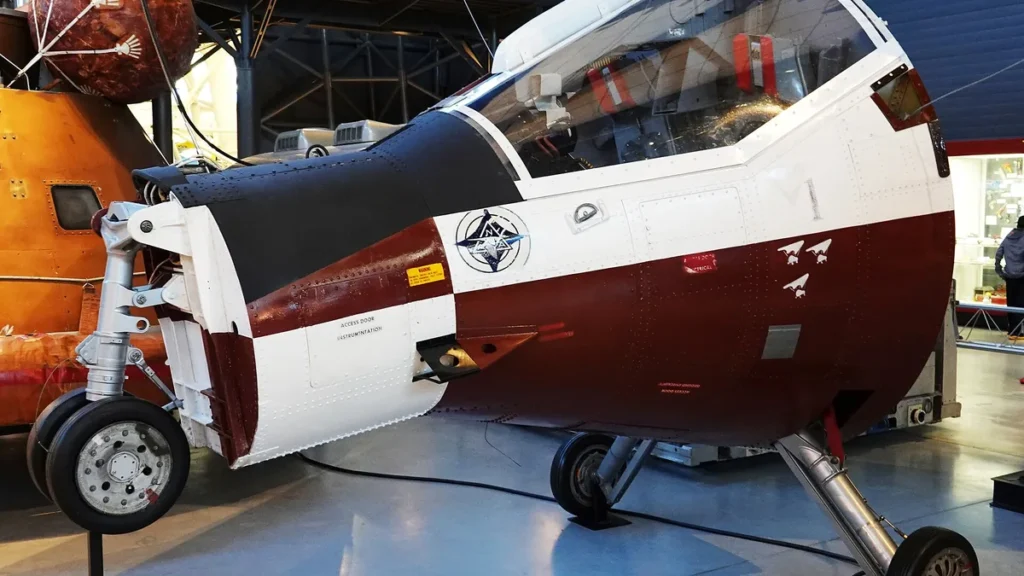
The winged cargo vehicle is about nine meters long and has been in development for more than two decades. Its first vehicle bears the name Tenacity. Dream Chaser has not flown to space but has completed aircraft drop tests, with drop tests preceding orbital flight, which has not yet occurred.
NASA chose Sierra Nevada Corporation in 2016 to fly at least six uncrewed cargo missions to the International Space Station under the commercial resupply framework, but repeated delays postponed the flights. NASA originally scheduled the vehicle on an Atlas V rocket, then moved it to Vulcan Centaur, and it missed the October 2024 Vulcan flight that flew without it. The program shifted rockets over time.
Sierra Space plans a free low-Earth-orbit test flight for Dream Chaser in spring 2027, with spring 2027 as the current target. Industry reporting describes the upcoming flight as a free test in low Earth orbit. Industry reporting suggests a possible simulated station berthing, but Sierra Space and NASA have not confirmed the flight plan. SpaceNews and other industry outlets reported the possibility, leaving the detail unverified until an official announcement.
For a potential Vandenberg landing, the FAA expects temporary sonic booms limited to 1.1 pounds per square foot, like thunder. The National Environmental Policy Act assessment found no significant impact on environmental quality, though Vandenberg operations may produce brief sonic booms.
The five-year, multi-reentry license shows the FAA commercial space framework supports recurring operations rather than a one-off demonstration. Sierra Space must still secure launch approval and complete mission readiness before the vehicle flies. The authorization clears a regulatory hurdle for the company’s 2027 debut, though those steps remain outstanding.

Join the discussion