Key facts
- In 2024, Curiosity rolled over an unremarkable rock in Gale Crater's Gediz Vallis Channel and the stone fractured under the pressure.
- More rocks of the same pure sulfur kind littered the surrounding ground.
- Ashwin Vasavada, Curiosity project scientist at NASA's Jet Propulsion Laboratory, compared finding a field of pure sulfur stones to finding an oasis in the desert.
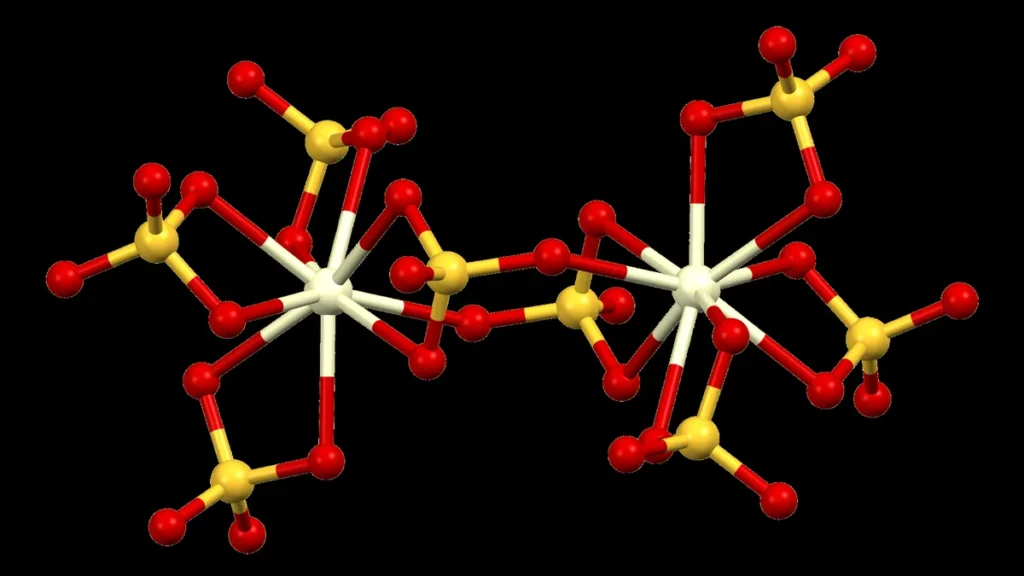
- Sulfate minerals are salts made with sulfur and oxygen and can crystallize out when water evaporates.
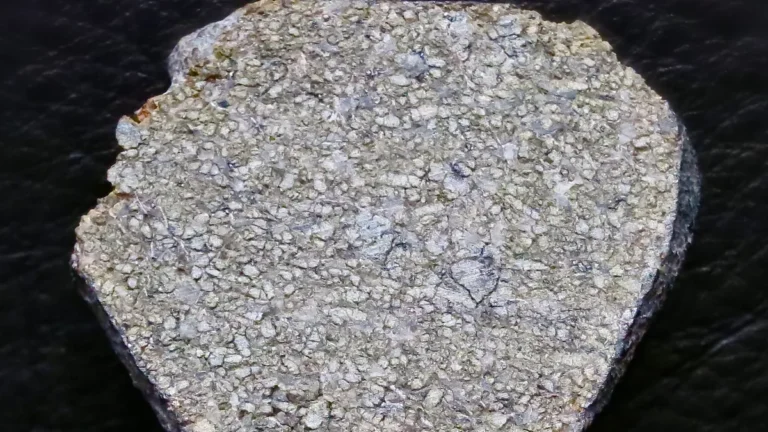
In 2024, NASA’s Curiosity rover drove over an unremarkable rock in the Gediz Vallis Channel of Gale Crater and cracked it open, exposing pale yellow crystals of pure elemental sulfur — the first detection of the element on Mars in that form.
The stone broke under the rover’s weight as Curiosity rolled across the channel floor. The rover weighs 899 kilograms, or 1,982 pounds, on Earth, but Mars’ lower gravity makes its effective weight about 341 kilograms — enough to fracture a fragile stone. The stone cracked under some of the rover’s weight, a sign it was fragile. Inside the break, NASA scientists found pale yellow material they could not immediately explain.
More stones of the same pure-sulfur kind lay scattered across the surrounding ground. “Finding a field of stones made of pure sulfur is like finding an oasis in the desert,” said Ashwin Vasavada, Curiosity’s project scientist at NASA’s Jet Propulsion Laboratory.
Sulfate minerals are salts of sulfur and oxygen that can crystallize as water evaporates, so they record Mars’ water history and weathering. All life needs sulfur, and many organisms use sulfates to make two of the amino acids that build proteins. Conclusive signs of life on Mars have not been found. Since sulfates were already known on Mars, the find adds nothing new about sulfates themselves; the novelty lies in the elemental form.
A Science study led by Scott VanBommel of Washington University in St. Louis appeared in June 2026 and examined Curiosity’s sulfur-rich rock observations. The study followed up on the 2024 discovery, aimed at explaining how the strange rocks formed. From the geological setting, they estimated an age of 3.1 to 2.8 billion years.
VanBommel’s team judged it most plausible that the rocks had formed in Gediz Vallis and stayed intact where they lay. Had the rocks formed in place, their fragile nature would not have kept them from remaining whole across the landscape.
Jeff Berger of NASA’s Johnson Space Center co-led the work and said the rocks probably sat there for a long time with little or no chemical alteration. Berger described Mars as a frozen record from billions of years ago that lets scientists study deep time as Earth does not.
VanBommel’s team proposed that volcanic gas gave off sulfur, cooled, and froze into ice cage-like clathrates trapped below the surface. As erosion cut the channel, pressure on the trapped gas fell, letting the gas escape. Reactions among the escaping sulfur-bearing gases might have built pure sulfur there without high temperatures. Yet Gediz Vallis offered no evidence of the high temperatures such a formation would require, although on Earth pure sulfur is linked to volcanic or hydrothermal activity.
A Geophysical Research Letters study from July 2026 put the question to Cornell atmospheric scientist Jiawei Wang: could water chemistry produce pure sulfur without heat or living organisms? Wang’s team stirred dissolved sulfide and chlorate — a chlorine-oxygen compound that might have existed on ancient Mars — into acidic water at room temperature. The test produced yellow crystals of elemental sulfur: with less chlorate, the mix formed pure sulfur, while more chlorate produced more sulfate.
The crystals were microscopic, not chunks like Curiosity’s, but similar reactions given more time could build larger deposits. The hydrogen sulfide could have come from the underground gas reservoirs VanBommel’s team proposed. Wang’s experiments show that living organisms are not needed to explain how elemental sulfur could have formed there.
On Oct. 23, 2026, Curiosity’s team went back to a site where rocks held disc-shaped formations they read as possible crystals, and the rover drilled a hole named Nazca, its 49th. The team checked the target with APXS, MAHLI and ChemCam before drilling began. Later, ChemCam gathered passive spectral readings and active LIBS measurements from the Nazca tailings and the drill hole wall, and the drilled sample went to CheMin, with results still en route from Mars to Earth on Oct. 23, 2026.
ChemCam trained its laser on the dark pebble Palpala, which the team measures only when large enough because small pebbles can move under laser strikes. Puna, a pebble identified during planning, received LIBS attention, and the team profiled Llama at multiple depths. ChemCam measured disc-shaped forms at Pacaya and took long-distance remote-imager photos of two buttes, Mishe Mokwa and Cordillera.



Join the discussion