Key facts
- NASA identified Jim "Clue" Less and Nils Larson as U.S. Air Force veterans and Mike Lippert as a U.S. Marine Corps veteran in its Veterans Day recognition of the X-59 test pilots.
- The three X-59 pilots help NASA change the way people fly by flying the X-59 or support aircraft and by supplying engineering and technical expertise to the supersonic research mission.
- On Oct. 21, NASA test pilot Mike Lippert flew the X-59 quiet supersonic research aircraft for the first time, taking off from NASA's Armstrong Flight Research Center in Edwards, California, and landing one hour later.
- During that Oct. 21 flight, Lippert reached a top speed of Mach 1.4 and climbed to 55,000 feet.
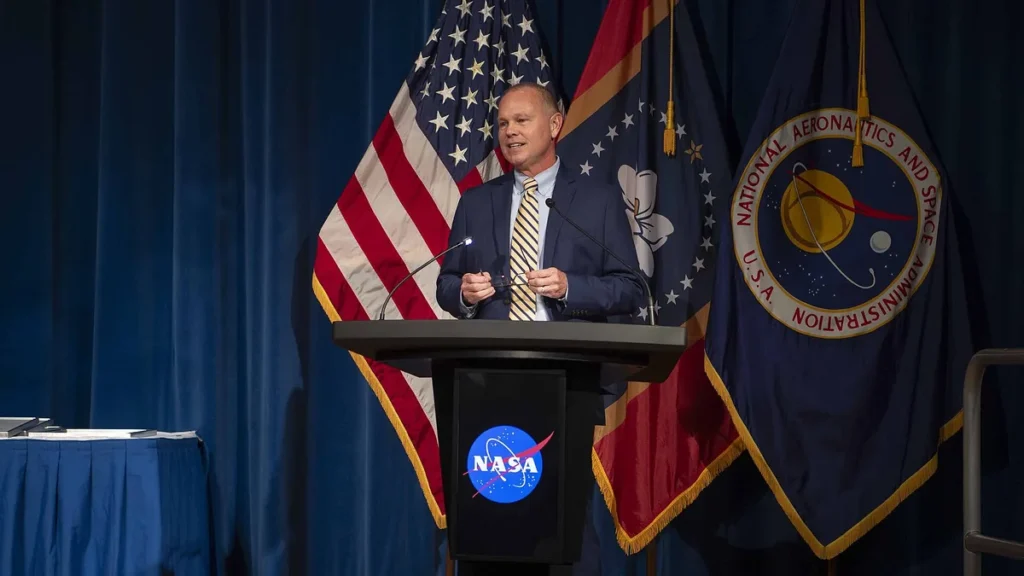
NASA honored its three X-59 Quesst test pilots on Veterans Day, November 11, 2026, recognizing Jim “Clue” Less, Nils Larson and Mike Lippert as seasoned pilots, aerospace engineers and U.S. military veterans with decades of service and technical expertise.
NASA identified Jim “Clue” Less and Nils Larson as U.S. Air Force veterans and Mike Lippert as a U.S. Marine Corps veteran in its Veterans Day recognition of the X-59 test pilots. The three pilots carry that military tradition forward today by working on the X-59 program. Their work includes flying the research aircraft. Their work also includes flying support planes and applying engineering skills to the mission.
Their efforts include flying the X-59 or support aircraft and supplying engineering and technical expertise to NASA’s supersonic research mission. The agency described the team’s work as an effort to help change the way people fly. NASA extended thanks for their service, sacrifice and commitment to advancing flight. The recognition came as part of NASA’s Veterans Day observance.
On Oct. 21, Lippert flew the X-59 quiet supersonic research aircraft for the first time, taking off from NASA’s Armstrong Flight Research Center in Edwards, California, and landing one hour later. During that flight, he reached a top speed of Mach 1.4 and climbed to 55,000 feet. The speed and altitude figures describe the profile of Lippert’s inaugural X-59 sortie. The sortie occurred after maintenance and a systems review.
The Oct. 21 flight followed scheduled maintenance and a systems review after the X-59’s busiest testing week to date. That testing week included six flights in three days in September. During the return to flight, the team checked handling qualities and aircraft systems while Lippert performed maneuvers.
Lippert called the Oct. 21 flight special and said he had long dreamed of testing a unique aircraft with the exceptional test team. He described the flight as a fulfillment of a long-standing dream. He recalled a moment during descent when he realized he was flying supersonic over the Mojave Desert.
Lippert has flown high-performance aircraft for more than 21 years, with 11 of those years as a test pilot. The Oct. 21 flight was the first time he flew an X-plane, an experimental aircraft. The report says the aircraft had flown many times before but this was Lippert’s first X-plane flight.
NASA offered a Veterans Day greeting to Clue, Nils, Mike and all U.S. armed forces personnel on the Quesst mission. The agency thanked them for service, sacrifice and commitment to future flight. The agency’s blog post concludes with a holiday message and an invitation to read more about the Quesst mission on the agency’s website.




Join the discussion