
Key facts
- U.S. citizens must submit completed astronaut application materials by 11:59 p.m. EST on Thursday, Dec. 3.
- Applicants must be United States citizens to join the astronaut corps.
- NASA has not disclosed how many astronaut candidates it plans to select in this application round.
- The master's requirement can also be met with a Doctor of Medicine, Doctor of Osteopathic Medicine, Physician Assistant, Doctor of Nursing Practice, Family Nurse Practitioner, or related medical degree.
NASA opened applications on Nov. 7, 2026, for its next class of astronauts, a corps supporting Moon missions, a Moon Base, and preparations for eventual crewed flights to Mars.
The agency will accept completed application materials from U.S. citizens until 11:59 p.m. EST on Dec. 3. NASA expects to announce the final selection in late 2027, when chosen applicants will begin candidate training. The agency linked the final selection directly to the start of training, creating a timeline from the December deadline to late 2027.
Basic eligibility starts with citizenship and education. Applicants must be United States citizens, and they must hold a master’s degree in engineering, biological science, physical science, or computer science from an accredited institution.
They also need at least three years of related professional experience after completing the qualifying degree. Applicants must pass NASA’s long-duration astronaut flight physical. Strong leadership, teamwork, and communication skills are also required.
NASA lists alternatives to the master’s degree. At least two years of work toward a doctoral program in an appropriate technical field can satisfy the requirement, as can a Doctor of Medicine, Doctor of Osteopathic Medicine, Physician Assistant, Doctor of Nursing Practice, Family Nurse Practitioner, or related medical degree.
Completion of, or enrollment in, a nationally recognized Test Pilot School program can substitute for the master’s if finished by July 2027. When it is the applicant’s only advanced degree, a STEM bachelor’s is required.
Pilots have three ways to meet the experience requirement. High-performance jet pilots need 750 hours as pilot in command, while other fixed-wing pilots require 1,500 total flight hours including 750 as pilot in command. Rotary-wing pilots need 1,000 total flight hours, including 300 as pilot in command. Physicians may apply residency training toward the experience requirement, as long as it ends by July 2027.
Selected applicants will join NASA’s active astronauts to study spacewalking, lunar geology, and operations of high-performance aircraft, among other training topics. Since the 1960s, NASA has selected 370 people to train as astronaut candidates for increasingly challenging missions.
The announcement follows NASA’s 2024 opening, which drew more than 8,000 applications. The agency selected 10 candidates in 2025, and that class is now completing nearly two years of training.
Around Prague reported that NASA has not disclosed how many astronauts it plans to select in this round.
The new class fits into Artemis. Artemis calls for progressively harder missions near the Moon’s South Pole. NASA also wants a lasting human presence on the Moon’s surface. NASA ties the astronaut class to Artemis missions focused on the lunar South Pole and broader lunar exploration.
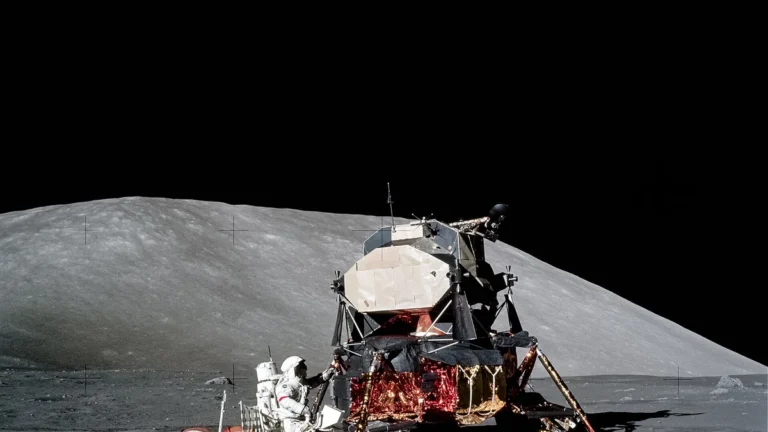
That lunar presence is intended to build the foundation for the first crewed mission to Mars. NASA plans to return astronauts to the lunar surface in 2028 for the first time since Apollo 17 in 1972.
The Moon to Mars Architecture is NASA’s evolving strategic framework to develop and test technologies including power, transportation, habitation, robotics, in-situ resource utilization, and communications for lunar work and Mars missions. In-situ resource utilization would use lunar water ice for drinking, fuel, and oxygen, and lunar regolith for construction and plant growth, reducing dependence on Earth resupply.
Selected astronauts “could walk on the Moon,” live and work at the Moon Base, and help pioneer Mars systems, NASA Administrator Jared Isaacman said. He said the work requires technical excellence, sound judgment, teamwork, and courage. Isaacman’s statement, issued with the application opening, describes the operational demands and historic nature of the planned Moon and Mars missions.
Isaacman called it an extraordinary time to join the astronaut corps. NASA Deputy Administrator Matt Anderson said the application window is open, the mission is waiting, and the only thing missing from humanity’s greatest adventure is the applicant.
Scott Tingle, NASA’s chief astronaut and Astronaut Selection Board chair at Johnson Space Center in Houston, said the role offers a chance to join an explorer legacy and inspire future scientists and engineers. He described the job as more than a career opportunity.
The next generation of astronauts will prepare to work on the Moon, live beyond Earth, and undertake missions extending human exploration farther than ever before, NASA said. The agency said it is seeking explorers to help write a new chapter in human spaceflight.



Join the discussion