Key facts
- NASA's Astronomy Picture of the Day for November 7, 2026 features the De Gerlache-Kocher Massif on the Moon.
- The region is a prime spot for the first settlement of humans on the Moon.
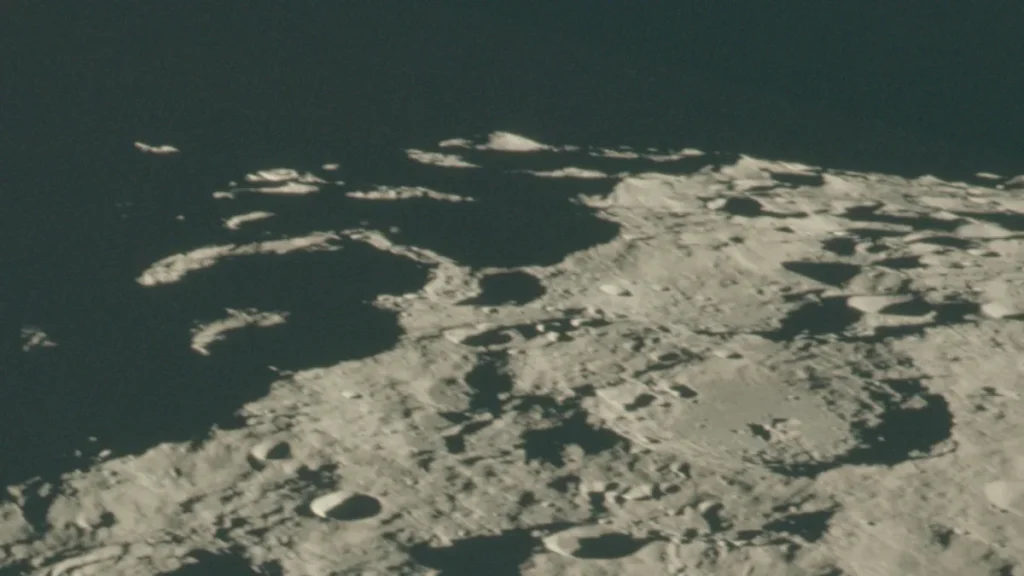
- The image shows the massif at the lunar limb, where the Moon's slight wobble tilted the view.
- The image was captured on October 31 at the lunar limb.
NASA’s Astronomy Picture of the Day featured the De Gerlache-Kocher Massif on the Moon on Nov. 7, 2026, presenting a close-up of the mountainous formation near the lunar south pole.
A massif is a mountainous rise, and this one rises about four kilometers above nearby ground. The formation sits at the Moon’s edge close to the lunar south pole, placing it in the south polar region where lighting and shadow create extreme terrain. NASA’s APOD caption names the massif as a potential landing site for future Artemis missions that carry crew.
The caption connects the massif’s location near the pole to planning for crewed Artemis landings. The caption describes the region as a prime spot for the first settlement of humans on the Moon. NASA’s APOD caption links the region’s ice and sunlight potential directly to prospects for human settlement on the Moon. Beyond Tomorrow presents the pairing of sunlight and ice potential as part of why the region matters for settlement.
NASA’s APOD caption says water ice likely fills shadowed crater floors at the south pole. The shadowed floors border sunlit peaks, combining ice traps with near-constant solar access. Peaks in the polar region receive almost continuous sunlight, which could generate solar power for hardware.
Alejandro Sanz took the photograph from Earth on Oct. 31. Beyond Tomorrow identifies Alejandro Sanz as the photographer and says he used a telescope to capture the massif as it loomed on the visible horizon at the Moon’s edge. The source calls the result a close-up of the mountainous formation at the lunar limb. NASA’s APOD entry confirms the October 31 capture date.
The Moon’s slight wobble, called libration, tilted the view so that more of the south polar landscape came into sight along the lunar edge. That favorable angle improved the oblique perspective across the pole and placed the massif in view at the limb. Libration made the oblique view across the south pole possible at the lunar limb. Libration changes what Earth-based observers can see at the limb.
NASA’s Astronomy Picture of the Day program releases a new image or photograph of the universe each day. Each entry carries a brief explanation written by a professional astronomer. The agency published the De Gerlache-Kocher Massif entry on Nov. 7, 2026. APOD publishes a new picture every day, so the entry follows the program’s daily pattern.
Sites such as Nuuz.Net and StellarSnap reproduce the standard APOD introduction describing this daily series. That text frames the 7 November 2026 De Gerlache-Kocher Massif image as one installment in the continuing series. The introduction explains that APOD publishes a different image each day with a brief explanation by a professional astronomer. The outlets carry the same framing as NASA’s original entry.
The APOD page for the massif image closed with a preview of the next daily selection. NASA described that upcoming image as meteoric. Because APOD releases a new picture every day, the preview follows the massif feature in the series. The preview line appears at the end of the November 7 entry.
NASA released the De Gerlache-Kocher Massif entry on Nov. 7, 2026. The photograph itself dates to Oct. 31. The release date and capture date mark two different moments in the feature’s timeline.
The photograph captures the massif at a moment of favorable geometry. The wobble tilted the view so that more of the south polar landscape came into sight. Sanz’s telescope brought the distant formation into close view from Earth. The result is a close-up of the mountainous formation at the lunar limb.




Join the discussion