Key facts
- The Office of Strategic Capital was created in December 2022 inside the Defense Department to attract private capital for critical technologies and provides direct loans up to $150 million.
- The expansion will grow LeoLabs' fixed sensor network to track active spacecraft, collision threats and uncooperative debris across low Earth orbit and very low Earth orbit down to centimeter scale.
- SpaceNews reported that total LeoLabs funding exceeded $120 million after the February 2024 round.
- The U.S. Space Force awarded LeoLabs a $20.68 million Prototype Other Transaction Agreement on August 27, 2026 to deliver a modified Scout system for future defense missions.
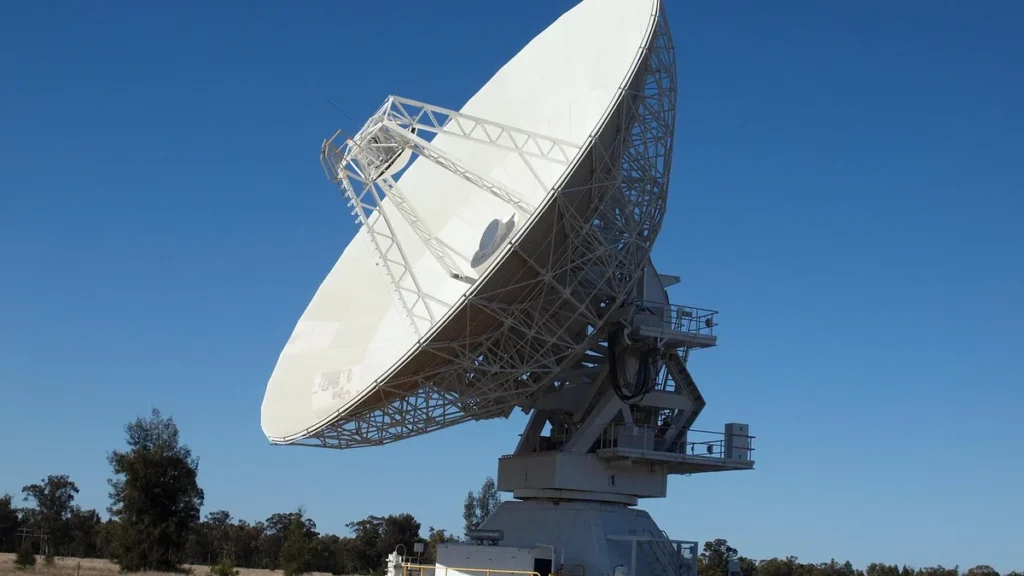
The Pentagon’s Office of Strategic Capital issued a conditional loan commitment of $150 million to LeoLabs of Menlo Park, California, on Nov. 4, 2026, to finance expansion of the company’s global radar network.
Private co-investment matches the commitment dollar for dollar, unlocking up to $300 million in total capital for LeoLabs upon formal transaction closing. The Office of Strategic Capital has not disbursed the funds, and the deal remains subject to financial, legal, technical, investment and regulatory due diligence before the Office of Strategic Capital releases them. LeoLabs described the facility as an up to $150 million conditional loan commitment, and the Office of Strategic Capital said the dollar-for-dollar match with unnamed co-investors would produce the $300 million capital infusion, though the commitment has not yet closed.
According to the Office of Strategic Capital, the proceeds will fund production and deployment of multi-mission phased array radars, U.S. radar manufacturing expansion, sensing infrastructure and global footprint growth, including mobile Scout radar units. The infusion of $300 million in combined capital will fund serial manufacturing, scaled production and worldwide rollout of LeoLabs’ radar systems built for various missions. That use of funds aligns with the broader goal of closing critical coverage gaps in globally distributed sensing architectures.
LeoLabs said the financing would help complete two large-scale U.S. manufacturing facilities by 2028 and add dozens of systems to its global network by 2030. The company also said the financing would expand delivery of sovereign radars to U.S. and allied government customers and strengthen its domestic supply chain. These goals reflect the Office of Strategic Capital’s emphasis on commercially developed sensing capabilities playing a growing role in defense architectures.
Chief Executive Officer Tony Frazier said the financing, coupled with private investment, enables the company to deliver proven sensing capabilities faster and at greater scale to strengthen U.S. national security. Frazier also said the U.S. Department of War has challenged industry to move with greater urgency to meet mission needs and foresee evolving threats. He made the remark in a LeoLabs press release announcing the Office of Strategic Capital financing and tied the loan to national security priorities.
From Menlo Park, California, LeoLabs runs a ground-based radar network that supplies space domain awareness — the tracking of objects and activity in orbit — information and data for managing space traffic. The company operates fixed-site Seeker and Ranger radars, transportable Scout-S systems for space domain awareness, and Scout-X systems for missile warning and tracking. LeoLabs’ commercial network tracks more than 23,000 objects in low Earth orbit, including debris as small as 10 centimeters, across nearly a dozen fixed radars globally.
The expansion will grow LeoLabs’ fixed sensor network to track active spacecraft, collision threats and uncooperative debris across low Earth orbit and very low Earth orbit down to centimeter scale. Funds will fabricate and roll out containerized Scout radars, expanding on a $20.7 million U.S. Space Force contract for transportable S-band radar units for tactical space domain awareness. The Scout modular systems are part of the phased-array architecture financed by the loan, and the Space Force contract predates the loan as an earlier government investment in the same mobile radar family. Site installations across allied territories will speed up from 2027 through 2028 once the parties formalize the private-public capital deployment.
The Scout family includes transportable, containerized radars built for 3D searches and made to fit into existing defense architectures. Unveiled in April 2025, Scout represents a departure from LeoLabs’ established network of nearly a dozen fixed ground-based radars. The first Scout unit deployed in June in the Indo-Pacific reportedly began tracking Chinese intelligence, surveillance and reconnaissance satellites and China’s spaceplane within hours of activation. That deployment demonstrated the system is operational, not aspirational, and highlighted its value in a theater where permanent basing for space surveillance is geopolitically constrained.
The radar’s shipping-container footprint means planners can airlift, truck, or ship it to any location with ground clearance and power. That mobility gives military planners flexible sensor placement in contested environments where fixed infrastructure may be vulnerable or impractical.
The U.S. Space Force awarded LeoLabs a $20.68 million Prototype Other Transaction Agreement on August 27, 2026, to deliver a modified Scout system for future defense missions. Under the agreement, LeoLabs will deliver a modified Scout system to prove its radar technology for a new defense mission set. Reporting described the award as LeoLabs’ most significant public defense contract to date. The contract supports operational test and evaluation of transportable 3D search radar systems as emerging threats become faster and more maneuverable.
Under an Other Transaction Agreement, the military can quickly prototype and test commercial technology, skipping the usual Pentagon procurement steps. The Space Force and Space Command have not procured any Scout radars yet, though LeoLabs is seeing strong interest and working with the Pentagon.
Frazier said the company would build the first four to five Scout systems in 2025 and was planning testing in the Indo-Pacific command with a commitment around that. The Scout award is a hardware and sensing contract rather than data licensing, and the $20.68 million figure is a meaningful revenue event for a company with undisclosed public financials.
In December, LeoLabs won a contract with the Office of Space Commerce and the Space Force to assess compatibility of its public orbital catalog with the Commerce Department’s TraCSS space-traffic management tool. That arrangement was a data licensing agreement, structurally different from the Scout hardware and sensing contract awarded in August 2026.

Pentagon attention to space domain awareness extends beyond LeoLabs. AFWERX funded an AI-powered tool from Slingshot Aerospace for identifying and tracking objects in low Earth orbit even as they maneuver and cloak themselves. The Defense Innovation Unit has also contracted with startup ExoAnalytic Solutions, showing LeoLabs is one of a number of space domain awareness startups receiving Pentagon attention.
SpaceWERX announced a $60 million Strategic Funding Increase for LeoLabs to build a new radar at a to-be-determined site in the Indo-Pacific. The new LeoLabs radar, called Seeker, is an ultra-high frequency direct radiating array intended to detect new foreign launches within minutes and provide early warning.
LeoLabs built a radar in Arizona in five months with a previous Small Business Innovation Research contract from AFWERX and has tracked thousands of satellites. That Arizona radar provided a larger field of regard than previous radars and demonstrated the company’s ability to build and operate sensing hardware quickly. The company aims to select a site for the new Indo-Pacific radar soon and start building fast so the system can be up and running by January 2027. The $60 million for the Indo-Pacific effort comes from Air Force Research Laboratory funds, private funding and U.S. Space Command resources.
Better space domain awareness is a top priority of U.S. Space Force leadership, which wants to track more threats and understand competitor satellite maneuvers, especially from China. The service can use its own spacecraft or ground sensors, and ground-based radars are a near-term focus for boosting coverage over the Indo-Pacific while long-term upgrades proceed. Col. Bryon McClain, program executive officer for space domain awareness and combat power, said he is taking a both/and approach to ground-based and space-based sensing.
Space Force planned spending on ground-based space domain awareness is projected to be $1.7 billion from 2025 to 2029 according to budget documents. Space-based space domain awareness is a much smaller $784 million, with much of that supporting and expanding the Silent Barker program the Space Force worked with the NRO to launch.
Construction on the first of three Deep-Space Advanced Radar Capability sites concluded in Australia in February, and planners have picked a second site in the United Kingdom. Tests are underway on the Ground-Based Operational Surveillance System upgrade at a Ground-Based Electro-Optical Deep Space Surveillance facility in White Sands Missile Range, New Mexico.
McClain’s team is following a directive from acting acquisition czar Maj. Gen. Stephen Purdy to review Deep-Space Advanced Radar Capability requirements for possible commercial-only solutions. The review examines whether the Pentagon can avoid remaining locked into an expensive program even after signing a trilateral memorandum of agreement. In March 2024, McClain’s office released a request for information from industry on new satellites for space domain awareness like the current Geosynchronous Space Situational Awareness Program.
Market research has been ongoing since then, and while no program exists in budget documents yet, McClain suggested it may not be far off.
LeoLabs raised a $65 million Series B in June 2021 co-led by Insight Partners and Velvet Sea Ventures, when the company said it had raised more than $100 million in total. This early venture round preceded a February 2024 extension and brought the company’s disclosed funding history into the nine-figure range before the Pentagon loan. In February 2024, LeoLabs added a $29 million extension led by GP Bullhound with participation from 1941 and Dolby Family Ventures, plus existing investors. SpaceNews reported that total LeoLabs funding exceeded $120 million after the February 2024 round.
The LeoLabs commitment is the Pentagon’s second space industrial loan within two weeks, following an Office of Strategic Capital loan commitment of $150 million to Stoke Space for construction of a second dedicated launch pad at Cape Canaveral Space Force Station. The Office of Strategic Capital was created in December 2022 inside the Defense Department to attract private capital for critical technologies and provides direct loans of up to $150 million. The office was created to draw private investment into critical defense supply chains rather than relying only on procurement contracts.



Join the discussion