
Key facts
- NASA set the initial performance period to start November 4, 2026, and end May 3, 2027, with priced options that may continue work through 2029.
- The concepts must work with current in-space missions without requiring modifications to onboard systems, preserving service for legacy spacecraft that cannot be reflown or reprogrammed.
- NASA named Astranis Space Technologies Corp. at $264.3 million, Global Enterprise Solutions Inc. at $340.4 million, and Viasat Inc. at $460.9 million as the awardees, each with a firm-fixed-price contract.
- Viasat Inc. received the largest award, $460.9 million, for a high-capacity geostationary relay design based on its high-throughput satellite fleet.
NASA selected Astranis Space Technologies Corp., Global Enterprise Solutions Inc. and Viasat Inc. on Nov. 4, 2026 to develop Ka-band space relay concepts under firm-fixed-price contracts with a combined ceiling of $1.0656 billion, with the awards reported from Cleveland. The agency framed the awards as a step toward commercial communications for future missions and away from government-owned relay infrastructure.
Astranis Space Technologies Corp. received $264.3 million, the smallest of the three ceilings, for a dedicated MicroGEO satellite architecture intended for targeted, low-cost geostationary relay services. Global Enterprise Solutions Inc. received $340.4 million to pursue medium Earth orbit relay concepts built around a software-defined O3b mPOWER constellation. Viasat Inc. received $460.9 million, the largest single award, for a high-capacity geostationary relay design drawing on its high-throughput satellite fleet. Some trade coverage identifies Global Enterprise Solutions Inc. as SES Space & Defense, though NASA’s announcement uses only the legal name and does not confirm the link.
The initial performance period runs Nov. 4, 2026 to May 3, 2027, covering concept maturation and risk reduction rather than hardware builds. NASA holds priced options that may fund later work through 2029, and flight hardware receives money only if the agency exercises those options. Firm-fixed-price terms mean the companies cover any cost overruns on the initial work, while NASA pays only for options it exercises.
NASA intends to retire the Tracking and Data Relay Satellite fleet gradually and move future missions to commercial relay services. The fleet currently relays data for the International Space Station, Hubble Space Telescope and other missions; NASA expects it to support current missions into the mid-2030s, and it ceased adding new missions in late 2024. The agency plans to buy launch, operations and integration services from industry while remaining one customer among many, with space and ground support included in the commercial package.
NASA requires the concepts to function with current missions without modifying onboard systems, preserving service for older spacecraft that cannot be reflown or have their software changed. Any replacement relay must use the same frequencies and pointing as older missions and deliver data without requiring flight software uploads or hardware swaps. This forces vendors to build adaptable receivers and tracking equipment.
The solicitation seeks a Ka-band relay service compatible with older TDRSS users for 15 years or more, though NASA’s award announcement does not confirm that requirement. Ka-band supports wide channels and high data rates, though it is more sensitive to ground-link weather and requires tighter antenna pointing. For years, TDRS has allowed spacecraft in low Earth orbit to remain in contact with the ground even when no ground station is in view.
Viasat launched the Maxwell spacecraft on Oct. 20, 2026, riding a SpaceX Bandwagon-5 rideshare from Cape Canaveral Space Force Station. Rocket Lab built the spacecraft at its Long Beach, California facility and supplied power, communications, propulsion and attitude-control systems, including an L-band radio for testing through Viasat’s L-band network. The launch marks Viasat’s second demonstration mission under NASA’s Communications Services Project. “Yesterdays launch represents the culmination of years of innovation, engineering and collaboration across Viasat, NASA and our industry partners,” said John Reeves, Vice President of Space and Mission Systems, Viasat Government.
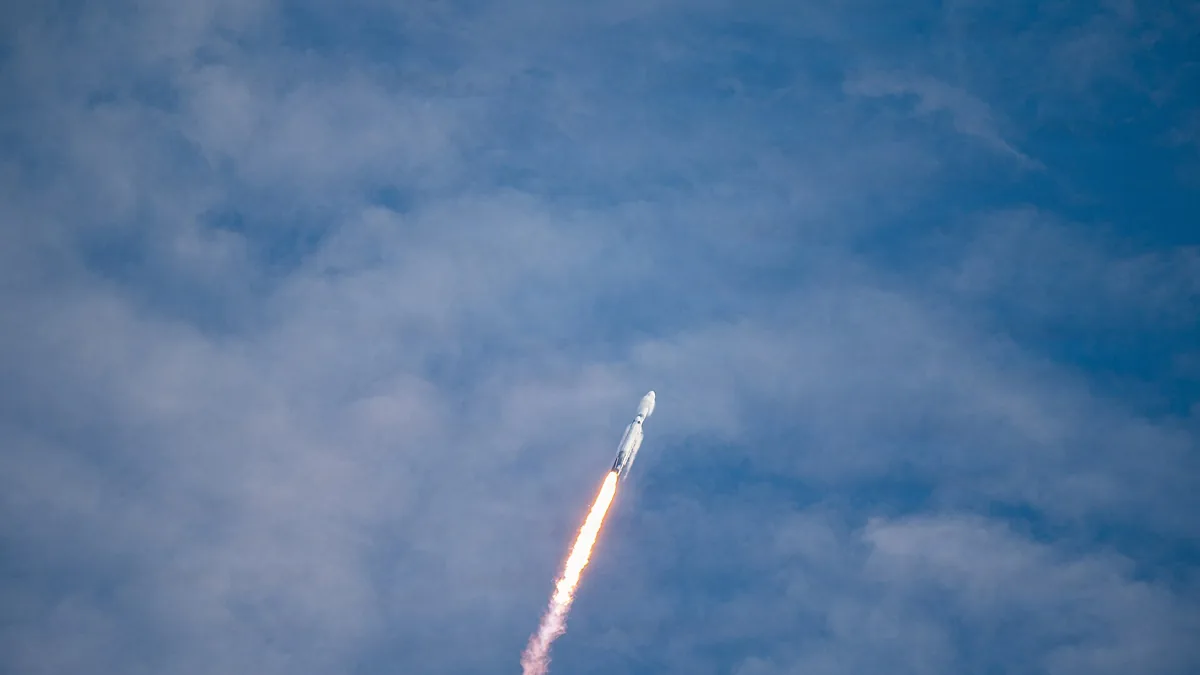
The spacecraft carries a space-qualified Ka-band terminal for the ViaSat-3 network plus an L-band terminal for Viasat’s global L-band network, with tests planned through March 2027. Tests will demonstrate low-latency communications from low Earth orbit and direct-to-ground links through Viasat’s Real-Time Earth Ground-Station-as-a-Service for S-, X- and Ka-bands. Viasat holds two CSP contracts with a combined value of $81 million and flew a launch telemetry relay demonstration aboard Blue Origin’s New Glenn rocket in November 2025.
Under the 2022 Communications Services Project, NASA awarded $278.5 million to six commercial providers for satellite communications demonstrations, and those firms expected to spend an estimated $1.5 billion of their own money over five years. NASA’s latest combined ceiling comes to $1.0656 billion, roughly 3.8 times the $278.5 million provided in 2022. NASA reduced the number of awardees from six in 2022 to three in 2026 while increasing the size of each award. Commercial providers supplied 63% of all direct-to-Earth services for NASA missions as of 2022.
Firm-fixed-price terms put schedule and cost risk on the companies, reward careful engineering and punish bids that are too optimistic. NASA is not purchasing a spacecraft it will own; instead, it pays firms to demonstrate a relay capability they will operate and offer to other customers. Winning firms gain a government anchor customer, which lowers perceived risk for banks and investors backing satellite finance.
NASA has not shared design specifics for any winner, leaving the public record without constellation size, orbital regime, throughput, launch timing or service-start dates for each bidder. The agency has not set a launch date, service-start date or TDRS shutdown date. The agency has also not disclosed how many follow-on awards it expects or how it will select the vendor for flight demonstration.
The $1.0656 billion ceiling is maximum potential value rather than guaranteed spending, NASA says, since the agency committed nothing up front and actual spending will depend on technical progress and budget decisions. Shattered notes that maximum potential values are not appropriations and that Congress funds NASA year by year, meaning a tight budget could trim options. The first 180 days of concept work pay for engineering hours and prototype parts rather than satellites, with further spending only if NASA exercises options after May 3, 2027.
If commercial relay development slips, NASA must either extend the aging TDRS fleet or accept gaps for missions that need continuous contact, and the announcement sets no date for either outcome. Shattered says the competition could narrow to just one or two providers after demonstrations, and losing firms will have spent real engineering money on a design that lacks a buyer. The full $1.0656 billion is available only if each team keeps passing its gates, and some options may lapse.


Join the discussion