Key facts
- Orbital Matter CEO Jakub Stojek said folding designs mean spacecraft are built mostly for launch rather than for operations in orbit.
- After two months of terrestrial print jobs, Orbital Matter updated Replicator 2's firmware and printed a second bonded structure that was 32.5 cm long.
- Replicator 2 achieved partial deployment of a solar array along one boom.
- EnduroSat confirmed acquiring signals from all satellites launched on the Transporter 9 mission and began the operational phase in late 2023.
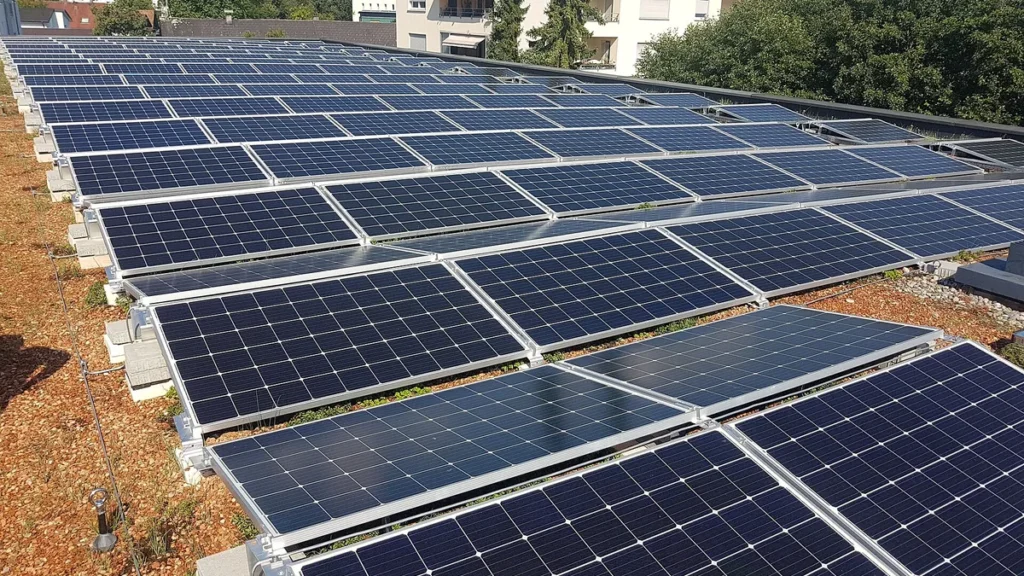
Orbital Matter and EnduroSat announced a partnership on Nov. 4, 2026, to deploy a 5-kW solar array in orbit in 2028 by printing support structures in space instead of folding arrays for launch.
Orbital Matter CEO Jakub Stojek said folding designs mean engineers build spacecraft primarily for launch rather than for orbital operations. The demonstration aims to test printing support structures in orbit instead of folding them for launch.
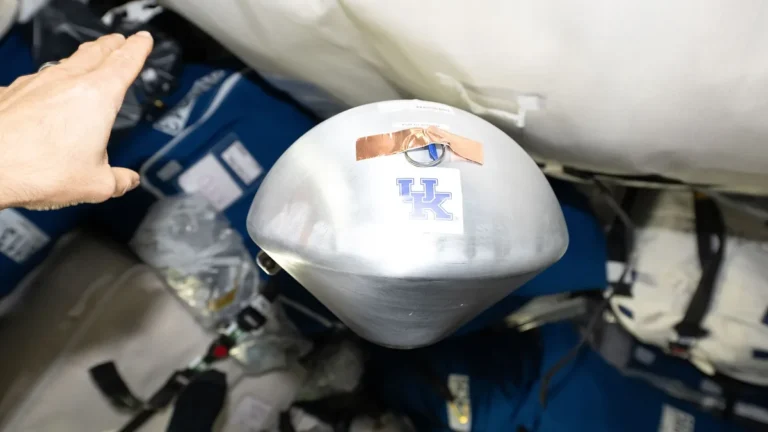
Orbital Matter’s second demonstration, Replicator 2, launched in July on SpaceX’s Transporter-17 rideshare using an EnduroSat bus. The spacecraft carried four Orbital Matter printers that extrude liquid material onto a spinning cylinder, harden it with UV light, and extend the hardened beam outward to hold a silicon solar blanket.
Replicator 2’s first August print job failed because gaps appeared between printed material layers. After two months of terrestrial print jobs, Orbital Matter updated the firmware and printed a 32.5 cm bonded structure that achieved partial deployment of a solar array along one boom.
The 2028 mission will attempt to back a 5-kW solar array about 5 m in length using rigid booms manufactured in space by Orbital Matter printers, according to CTO Robert Ihnatisin, targeting the nascent orbital-data-center market where operators need large amounts of affordable power. EnduroSat CTO Victor Danchev said orbital data centers and AI compute in orbit will require hundreds of kW per satellite.
Danchev called the first flight an important milestone and said the partnership will scale to 100+ kW arrays in the next few years at a fraction of the current market USD/W. Orbital Matter does not plan to stop at 5 kW and hopes the follow-on demonstration can convince customers it can support larger missions later. Orbital Matter’s long-term goal is to use the printing method for large structures built in space, such as lunar and Martian infrastructure.
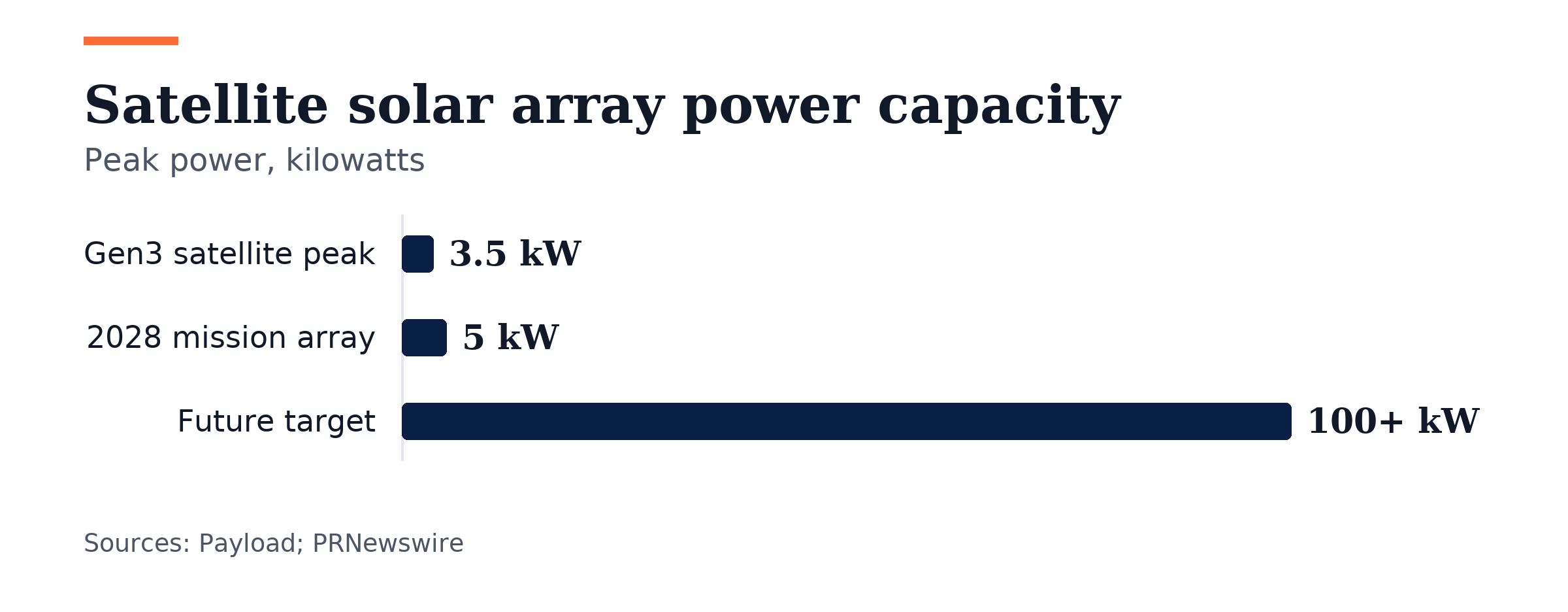
Orbital Matter employs seven people and is raising a round of financing to support an increased team and a new production facility for more printers, according to Stojek. EnduroSat’s Gen3 satellites, funded by a €43 million investment in 2025, offer up to 3.5 kW of peak power and a 2 Gbps data rate.
The company aims to produce up to 60 satellites per month by the end of 2025 at its new 17,500 m² facility in Sofia. As of Nov. 27, 2023, EnduroSat could deliver standard satellite modules to customers within 2 weeks, enabled by its new 3,200 m² Space Facility in Bulgaria and a $10 million Series A funding.
EnduroSat confirmed acquiring signals from all satellites launched on the Transporter 9 mission and began the operational phase in late 2023. It supports missions including NASA and UC-Berkeley’s PADRE solar exploration mission, Breakthrough Initiatives and University of Sydney’s TOLIMAN astronomy mission, and Vyoma’s FLAMINGO constellation for in-situ space situational awareness.
Redwire Corporation and EnduroSat signed a memorandum of understanding in late 2026 to combine Redwire’s power systems and prime contractor experience with EnduroSat’s manufacturing for European defense and commercial missions, including very low Earth orbit (VLEO) and orbital data centers. According to Founders Fund partner Delian Asparouhov, EnduroSat’s shift to consumer electronics and automotive supply chains improved cost efficiency and performance. EnduroSat’s Gen3 satellites use an in-house cableless bus design for assembly and testing in hours, and its constellations-as-a-service model covers design, integration, launch, and operations.


Join the discussion