Key facts
- The proposed algorithm will use a variational autoencoder (VAE) trained on natural geology to flag features that cannot be reconstructed as natural, which will then be reviewed by experts and citizen scientists.
- Dr. Lewis J. Pinault is developing research proposals with the SETI Institute to turn the lunar technosignature search into a deliberate scientific objective of future lunar exploration missions.
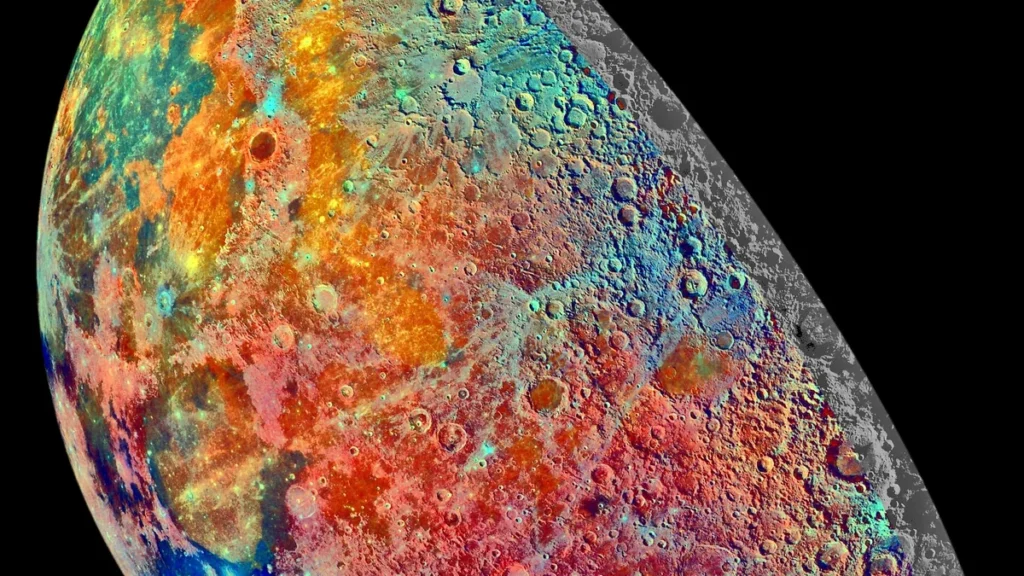
- The Moon may hold traces of past technological civilizations in the form of microscopic particles, offering a unique opportunity to investigate the technological history of the Galaxy.
- The authors propose two approaches to developing a model for detecting surface technosignatures: a supervised approach and an unsupervised approach.
Researchers Ana Henrique, Sofia Sheikh, and Benjamin Fields propose expanding the search for extraterrestrial intelligence beyond radio signals to include intentional surface patterns on the Moon and Mars, building on a radio-focused approach that dates to the Drake Equation in 1961.
The researchers define surface technosignatures as non-random, intentional patterning on planetary terrain, comparable to long-lasting human-made landscapes and monuments on Earth. They argue that artificial landscapes or monuments could persist for hundreds of millions of years on geologically inactive bodies such as the Moon and Mars, and the definition emphasizes intentional design rather than random natural variation. Recent advances in high-resolution imaging and machine learning make this expanded search possible. Ana Henrique, Sofia Sheikh, and Benjamin Fields say: “Surface technosignatures: non-random, intentional patterning on planetary terrain, similar to long-lasting human-made landscapes and monuments on Earth.”
SETI has historically centered its search on artificial radio emissions, a direction shaped by the Drake Equation developed in 1961 to guide detectable communication searches. The new proposal broadens the framework to include surface-based evidence of technological activity rather than relying only on radio.
The authors point to human constructions on Earth as proof that large artificial patterns remain visible from orbit long after they are built. The Ziggurat of Ur, Inca Agricultural Terraces, and the Pyramid of the Sun can still be seen in satellite imagery more than 500 years after construction. These terrestrial examples show that geometric shapes and large-scale landscaping survive in orbital photographs. Similar patterns on the Moon or Mars should be detectable with existing satellite technology, the researchers argue.
The authors say high-resolution imaging datasets now provide the tools needed to search geologically inactive surfaces. The HiRISE camera on NASA’s Mars Reconnaissance Orbiter has collected detailed imagery of Mars, and the Lunar Reconnaissance Orbiter provides comparable views of the Moon. These images, when combined with machine-learning anomaly detection, enable a systematic search for artificial patterns, and the researchers stress that existing image archives supply the tools needed for that work.
The authors propose combining machine learning with three other sensing methods. LiDAR maps surface shape with laser pulses, ground-penetrating radar reveals subsurface structure, and reflectance spectroscopy measures how light interacts with materials. Together with anomaly detection, these tools could establish the first quantitative upper limits on surface technosignatures.
The paper lays out two machine-learning strategies for building a detection model. A supervised approach would train the algorithm on known examples of artificial patterns, while an unsupervised approach would search for anomalies without predefined categories. Both would draw on existing imagery and artificial-intelligence techniques to identify surface patterns that do not look natural. These methods would expand the scope of technosignature searches beyond radio.
A separate but connected project is moving forward under the SETI Institute’s Fundraiser 2025/26. The fundraiser’s second phase selected the Surface Technosignatures project, led by Ana Henrique Salvan and Carl Strom, to create an algorithm trained on human-made patterns from Earth. The system would then scan imagery from the Lunar Reconnaissance Orbiter and the Mars Reconnaissance Orbiter for similar patterns on the Moon and Mars. Researchers intend to use the trained model to compare natural terrain against human-made examples, building on the same high-resolution archives that support the broader surface technosignatures proposal.

The project’s algorithm uses a variational autoencoder, a machine-learning model trained to reconstruct natural geology. Experts and citizen scientists review features that fail to reconstruct as natural, joining professionals in examining the flagged features. Human reviewers would then decide which flags merit closer study.
A second research thread looks for microscopic technosignatures rather than large surface patterns, and the lunar regolith could serve as a long-term storage medium for material arriving from space. Dr. Lewis J. Pinault and colleagues propose searching lunar soil for particles of extraterrestrial technology that could have survived in lunar regolith for billions of years. Their method combines machine learning, advanced imaging, and chemical analysis to distinguish potential artificial particles from natural material or human contamination. The work treats the Moon as a potential archive of ancient technological activity.
One cubic meter of lunar soil could help scientists constrain the amount of long-lived artificial material that past technological civilizations in the Galaxy may have produced, even if the search finds nothing. The benchmark is part of a staged discovery program aimed at systematically exploring lunar regolith. Future sample-return missions and lunar expeditions would provide the material for analysis. A null result would still place scientific limits on the prevalence of such material, and scientists would compare any suspicious particles against known natural and human-made materials.
Dr. Lewis J. Pinault is working with the SETI Institute to develop research proposals that would make the lunar technosignature search a deliberate goal of future lunar exploration missions. The goal is to move the search from opportunistic discovery to systematic exploration built into planned expeditions. Researchers want mission design to integrate the hunt rather than leave it to chance.
Pinault and colleagues say the Moon could hold traces of past technological civilizations as microscopic particles because its surface is geologically stable. Those particles would offer a unique opportunity to investigate the technological history of the Galaxy. This lunar record would complement traditional SETI efforts that scan the skies for radio emissions. The search could run alongside existing methods instead of replacing them.
The surface search is meant to work alongside radio SETI, not to replace it. Surface technosignatures could persist for hundreds of millions of years, so the Moon and Mars might hold evidence that radio sweeps would miss. Researchers regard the two methods as complementary paths for studying the Galaxy’s technological history. Each approach covers a different kind of technosignature.



Join the discussion