
Key facts
- Musk has said SpaceX might eventually generate $1 trillion per year, possibly by 2027.
- The United States wireless market carries an estimated value of $235 billion.
- Boost Mobile functions as a mobile virtual network operator and rents access to networks run by AT&T and T-Mobile rather than building its own wireless infrastructure.
- Those existing lease agreements generally cannot move to a new owner unless AT&T and T-Mobile approve the transfer.
SpaceX has held discussions with EchoStar about buying Boost Mobile or gaining access to its wireless network, according to a Washington Post report dated Nov. 2, 2026. Cite: SFist, Invezz, The Mac Observer
Neither SpaceX nor EchoStar, Boost Mobile’s parent company, has publicly announced an agreement, leaving the potential transaction unconfirmed as of reporting from Feb. 11, 2026. SpaceX is also considering becoming a fourth major wireless carrier in the United States. The deal would give SpaceX an established consumer-facing wireless business with current subscribers and retail relationships. Cite: AndroGuider, How-To Geek
Musk held talks with EchoStar chair Charlie Ergen about a potential partnership. The meetings took place in recent months, with one report specifying last month relative to its November 2026 publication. EchoStar owns Dish and Boost and has encountered major financial and operational pressure while trying to grow its wireless business. Cite: SFist, The Mac Observer, AndroGuider
The talks contrast with SpaceX’s existing direct-to-cell relationship with T-Mobile. SpaceX reportedly began providing satellite access to T-Mobile subscribers in 2024. T-Mobile became the first major American carrier to ally with Starlink, initially aiming at text messaging where no terrestrial coverage exists. Cite: SFist, AndroGuider
Starlink direct-to-cell technology links ordinary mobile phones to orbiting satellites without requiring a special satellite handset or antenna. SpaceX envisions Starlink Mobile as a hybrid network connecting more than 12,000 satellites with standard ground towers. Phones would use local cell sites when available and shift to satellite coverage if the regular signal disappears. Cite: AndroGuider, The Mac Observer
Plans call for the service to begin with messaging, then add selected data services and possibly voice applications later. Network capacity is more limited than a conventional cellular system, especially when many users connect to one satellite. High-bandwidth activities such as streaming video and large downloads would still rely on normal cell networks or Wi-Fi. Cite: AndroGuider
Current phones might need software updates, particular frequency support, or carrier configuration changes to use the service. SpaceX and partner carriers need to coordinate spectrum use to prevent interference with ground networks and other satellite systems. The FCC would probably examine spectrum licenses, satellite coordination, consumer safeguards, and national communications infrastructure. Cite: AndroGuider
Boost Mobile operates as a mobile virtual network operator, renting access to networks run by AT&T and T-Mobile rather than building its own wireless infrastructure. The company currently serves more than seven million subscribers and counted more than 7.5 million subscribers at the end of 2025. Boost relies on leased cell towers across most of the contiguous United States. Boost Mobile does not own all its towers and instead rents space on networks run by AT&T and T-Mobile.
Cite: SFist, AndroGuider, Invezz, The Mac Observer, How-To Geek
Boost Mobile runs on Dish Network infrastructure, including a nationwide 5G network and roaming arrangements that supplement coverage. Boost subscribers rely on Dish’s network plus roaming arrangements and other network partners. EchoStar’s Boost Mobile provides low-cost cell service by leasing access from AT&T and T-Mobile. Cite: AndroGuider, How-To Geek
EchoStar owns Dish and Boost and has encountered major financial and operational pressure while trying to grow its wireless business. Dish Wireless is still in Chapter 11, while EchoStar’s satellite TV business came out of bankruptcy protection last month. EchoStar could ease financial strain from running a nationwide wireless business by selling or restructuring Boost. Cite: AndroGuider, Invezz
EchoStar must balance an immediate sale against the chance that Boost gains value if satellite-to-phone services are widely adopted. In August, EchoStar Chairman Charlie Ergen said the firm had struggled to succeed in wireless. Ergen has said EchoStar has options to improve the business via partnerships or a merger. Cite: AndroGuider, Invezz
SpaceX recently agreed to spend $8 billion on wireless spectrum licenses meant to expand cellphone coverage where satellites do not currently reach. TechCrunch reported that SpaceX spent $17 billion on wireless spectrum from EchoStar in the previous year. Musk wrote on social media that the purchase represents the final part of the spectrum puzzle required for full phone coverage across America. Musk said: “This is the last critical piece of the spectrum puzzle needed for SpaceX to provide complete phone coverage in America”.
Cite: SFist, The Mac Observer
Musk has said SpaceX might eventually generate $1 trillion per year, possibly by 2027. The projection covers businesses built around SpaceX technology and relates to Mars settlement ambitions, where reliable communications would be essential. The United States wireless market carries an estimated value of $235 billion. Cite: SFist, The Mac Observer
MarketWatch said acquiring Boost Mobile’s agreements might enable SpaceX to produce as much as $235 billion in revenue and hit its $1 trillion goal by 2027. SpaceX reported $14.6 billion in revenue for 2026’s third quarter. Starlink reached 13.6 million users by the end of Q3, up roughly 90% from the previous year. Cite: How-To Geek, Invezz
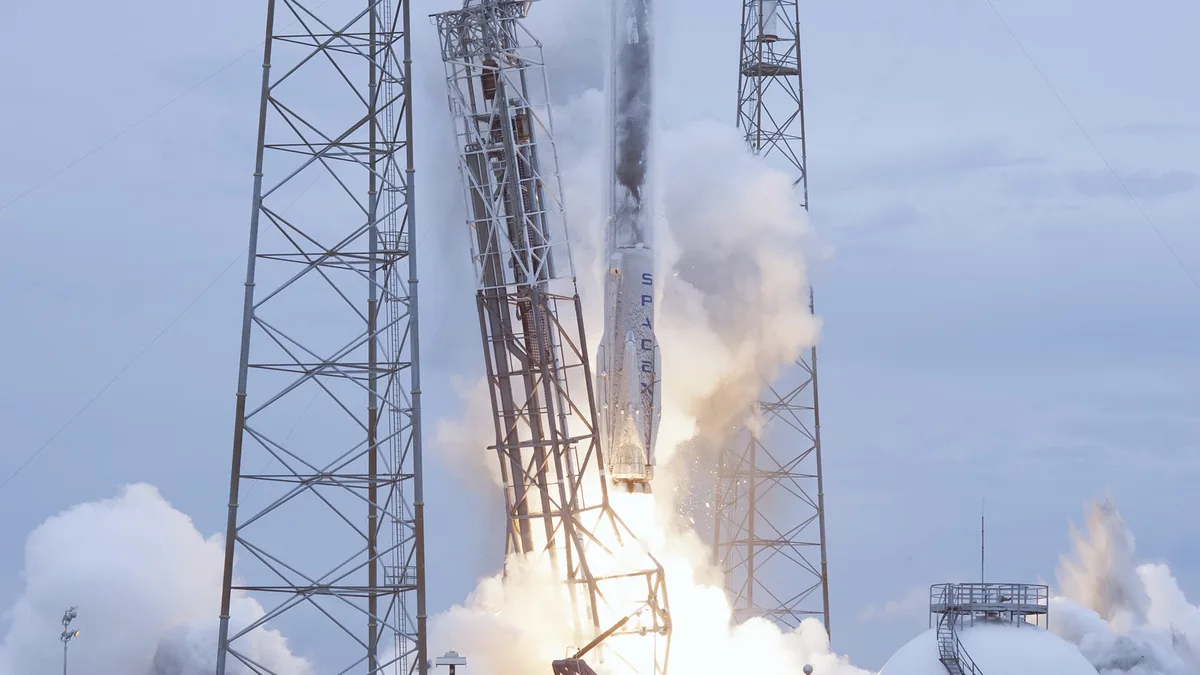
The constellation runs more than 11,000 satellites in over 170 countries and produced $5.2 billion in Q3 revenue with profit margins above 65%. An acquisition could speed up Starlink Mobile’s launch by several years. Buying EchoStar would give SpaceX access to more spectrum and Dish Wireless assets. Cite: Invezz
Regulatory approval faces immediate obstacles. Existing lease agreements generally cannot move to a new owner unless AT&T and T-Mobile approve the transfer. Barclays analyst Kannan Venkateshwar said Boost’s network-leasing agreements may not transfer to a new owner unless AT&T and T-Mobile approve. A Boost purchase would likely require SpaceX to get permission from AT&T and T-Mobile to keep using leased equipment.
Cite: SFist, Invezz, The Mac Observer
The Department of Justice or other authorities might review the deal’s competitive impact depending on the transaction’s structure. The major carriers have repeatedly declined to give SpaceX network access, and Verizon, AT&T, and T-Mobile have reportedly turned down SpaceX’s purchase offers according to reporting dated Nov. 2, 2026. Cite: AndroGuider, Invezz, How-To Geek
Satellite links work less efficiently in crowded cities, where millions of phones depend on conventional cellular networks. Satellite-industry analyst Tim Farrar, president of TMF Associates, said SpaceX’s current satellite signal lacks enough strength for reliable indoor or citywide coverage. Farrar’s comments highlight technical obstacles that a carrier partnership could help address. Cite: SFist
Verizon’s CEO estimated that constructing the network would take four to six years. Musk said SpaceX could finish the work in about half that period. The Post notes Musk has a history of offering ambitious timelines that do not always materialize. Cite: SFist
Drew Cupps of Polen Capital cited Tesla’s global Supercharger network, encompassing roughly 80,000 charging stations, as an example of what Musk could build. Cupps told the Post that carriers have reason to feel spooked and agitated about Musk’s entry. BNP Paribas analyst Sam McHugh said the report pointed to a possible move toward an MVNO arrangement. Cite: SFist, Invezz
Citi analyst Michael Rollins identified buying a telecommunications company outright as a potential path. SpaceX reportedly talked with Crown Castle, and American Tower says it is discussing potential opportunities with the company. These reports appeared on Nov. 2, 2026. Separately, SpaceX has sought carrier partnerships in other countries, including New Zealand and Canada.
Cite: Invezz, AndroGuider
Instead of buying Boost, SpaceX could grow direct-to-cell through carrier tie-ins, wholesale pacts, or technology licensing. A partnership lets SpaceX skip the expense and complexity of running a carrier but limits control over prices, brand, and customer information. Boost Mobile would give SpaceX an established consumer-facing wireless business with current subscribers and retail relationships. Cite: AndroGuider
SpaceX stock SPCX gained over 2% on Monday and traded just above its $135 IPO price as investors assessed the competitive threat of SpaceX entering wireless. AT&T and T-Mobile shares fell at the open Monday but recovered, rising 0.12% and 1.77% by midday. Verizon shares rose 0.64% after opening lower. Cite: Invezz
Crown Castle shares fell 2.14% as wireless tower operators had a weaker session. Crown Castle shares had risen about 30% in the prior month on expectations SpaceX might become a new tenant. EchoStar gained 4.6% in early trading after the report, though the gains later narrowed. Cite: Invezz
AT&T, T-Mobile, and Verizon dominate the U.S. wireless market, and each serves tens of millions of subscribers. Satellite coverage could become a standard mobile plan feature, giving Starlink a way to challenge established carriers. Competition could speed up in machine-to-machine services, emergency communications, and rural connectivity. Public safety, transportation, energy, agriculture, and logistics might gain from devices that move automatically between cell and satellite networks.
Cite: AndroGuider

Join the discussion