Key facts
- Reid Wiseman will start as Caltech's associate vice president and JPL's deputy director on November 30, with the announcement made October 28 at an event Caltech called Brave New Space Age.
- The Artemis II commander and its pilot shifted to astronaut emeritus status in September, ending active astronaut service while continuing to support NASA's moon exploration program.
- The Brave New Space Age panel included NASA Administrator Jared Isaacman, Eric Schmidt of Relativity Space and Schmidt Sciences, and Lindy Elkins-Tanton of UC Berkeley and NASA's Psyche mission.
- Caltech, JPL and NASA notched firsts including America's first satellite, first soft Moon landing, Mars landings, first powered flight on another planet, and lakes and seas on another world.
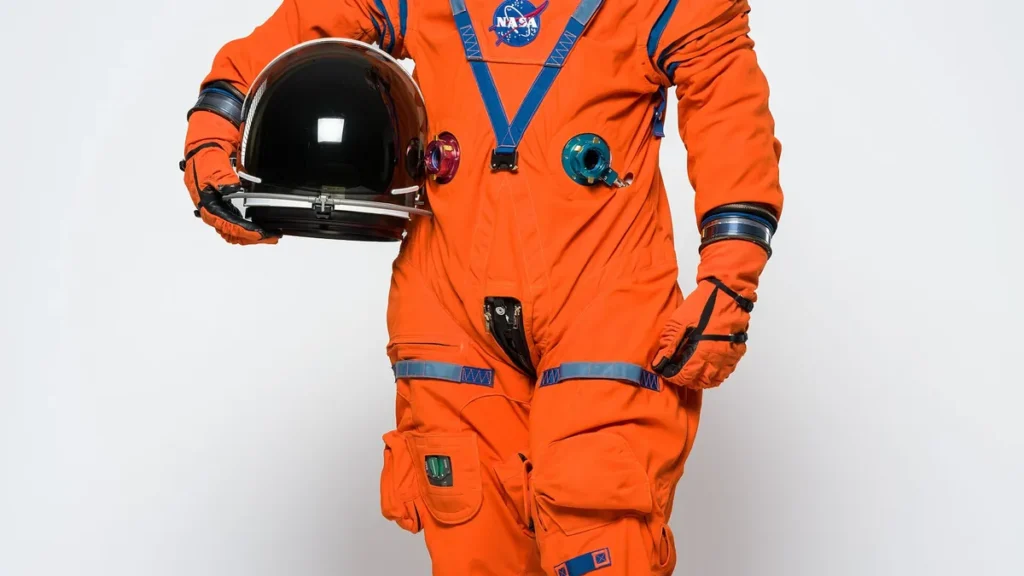
Caltech President Ray Jayawardhana and JPL Director Dave Gallagher announced on October 28, 2026, that Artemis II commander Reid Wiseman will become Caltech’s associate vice president and JPL‘s deputy director on November 30, at the institute’s Brave New Space Age event in Pasadena. The announcement came on the eve of Jayawardhana’s inauguration as Caltech’s 10th president.
Wiseman is leaving active astronaut service. He and Artemis II pilot Victor Glover shifted to astronaut emeritus status in September 2026, ending their active astronaut roles while continuing to support NASA’s moon exploration program. The four-person Artemis II crew flew around the Moon in April 2026 on a flight that set a new distance record for human spaceflight.
NASA selected Wiseman as an astronaut in 2009, and he led the agency’s astronaut corps as chief astronaut from December 2020 to November 2022, overseeing crew flight readiness and safety for all NASA human spaceflight missions. He logged 175 days in space across two missions, including time as U.S. segment lead and flight engineer on the International Space Station, and he commanded Artemis II, during which he led two spacewalks and conducted hundreds of scientific experiments. He also commanded the 21st NASA Extreme Environment Mission Operations expedition, living eight days in a habitat on the ocean floor.
In his JPL role, Wiseman will handle strategic leadership, stewardship, and continuous improvement of laboratory operations, managing laboratory operations as the center authority overseeing JPL mission execution and serving as the lab’s main contact for national security programs. He will partner with Caltech on institutional planning, management, and compliance, ensuring operational excellence across mission support functions under NASA’s Prime Contract and regulations. Working with Jayawardhana and Gallagher, he will advance Caltech and JPL’s long-term vision for NASA and the nation while building stronger ties across government and industry.
JPL is preparing robotic missions for the Moon and Mars, and NASA chose Caltech and JPL teams to lead NASA’s $1 billion PRIMA far-infrared space telescope and to operate the OCO-2 satellite and OCO-3 instrument on the International Space Station. NASA also designated JPL as lead on two Earth-observation missions that will study clouds and aerosols, support resource identification, enable space-based disaster-response monitoring, and test technologies for deep-space exploration. The lab manages the Perseverance and Curiosity rovers, Europa Clipper, Voyager probes, and NASA’s Deep Space Network.
JPL is launching a new hiring campaign, diversifying its business base, and preparing to execute a number of NASA missions as Wiseman joins during a period of great momentum and opportunity for the Laboratory. The laboratory began on October 31, 1936, when Caltech graduate students tested handmade rocket engines in Pasadena’s Arroyo Seco, and it operates under Caltech management for NASA, an arrangement dating to the civilian space agency’s establishment in 1958.
Caltech, JPL, and NASA notched firsts including America’s first satellite, the first soft Moon landing, Mars landings, the first powered flight on another planet, and the discovery of lakes and seas on another world, along with continuing Voyager voyages into interstellar space. The partnership also produced the camera-on-chip used in cell phones and the in-orbit repair of the Hubble Space Telescope’s mirror. The source says these instruments and technologies safeguarded economic prosperity and security and shaped society.
NASA Administrator Jared Isaacman said Wiseman has the technical judgment, operational experience, and leadership qualities to help push the boundaries of what is possible. Wiseman said, “I’ve explored the furthest reaches of what a human can explore at NASA.” The announcement panel at Brave New Space Age included Isaacman, Eric Schmidt of Relativity Space and Schmidt Sciences, and Lindy Elkins-Tanton of UC Berkeley and NASA’s Psyche mission. Wiseman will work under JPL Director Dave Gallagher.
Glover’s move to California Polytechnic State University started September 1, 2026, coinciding with his Navy retirement. Glover graduated from Cal Poly in 1999, became a Navy test pilot, joined NASA in 2013, and piloted SpaceX’s second NASA crew flight on a nearly six-month station mission in 2020 and 2021. He left spaceflight to focus on young people and his wife and four daughters, three of whom attend Cal Poly while the oldest has graduated. Glover said, “this is not a leaving… for me, this is opening the aperture, not closing it down.”
Christina Koch is the only Artemis II crew member still on NASA’s active astronaut rolls after Jeremy Hansen retired from the Canadian Space Agency in July 2026. NASA appointed Koch as acting deputy chief engineer effective November 1, 2026, and Hansen entered the Royal Canadian Air Force Reserve. The Artemis II crew received the Congressional Space Medal of Honor from President Donald Trump at a NASA center in Houston in August 2026, and Wiseman and his crew asked permission to name a Moon crater after his late wife Carroll, who died of cancer in 2020.
As emeritus astronauts, Wiseman and Glover will donate time to train and mentor NASA workers and share knowledge for future moon missions under a new agency approach to retaining expertise. Wiseman’s emeritus status takes effect in September 2026; he spent more than five months aboard the International Space Station in 2014 after joining NASA’s astronaut corps in 2009.



Join the discussion