Key facts
- NASA's Perseverance rover drilled and cached a rock nicknamed "Singita" on October 24, 2026 — its first sample collected in more than a year.
- On October 11, 2026, Perseverance's odometer reached 28.10 miles (45.22 kilometers), passing Opportunity's 28.06-mile (45.16-kilometer) record on the rover's 2,006th sol.
- Opportunity operated for 5,111 sols, completed the first off-world marathon in 2015, and set the 28.06-mile (45.16-kilometer) record Perseverance broke; contact ended June 10, 2018.
- The U.S. Congress cut funding for NASA's Mars Sample Return successor over spiraling costs and feasibility concerns, especially the first-ever launch from Mars, leaving the campaign in limbo.
Perseverance cached Singita, a drilled rock, on October 24, 2026, in Lac de Charmes outside Jezero Crater, marking the first sample the rover has taken in more than a year.
Katie Stack Morgan told the American Astronomical Society’s Division of Planetary Sciences conference that Singita may rank among the oldest exposed rocks on Mars. Stack Morgan said the rock originated about 1 kilometer (0.6 miles) underground in the Martian crust before an asteroid or comet impact, or repeated impacts, threw it to the surface. Jezero Crater formed from a giant impact about 3.9 billion years ago, so researchers did not anticipate rocks older than that inside it. Since Singita is outside the crater rim, it may predate the material inside Jezero.
Singita is the first crystalline igneous rock sample collected outside Jezero Crater and is probably at least as old as the crater itself, possibly several hundred million years older. The rock might match Earth’s oldest preserved surface rocks. Stack Morgan suggested the Isidis Basin as one possible origin, saying the material might be a piece of the impact that created that basin or older than the basin itself. On Earth, comparable rocks have mostly vanished through erosion and plate tectonics, while Mars lacks tectonic plates and preserves ancient terrain.
Singita proved so hard that the first core-drilling attempt failed, prompting the rover to switch to a different, less-used drill bit; it succeeded after a sampling pause of more than a year. Stack Morgan said Perseverance will remain in the area and attempt to collect two more samples, including one from another crystalline igneous rock of a younger age.
On October 11, 2026, Perseverance’s odometer hit 28.10 miles (45.22 kilometers), passing Opportunity’s 28.06-mile (45.16-kilometer) mark on the rover’s 2,006th sol. Opportunity operated for 5,111 sols, finished the first off-world marathon in 2015, and held the 28.06-mile (45.16-kilometer) mark that Perseverance surpassed; contact with the rover ended June 10, 2018. Steven Lee, the project manager, said the original mission allowed no more than 12.4 miles of driving.

AutoNav enables Perseverance to travel up to 1,351 feet (412 meters) in one Martian day. AutoNav has assessed terrain across more than 90 percent of the distance driven by the rover. The earliest autonomous navigation used by Opportunity and Spirit looked at only about 5 percent of the ground those rovers covered. Mark Maimone said, “The rover that broke this record did so by making its own decisions about the path.”
Perseverance began operations on Mars on February 18, 2021, after landing in Jezero Crater, an ancient river delta chosen for potential past microbial life. After Lac de Charmes, Perseverance is expected to continue along the crater rim and head south, stopping at Rainbow Falls, a 328-foot (100-meter-wide) slab of ancient crust lifted by the impact that formed Jezero. At Idubi, researchers hope to find signs of ancient hydrothermal systems where heated water flowed through rocks and may have created conditions suitable for life.
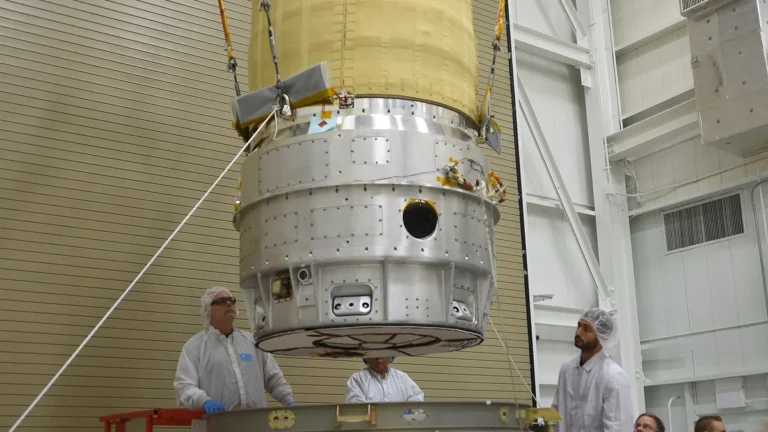
Perseverance has collected 29 rock and regolith samples from distinct settings, including the crater floor, a fan-shaped deposit from an ancient river, and the crater rim. No Martian sample has ever been returned to Earth, unlike Moon samples; Perseverance seals its samples in tubes for later missions to retrieve. NASA and the European Space Agency plan a multi-mission Mars Sample Return effort to collect Perseverance’s sealed tubes and bring them to Earth for laboratory study.
Bobby Braun, Mars Sample Return program manager at NASA’s Jet Propulsion Laboratory, said the instruments needed to demonstrate past microbial life on Mars are too large and complex to send there. The U.S. Congress cut funding for NASA’s Mars Sample Return successor over spiraling costs and feasibility concerns, especially the first-ever launch from Mars, leaving the campaign in limbo. Perseverance has cached drilled material for years, hoping a future mission will fly it to Earth so scientists can search for signs of ancient microbes.



Join the discussion