Key facts
- Voyager Technologies signed a mission management agreement with Interstellar Lab to place the autonomous BioPod EDEN plant-growth chamber aboard the International Space Station.
- Interstellar Lab's AI-driven operating system will autonomously monitor, control and optimize the growth chamber environment and compare it against a matching experiment running on the ground.
- NASA will determine the specific hosting location aboard the International Space Station for the BioPod EDEN payload.
Voyager Technologies signed a mission management agreement with Interstellar Lab on Oct. 26, 2026, to place the autonomous BioPod EDEN plant-growth chamber aboard the International Space Station.
The announcement came from Houston as NASA advances its Faster to Science initiative to accelerate researcher access to the station. NASA will determine the specific hosting location aboard the station for the payload, and the October 26 statement did not include a launch date for BioPod EDEN.
The first BioPod EDEN mission is planned to run from 30 days up to 3 months on orbit. The payload will operate mostly autonomously after installation to cut crew time. At mission end, a crew member will pick plant samples and store them at minus 4 degrees Fahrenheit (minus 20 Celsius) for the trip home.
Interstellar Lab’s AI-driven operating system will autonomously monitor, control and optimize the growth chamber environment and compare it against a matching experiment running on the ground. The paired orbital and ground studies form the control comparison for assessing plant development in microgravity.
Voyager will provide end-to-end hosting for the middeck locker-class payload, covering design and safety review support across NASA review phases, engineering and technical support, assembly, integration and testing, concept of operations, on-orbit activities, and return of the payload to Interstellar Lab. NASA will determine the specific hosting accommodation aboard the station for the payload.
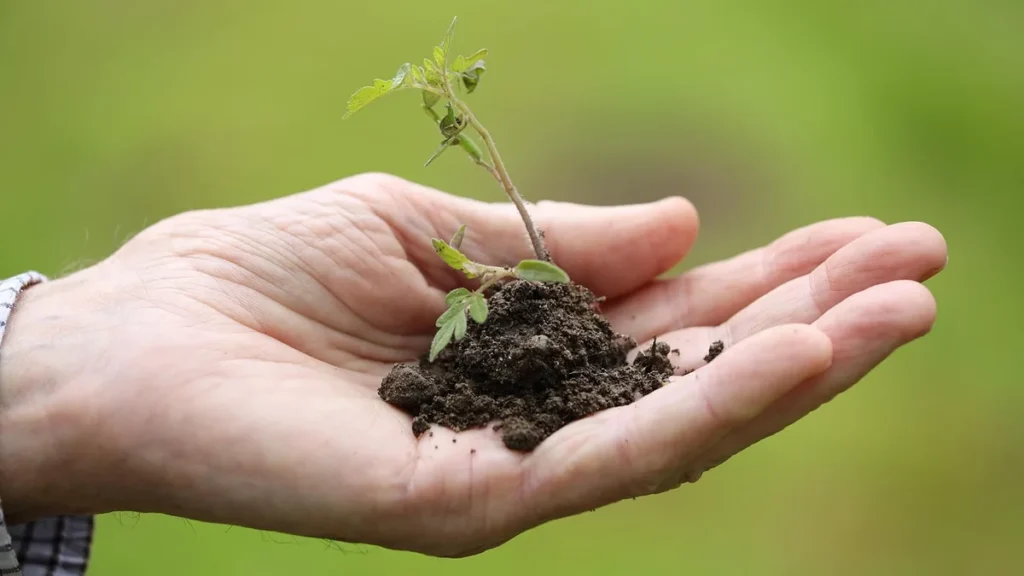
BioPod EDEN aims to move microgravity plant research beyond single-species demonstrations by growing flora in orbit to inform bioregenerative life support for future lunar and Mars missions, with findings also meant to help Earth agriculture. The chamber supports the longer-term goal of growing food on the Moon, including a future greenhouse, according to Interstellar Lab.
Barbara Belvisi, founder and CEO of Interstellar Lab, said faster science in space means sooner food production on the Moon, that station flights speed microgravity plant science, and that each mission feeds data into the next hardware iteration toward a Moon greenhouse. She credited Voyager with giving Interstellar Lab a proven route to the station, so its team can stay focused on the science. Belvisi said “The faster we can do science in space the sooner we can grow food on the Moon”.
Ralph Fritsche, Interstellar Lab VP of Space Science Programs and Operations, said NASA showed astronauts can grow and eat fresh food in space and that next-generation hardware will help reach Moon food production. He joined after 34 years at NASA Kennedy Space Center, most recently as Space Crop Production Project Manager. Fritsche said “NASA showed that astronauts could grow and eat fresh food in space”.
Mattia Pianorsi, managing director of Voyager Technologies Europe, said commercial companies are delivering research capabilities that governments, space agencies and researchers can put to work on the International Space Station. He said Voyager’s role is to help partners such as Interstellar Lab reach orbit and serve governmental and commercial customers. Pianorsi said “Our role is to help partners like Interstellar Lab get their systems to orbit and make those capabilities available”.
Interstellar Lab’s work builds on years of NASA plant research aboard the space station, including the Veggie system and Advanced Plant Habitat. The company won NASA’s Deep Space Food Challenge, including the grand prize for NuCLEUS, a separate food-production system, and NASA described it as based in Merritt Island for that award. Headquartered in Florida with a subsidiary in France, Interstellar Lab has raised $17 million and supplies autonomous greenhouses to customers such as L’Oréal for high-value plant production.
Voyager is also managing research missions for customers including Luxembourg-based Exobiosphere, whose automated drug screening platform is manifested for launch in 2027. Exobiosphere’s platform is an automated drug screening system separate from the BioPod EDEN plant payload.

Join the discussion