Key facts
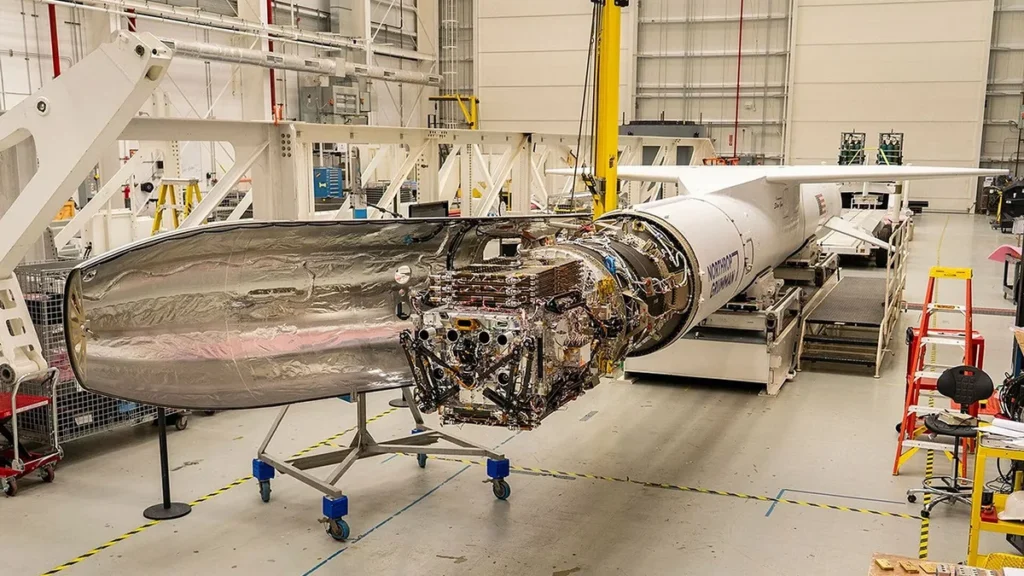
- NASA's R5-S10 6U CubeSat deployed from Momentus' Vigoride-7 on September 17, 2026, then flew as a free-flying inspection spacecraft to photograph the orbital service vehicle and evaluate its condition and performance.
- NASA's Small Spacecraft & Distributed Systems office and the Engineering Directorate at NASA Johnson fund and manage the R5-S10 demonstration.
- The 6U CubeSat lifted off March 30, 2026, on SpaceX's Transporter-16 rideshare mission from California's Vandenberg Space Force Base and was developed under NASA's Realizing Rapid Reduced-cost high Risk Research program.
- Momentus sent Vigoride-7 to orbit on the SpaceX Transporter-16 rideshare mission in March 2026 under a $1.86 million SpaceWERX award from the U.S. Space Force's Space Maneuver Challenge.
Solstar Space demonstrated on-orbit Wi-Fi communications on September 17, 2026, during NASA’s R5-S10 CubeSat proximity operations near Momentus’ Vigoride-7 orbital service vehicle, allowing the two orbiting spacecraft to exchange data and pass it to mission controllers on Earth.\n
Solstar’s Deke payload gathered more than 2,300 files during the roughly 30-minute proximity operation on September 17, 2026. The files included imagery plus optical, infrared and LiDAR sensor readings from the CubeSat and the orbital service vehicle.\n
The R5-S10 6U CubeSat left Momentus’ Vigoride-7 on September 17, 2026 and flew independently as an inspection spacecraft. It photographed the orbital service vehicle and assessed its condition and performance. The CubeSat sent data through a local Wi-Fi link to the Deke Space Communicator on Vigoride-7. Pre-launch ground tests showed the wireless link could work over distances greater than 200 meters.\n
The R5-S10 demonstration is funded and managed by NASA’s Small Spacecraft & Distributed Systems office and the Engineering Directorate at NASA Johnson. The Small Spacecraft & Distributed Systems office sits at NASA’s Ames Research Center in California’s Silicon Valley and operates in the agency’s Research and Technology Mission Directorate, with additional support from Johnson Space Center’s Engineering Directorate.\n
The flight validated an end-to-end communications design supporting satellites, future lunar operations, commercial stations and servicing missions. It backs low-cost small spacecraft used for inspection, satellite servicing and orbital assembly. The mission’s information is being used to train artificial intelligence models intended to support future autonomous space missions.\n
Brian Barnett, founder and chief executive of Solstar Space Company, said working with NASA, Momentus and Iridium demonstrates a new level of connectivity for spacecraft operating close together, and his firm is proud to take part. “We are proud to work alongside NASA, Momentus and Iridium to demonstrate a new level of connectivity for spacecraft operating in close proximity,” Barnett said.\n
John Rood, chief executive of Momentus Space, said Solstar’s partnership contributed a vital communications element to the mission. He added that combining interoperable technologies expands orbital possibilities and accelerates a more connected space environment. “We are proud of the strategic partnership with Solstar and the excellent results of our work together,” Rood said.\n
Ethan Haase, Iridium’s vice president of government solutions, said researchers can use the flight to test how Iridium’s constellation might serve new on-orbit operations and show where it fits in future missions. The demonstration used the Iridium Network under experimental licensed use to relay mission data from orbit to Earth.\n
Iridium Communications Inc. of McLean, Virginia, operates what it describes as the only fully global mobile satellite network. The company works with more than 500 technology and distribution partners serving millions of customers. The network enables voice, data, messaging, positioning, navigation and timing, and aircraft surveillance services anywhere on Earth. It is also advancing direct-to-device communications based on open standards.\n

Momentus, an American commercial space firm, sells satellites, components and in-space transportation services using its Vigoride orbital service vehicle. The offerings include hosted payloads, last-mile delivery and servicing for scalable designs. Momentus describes its services as tailored to scalable mission architectures for government, military and commercial use cases.\n
Vigoride-7 reached orbit aboard the SpaceX Transporter-16 rideshare mission in March 2026 under a $1.86 million SpaceWERX award from the U.S. Space Force‘s Space Maneuver Challenge. The effort included on-orbit checkout and operation of commercially available sensors retrofitted and space-qualified for low Earth orbit. The R5-S10 6U CubeSat lifted off March 30, 2026, on SpaceX’s Transporter-16 rideshare mission from California’s Vandenberg Space Force Base and was developed under NASA’s Realizing Rapid Reduced-cost high Risk Research program.\n
Brian Barnett founded Solstar in 2017. The company has flown its devices on four missions under a NASA test contract and started a $15 million Momentus agreement in 2025 to demonstrate Deke. Small Business Innovation Research awards funded Solstar’s work on space-based relays and lunar Wi-Fi for the U.S. Space Force and NASA, including Lunar Wi-Fi Access Points for Artemis and Commercial Lunar Payload Services.\n
Barnett said NASA has depended on tracking and data relay satellites for high-bandwidth links for years but is retiring that system and moving to commercial providers for space communications. He pointed to $6.5 billion in private space investment during 2025 and said all those new space companies require modern connectivity. Encore Technologies Corp. disclosed a recent strategic investment of $1.16 million in Solstar Space, saying commercial communications networks matter for future space operations.\n
Momentus is preparing a fully booked Vigoride-8 mission for 2027 with two NASA payloads aboard. The company has started work on Vigoride-9, which still has payload space available.\n
Solstar has not disclosed any further milestones for the technology beyond what it can currently do to support servicing and complex coordinated operations in orbit. The mission validated Solstar’s communications technology during rendezvous and proximity operations and indicates it could support more complex missions such as servicing.\n





Join the discussion