Key facts
- The PNAS study compared thymine and uracil using controlled UV irradiation at 265 nm with absorption, fluorescence and Raman spectroscopy.
- Thymine differs from uracil by a single methyl group, leaving the two pyrimidine bases chemically nearly identical.
- As genetic systems diverged from single-stranded RNA to DNA, thymine replaced uracil as one of DNA’s main building blocks.
- Researchers have long questioned why nature selected thymine over uracil for DNA because thymine is more vulnerable to ultraviolet damage and early Earth lacked ozone protection.
Researchers at Texas A&M University released a study in the Proceedings of the National Academy of Sciences on Aug. 3, 2026, showing that thymine channels ultraviolet damage primarily into reversible lesions more often than uracil does. The paper carries the title UV photodamage pathways and the evolutionary selection of thymine over uracil in early genetic systems and the DOI 10.1073/pnas.2615278123. Authors Keyvan Khosh Abady, Negar Karpourazar and Peter M. Rentzepis conducted the work in the Department of Electrical and Computer Engineering.
Peter Rentzepis, a professor in the Department of Electrical and Computer Engineering, led the research team, with research assistants Keyvan Khosh Abady and Negar Karpourazar. Texas A&M Stories identifies Rentzepis as a professor in that department and names Khosh Abady and Karpourazar as his research assistants. BIOENGINEER.ORG describes the group as coming from an electrical engineering lab rather than a biology laboratory. The group used light-based techniques to address a molecular evolution question.
The researchers used biophotonics, including absorption, fluorescence and Raman spectroscopy, to compare thymine and uracil under controlled UV irradiation at 265 nm designed to mimic primordial Earth’s radiation conditions. Biophotonics uses light-based methods to study biological materials. Researchers have long questioned why nature selected thymine over uracil for DNA because thymine is more vulnerable to ultraviolet damage and early Earth lacked ozone protection.
As genetic systems diverged from single-stranded RNA to DNA, thymine replaced uracil as one of DNA’s main building blocks. Thymine differs from uracil by a single methyl group, leaving the two pyrimidine bases chemically nearly identical. BIOENGINEER.ORG says this small chemical difference made the substitution appear redundant to scientists, deepening the puzzle of why DNA adopted thymine despite its greater UV susceptibility.
Before an ozone layer formed, intense ultraviolet radiation from the Sun bathed the surface of early Earth. That radiation environment is what the researchers sought to replicate in the lab, and the paradox prompted them to test whether thymine’s response offered a hidden survival advantage rather than an evolutionary flaw. Phys.org and Texas A&M Stories present this replacement as a chemical change that has long perplexed scientists because it occurred on an early Earth exposed to extreme solar UV radiation without an ozone layer.
Outcomes indicated thymine possesses greater inherent photoreactivity than uracil. Its photodamage rate proceeds more quickly, its absorption band overlaps more of the primordial UVC spectrum, and its absorption peak shifts toward a region of higher solar intensity. Astrobiology Web presents this as the photostability paradox: thymine is more vulnerable to UV damage yet became the dominant DNA base.
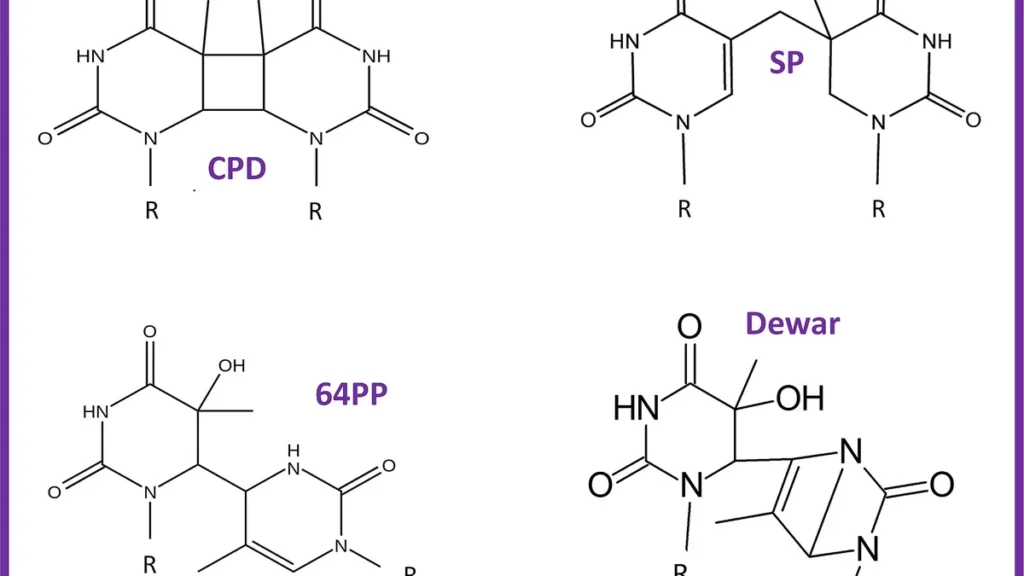
The team compared lesion pathways and found thymine directs UV damage mainly into reversible cyclobutane pyrimidine dimers. Uracil produces irreversible (6-4) photoproducts more frequently, so thymine favors reversible damage over permanent bond breakage. Keyvan Khosh Abady said, “We found that thymine tends to direct UV damage into a more reversible form”.
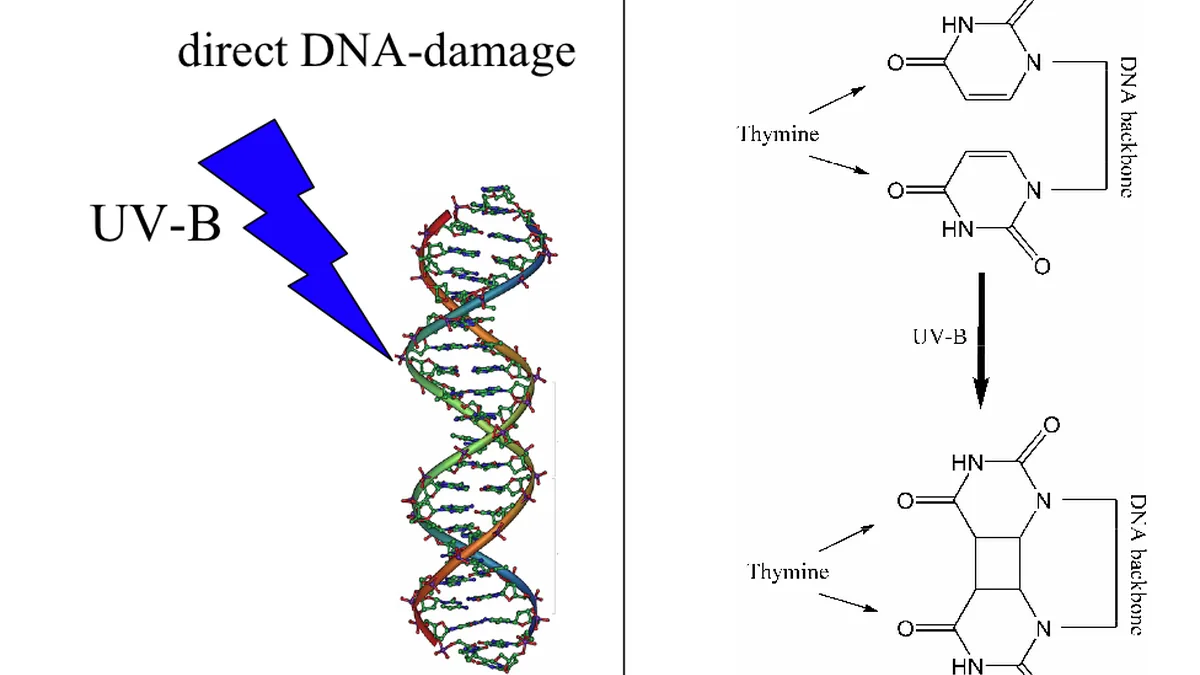
The finding backs the idea that evolution optimized early nucleobases to manage and confine damage rather than stop it. The authors propose that evolution optimized canonical nucleobases to confine damage within the bases and steer lesions toward reversible pathways that allow nonenzymatic self-repair, rather than to avoid photodamage altogether. Astrobiology Web presents this hypothesis as the interpretation of kinetic results showing thymine favors reversible cyclobutane pyrimidine dimers over irreversible (6-4) photoproducts.
Keyvan Khosh Abady described thymine as a molecular sunscreen that absorbs harmful UV energy and confines damage to genetic bases. He said, “thymine may have acted as a molecular sunscreen, absorbing harmful UV energy and keeping the damage confined to the genetic bases”. This long-standing puzzle led the Texas A&M team to test whether thymine’s reaction to UV light provided a hidden survival advantage instead of an evolutionary flaw.
The distinct spectral signatures measured for thymine and uracil may support faster, more sensitive pathogen detection and monitoring of whether UV disinfection has inactivated microorganisms. Keyvan Khosh Abady said the signatures could support faster, more sensitive pathogen detection and monitoring of whether UV disinfection has effectively inactivated microorganisms.
The Texas A&M researchers plan to examine whether thymine, uracil and other early genetic components assembled entirely on Earth or whether meteorites carried them to the planet. The study received support from Air Force Office of Scientific Research grant FA9550-20-1-0139 and from Texas A&M Engineering Experiment Station funds.
Rentzepis’s background features pioneering work in ultrafast spectroscopy and picosecond photography. That history helps explain how an electrical engineering lab brought light-based measurement methods to a question in molecular evolution.






Join the discussion