Key facts
- Photographers from around the world submitted more than 1,400 entries to the competition.
- Processing category participants used the same free Telescope Live dataset and did not need imaging gear.
- Julien De Winter, Landon Boehm, and Brian Diaz received the grand prize for "The Dementors of Cepheus.".
- The grand-prize image shows gas filaments from supernova remnant SNR G110.3+11.3, left when a massive star blew apart.
Astronomy Magazine named the winners of its 2026 Astrophotography Contest on October 23, 2026.
Celestron presented the competition, the first photo contest for the magazine in 13 years. Photographers from around the world sent in more than 1,400 entries, with subjects ranging from faint nebulae and planetary close-ups to dramatic solar images and nightscapes. Editors said they wanted to welcome as many imagers as possible because astroimaging has become more advanced and easier to reach since the previous contest.
The Smartscopes category was open to imagers using all-in-one devices. Editors created this category so users of all-in-one devices could compete on equal terms as astroimaging became more accessible.
The Newcomer category accepted photographers between 13 and 17 years old or anyone with fewer than two years of experience. Editors saw the Newcomer category as one of several ways to broaden participation once astroimaging became more advanced and accessible after the last contest.
Participants in the Processing category used a shared free Telescope Live dataset and did not need imaging equipment. Editors built this category so participants could process images from a shared free Telescope Live dataset even without their own imaging equipment.
The judges selected one grand prize winner. They also chose eight category winners and 22 runners-up. The panel included Contributing Editors Tony Hallas, Molly Wakeling, and Michael Bakich. It also included planetary imager Damian Peach and Editor Emeritus Dave Eicher.
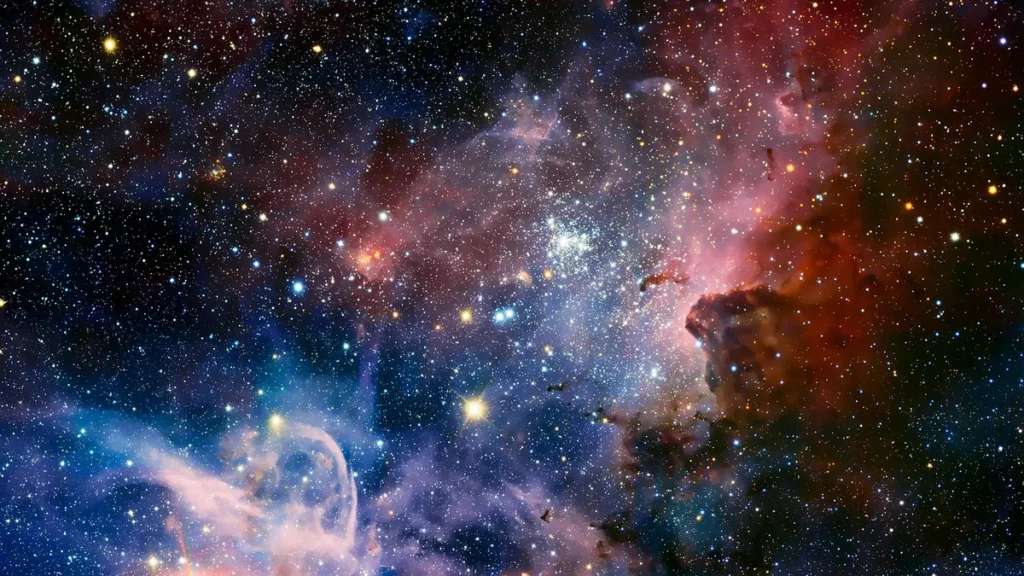
Julien De Winter, Landon Boehm, and Brian Diaz won the grand prize for “The Dementors of Cepheus.” The image features gas filaments from SNR G110.3+11.3, a supernova remnant left after a massive star blew apart. Wraithlike figures called “Dementors of Cepheus,” a Harry Potter reference to Azkaban wardens, guard supernova remnant SNR G110.3+11.3 in the grand prize-winning image. Judges called the photo “sensational” and “impressive.”
Contributing Editor Molly Wakeling praised the composition and depth, saying, “If you can get that 3D feel to it, that’s when you know you’ve made it.” Depth and a 3D feel matter to her in a good astrophotograph.
Prasaad Milner won Deep Sky – Broadband with the Blue Horsehead Nebula and Rho Ophiuchi cloud complex. Emmanuel Joly captured the Sharpless 2-115 complex in Cygnus to win Deep Sky – Narrowband. Simon Labergère earned the Solar System Objects award with Saturn, Titan, and Tethys. Mehmet Ergün photographed the active Sun in hydrogen-alpha for the Solar Imaging win.
Tom Rae won Nightscapes with the Milky Way over Aoraki/Mount Cook National Park in New Zealand. Nathanael Martin took Smartscopes with an image of the Angel Nebula, also known as NGC 2170. Marius Dinga won Processing for an image of RCW 38. Andy Garrett won Newcomer with the Rosette Nebula.
A Celestron RASA 8 astrograph goes to the winning team. Celestron served as the competition’s presenting sponsor. Astronomy’s December 2026 issue will carry full captions for every winning image along with photographer profiles. Subscribers can get the December 2026 issue to avoid missing the captions and profiles.

Join the discussion