Key facts
- Thaicom requested an extension of its operational deadline for Thaicom 9 to September 30, 2027.
- Astranis Space Technologies Corp. provided formal documentation supporting Thaicom's extension request.
- Thaicom procured Thaicom 9 to secure sovereign capacity as part of its broader fleet modernization strategy.
- Thaicom needs the extension to keep regulatory priority over valuable Ku-band and C-band spectrum at 119.5 degrees East.
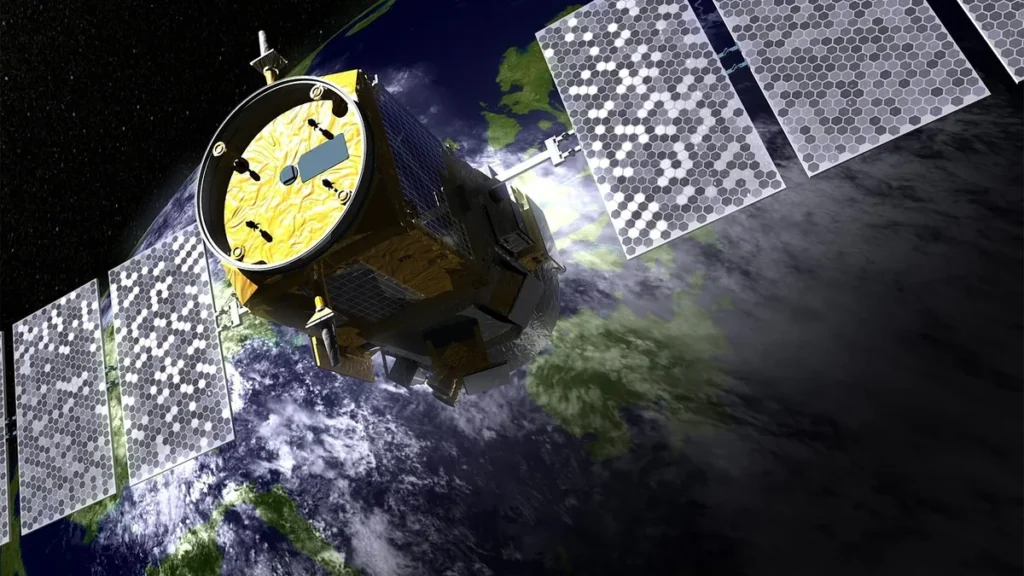
Thaicom asked the International Telecommunication Union for a 16-month extension of its regulatory deadline so Thaicom 9 can enter service at the 119.5 degrees East slot, following delays connected to manufacturer Astranis, satnews.com and Space Intel Report reported, with Space Intel Report confirming the petition on Oct. 23, 2026.
Satnews.com reported that Thaicom asked the ITU to extend the date by which Thaicom 9 must enter service to Sept. 30, 2027. The request comes after manufacturing delays tied to a subsystem anomaly that engineers at Astranis identified in March 2026, and formal documentation from Astranis Space Technologies Corp. supports it.
Satnews.com and Space Intel Report reported that Thaicom’s filing to the ITU contains engineering verification letters from Astranis Space Technologies Corp. showing that engineers there addressed the anomaly and confirming that the spacecraft is proceeding toward flight integration. Thaicom’s filing aims to show that the delay was outside its control and to back the request for a new regulatory deadline.
Space Intel Report reported that Thaicom gave international regulators additional evidence showing that its Thaicom-9 satellite slipped because of a March 2026 incident at manufacturer Astranis and that the delay was beyond its control. Thaicom-9 is a geostationary-orbit satellite. Output from all five satellites dropped after the power-system problem appeared on a single spacecraft.
Satnews.com reported that Thaicom procured Thaicom 9 to guarantee sovereign capacity within its broader fleet modernization effort. Thaicom, a Thai satellite operator, needs more time to protect its rights over valuable Ku-band and C-band spectrum at the 119.5 degrees East position. Ku-band and C-band are radio frequency bands used to carry satellite communications. The slot covers Southeast Asia and the Asia-Pacific region, ranks as a strategic telecommunications position, and Thaicom wants to keep its priority there following setbacks tied to manufacturer Astranis.
Satnews.com reported that, under ITU radio regulations, an operator can lose spectrum priority to rival national administrations when it misses milestone windows for placing an operational satellite in its assigned orbital location. That exposure pushes Thaicom to defend its position at 119.5 degrees East while it works through delays from the Astranis production slowdown.
Satnews.com reported that the ITU Radio Regulations Board will take up Thaicom’s extension petition at its next quarterly session. That same week, the board also weighs a separate Open Cosmos request to extend deployment of a low Earth orbit constellation, and multiple force majeure requests are under review.
Satnews.com reported that board approval would allow a rescheduled launch on a Falcon 9 in early 2027 and commercial operations ahead of the September 30, 2027, cutoff. Winning approval would keep Thaicom’s priority at 119.5 degrees East intact while the operator works through delays from the Astranis production slowdown.
Satnews.com and Space Intel Report reported that the problems began in March 2026, when engineers found a power-system fault aboard one of five small geostationary MicroGEO vehicles, or small satellites that operate in geostationary orbit. Thaicom-9 is part of the five-spacecraft Astranis group riding a single SpaceX Falcon 9 launch.
Satnews.com and Space Intel Report reported that, once the problem appeared, Astranis slowed production across the full five-satellite line while engineers isolated the root cause and performed component-level fixes. The slowdown pushed back Thaicom 9’s deployment schedule since every spacecraft in the group flies on the same Falcon 9 rideshare arranged through Astranis.

Join the discussion