Key facts
- SatNews reports the global satellite propulsion market will expand from $2.07 billion in 2026 to $4.66 billion by 2031 as operators rapidly adopt high-efficiency propulsion technologies.
- Propulsion development spans CubeSats, nanosatellites, microsatellites, and mini-satellites up to large geostationary Earth orbit communications platforms.
- The shared propellant is Advanced SpaceCraft Energetic Non-Toxic propellant, a green monopropellant developed by the U.S. Air Force for chemical propulsion as a less toxic alternative to hydrazine.
- Lozano's group builds thumbnail-sized electrospray thrusters atop small reservoirs of ionic liquid propellant for satellites ranging from lunchbox size to a small carry-on suitcase.
Satellite builders are reshaping bus designs around electric and green thrusters as the global propulsion market grows from $2.07 billion in 2026 to $4.66 billion by 2031, SatNews projects. Operators are adopting high-efficiency propulsion technologies to cut launch mass and extend orbital lifetimes, while regulatory pressure against hydrazine and growth in-orbit servicing accelerate the shift toward modular electric and green systems through 2031, according to SatNews.
Chemical monopropellant and bipropellant systems still lead revenue because they deliver high thrust for orbit raising, rapid transfers, and emergency attitude adjustments, SatNews reports. Chemical thrusters require a large fuel supply for short, fast bursts such as quick ascents and descents or speeding up and slowing down, Phys.org notes. Electric propulsion is gaining market share on higher specific impulse — a measure of how efficiently a thruster uses propellant — and fuel efficiency, according to SatNews and ScienceDaily, which describes the systems as propellant-efficient tools for long-duration missions. Hall-effect thrusters, ion thrusters, and pulsed plasma thrusters form the electric architectures built to prolong mission life, SatNews says.
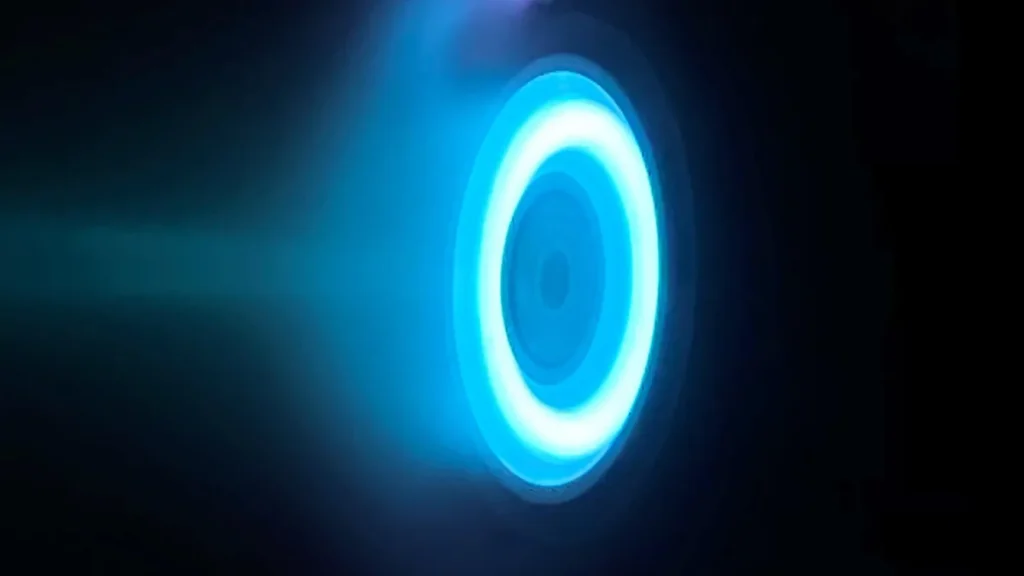
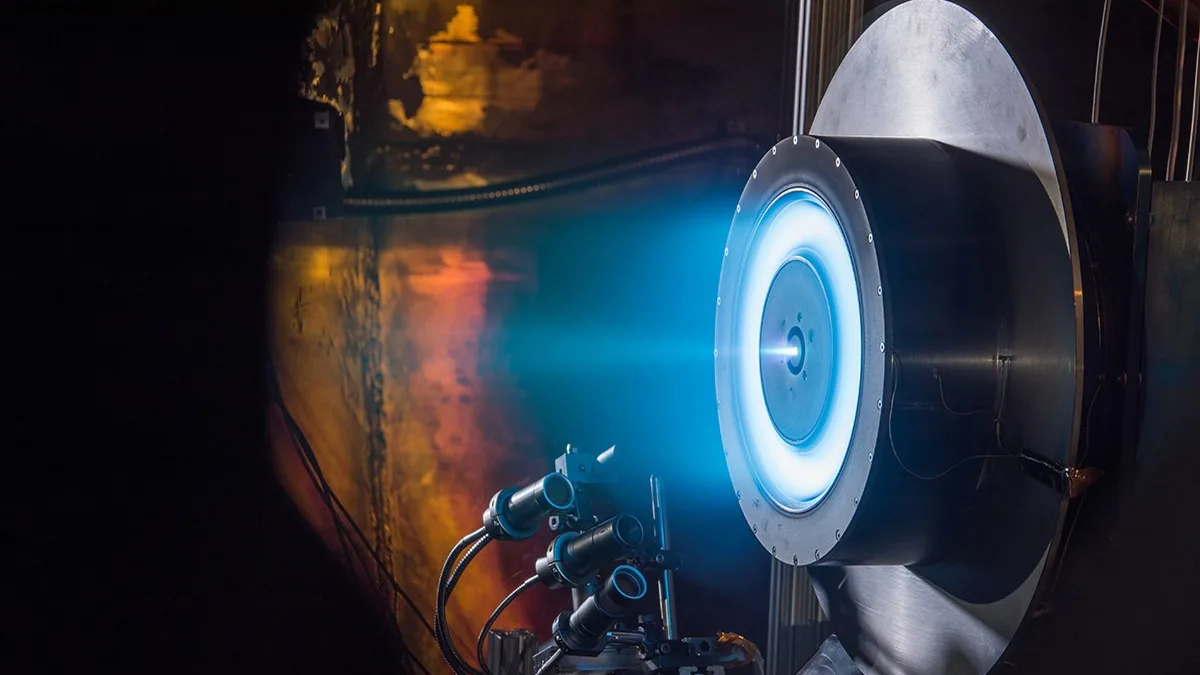
These electric devices accelerate charged particles with electrical energy, and Hall effect thrusters add magnetic fields to produce far less thrust than chemical engines but much greater propellant efficiency, ScienceDaily explains, noting the systems offer gentle long-duration acceleration instead of short chemical bursts. Eco-friendly chemical alternatives are also emerging. Ammonium dinitramide and hydroxylammonium nitrate monopropellants replace toxic hydrazine to cut ground-handling hazards and launch-processing costs while preserving chemical thrust performance, SatNews reports. Large satellite fleets use digital control units for automated station-keeping and precise telemetry across all propulsion architectures, according to SatNews.
Development spans CubeSats, nanosatellites, microsatellites, and mini-satellites up to large geostationary Earth orbit communications platforms, SatNews reports. Commercial imaging and Internet of Things constellations are pushing makers to miniaturize low-power electric thrusters so they fit standard small-satellite form factors without sacrificing specific impulse, according to SatNews. In-orbit servicing, which uses precision propulsion to dock, refuel, and reposition aging geostationary Earth orbit spacecraft, will also drive demand for modular systems through 2031, the outlet adds.
NASA opened the Advanced Mid-Power Electric Rocket Challenge on Nov. 9, 2026, a $500,000 prize competition for U.S. companies to build Hall effect thrusters in the 3-7 kilowatt range, or 3,000 to 7,000 watts, a class government and industry stakeholders call critical for satellite, defense, and exploration missions. The agency will divide the money across three phases, with as many as two winning teams eligible for up to $250,000 each plus NASA testing resources and technology. Participants must develop and demonstrate Hall-effect prototypes in that power band, and NASA will assess performance in its testing facilities to evaluate real-world function and find needed improvements before mission use. The contest is limited to companies incorporated in the United States with their main place of business there, and registration runs from Nov. 9, 2026 through Jan. 27, 2027.
The Journal of Propulsion and Power carried research by MIT engineers Amelia R. Bruno, Paulo Lozano, and Matthew Corrado, published June 2, 2026, under DOI 10.2514/1.b40175, showing that one propellant can power both chemical and electrical thrusters on a small satellite, giving operators fast chemical maneuvers and slow electric adjustments from a cheaper platform. The shared fuel is ASCENT, an Advanced Spacecraft Energetic Non-Toxic monopropellant that the U.S. Air Force developed as a less toxic substitute for hydrazine, and MIT found it also works as an ionic liquid for electrospray. MIT and NASA plan to launch the Green Propulsion Dual Mode mission, a briefcase-sized CubeSat carrying one chemical thruster, four electrospray thrusters, and one shared tank, which the report calls the first two-in-one test of its kind for small spacecraft. The mission launches in November and marks the first time a satellite carries a shared propellant tank; Lozano says the flight could support Earth observation and deep-space trips, while Bruno and Lozano conclude a single tank can power both thruster types for flexible near-Earth and interplanetary missions.
Electrospray thrusters are dime-sized rockets that charge liquid propellant particles with electric fields and spray them into space, providing extreme fuel efficiency for slow, precise adjustments on long interplanetary journeys, according to Phys.org. Paulo Lozano’s lab builds thumbnail-sized electrospray thrusters on small reservoirs of ionic liquid propellant, sized for satellites from lunchbox size to a small carry-on suitcase. In tests, the researchers fed each thruster 1 gram of baby-oil-viscosity ASCENT from a Lego-brick-sized cube reservoir, mounting the reservoirs on opposite sides of a CubeSat atop a MagLev stand inside a vacuum chamber designed to mimic space conditions. Researchers ran the thrusters continuously for up to 100 hours and found ASCENT fueled each electrospray thruster with thrust similar to conventional ionic liquid propellants, demonstrating that one tank can power both chemical and electrical thrusters in a compact CubeSat system.



Join the discussion