Key facts
- The competition distributes up to $500,000 in total cash prizes over three phases, and as many as two winning teams may each receive as much as $250,000 in cash along with access to NASA test facilities and technology.
- Registration for the AMPERE Challenge opened on November 9, 2026 and is scheduled to close on January 27, 2027.
- The current market for mid-power Hall-effect thrusters is dominated by foreign providers. This dominance raises national security concerns and creates geopolitical supply chain risks for U.S. space missions.
- Under the AMPERE project, NASA will run an industry capability challenge and then form public-private partnerships with domestic makers to identify and develop flight-ready commercial mid-power Hall-effect thrusters.
NASA began accepting registrations on November 9, 2026 for its new mid-power electric propulsion prize competition. The agency asked United States commercial companies to develop and demonstrate Hall effect thruster prototypes in the 3-7 kilowatt range. AMPERE stands for Advanced Mid-Power Electric Rocket, and NASA calls mid-power electric propulsion a critical capability for satellite, defense, and exploration missions. The registration window closes on January 27, 2027.
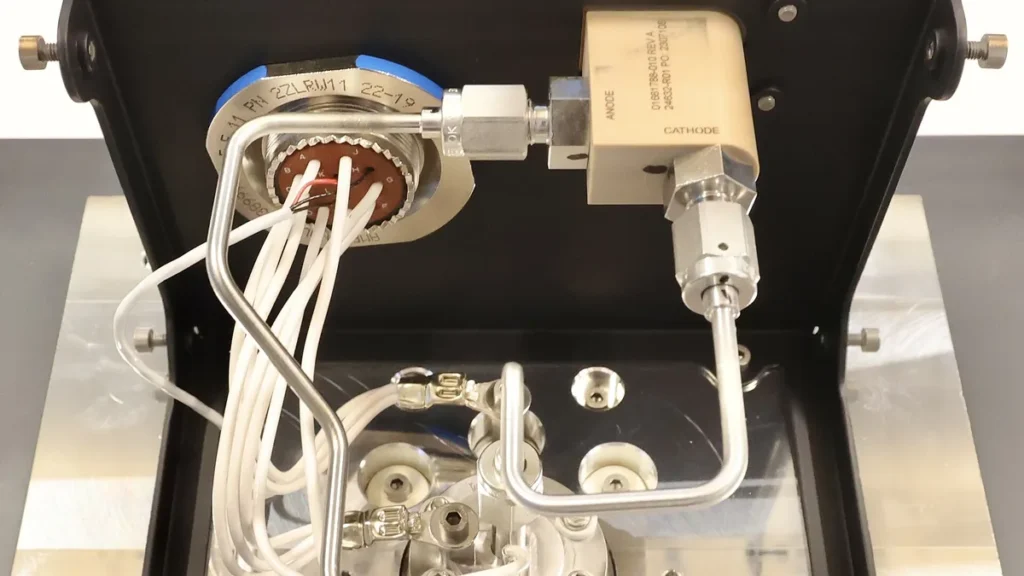
NASA explains that a Hall-effect thruster generates thrust by combining electricity with an inert gas. The announcement includes an image of a thruster tested at Glenn Research Center, and Orbion Space Technology asked that center for help developing the technology for small commercial satellites.
NASA says government and industry stakeholders consider mid-power Hall effect thruster systems essential for satellite, defense, and exploration work, and those systems fall in the 3-7 kilowatt range. In the past ten years, the roughly 5-kilowatt class has seen wider adoption across commercial, military, and government missions, including geostationary communications and deep-space science. Foreign providers now dominate the current market for mid-power Hall-effect thrusters, and that dominance raises national security concerns and creates geopolitical supply chain risks for U.S. space missions. The agency says that need led it to start the competition so domestic firms can build and demonstrate prototypes in that power range.
NASA’s Research and Technology Mission Directorate, Glenn Research Center, and Jet Propulsion Laboratory started the project to promote domestic development and commercialization of an affordable mid-power Hall-effect thruster for industry and government use. Commercial and government stakeholders will form a consortium to support the project, helping shape specifications and technology maturation activities. The consortium will work beside the planned industry capability challenge and later public-private partnerships with domestic producers. It is part of the project’s approach to closing the gap left by foreign-dominated mid-power thruster supply.
Total cash prizes reach $500,000 across three phases, and as many as two winning teams may each receive as much as $250,000 in cash plus access to NASA test facilities and technology. The agency plans to test prototype performance in its own facilities and said the challenge aims to accelerate electric propulsion technology and lay groundwork for future agency and commercial missions. NASA wants to confirm real-world performance inside its test facilities and create a basis for upcoming missions through the three-phase competition. The agency frames test-facility access as part of the prize package for winning teams.
Only companies incorporated in the United States that keep their primary place of business there are eligible. Sign-ups began on November 9, 2026, and will close on January 27, 2027. Interested companies can find registration details, rules, and eligibility requirements at ampere.nasatechmaturation.org. NASA said Mozilla Firefox users might encounter problems with the registration form and advised them to disable browser extensions or switch browsers.

No competing firms have been named, no winner-selection date has been set, and no timeline for the three phases has been published, according to NASA. The agency had not released the request for proposals, challenge rules, prize structure, or finished technical details by the time of the Industry Day announcement. NASA described the Industry Day as an information and engagement opportunity, not a commitment to procurement, partnership, funding, or selection.
Talks covered AMPERE motivation and roadmap, JPL modeling and simulation capabilities, the CoECI prize effort, the AMPERE Challenge, and industry lightning talks. Lindsay MacLeod, reachable at lindsay.m.macleod@nasa.gov, served as the point of contact for questions.
An earlier hybrid Industry Day was set for Tuesday, October 20, 2026, at Glenn Research Center in Cleveland, Ohio, with online participation available and a registration deadline of October 5, 2026. The in-person program was scheduled in Building 162, the Mission Integration Center Auditorium at 21000 Brookpark Road, Cleveland, Ohio 44135, from 9 a.m. until 3 p.m. Eastern Time. Individual meetings, test-facility tours, and networking followed, with the day expected to close by 5 p.m. Eastern Time.
After the industry capability challenge, NASA plans to form public-private partnerships with domestic makers to identify and develop flight-ready commercial mid-power Hall-effect thrusters. The project supports domestic development and commercialization of a mid-power Hall-effect thruster for commercial and government missions.




Join the discussion